Astronomy

Astronomy

Our Universe is amazing and full of cosmic mysteries and curious anomalies. Since the dawn of history, humans have gazed at the night sky and wondered what is really out there. Where can we find extraterrestrials? What would alien worlds look like? There is still so much we don’t know about the Universe.

In this section, we take you on a journey to distant worlds and explore the secrets of our universe. You’ll find here the latest astronomy news, remarkable facts about the cosmos and space mysteries scientists are still trying to solve.

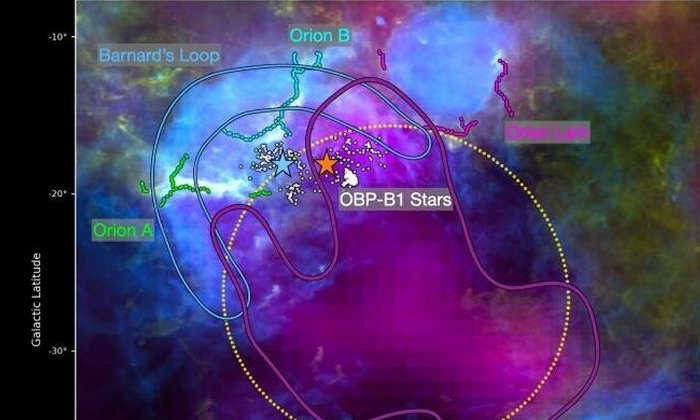
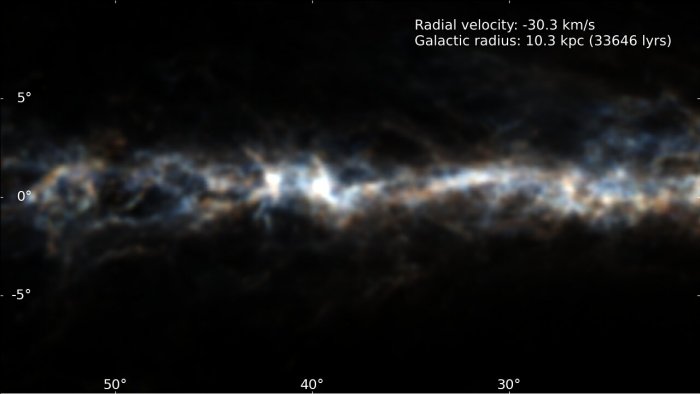
Atomic hydrogen emission towards a portion of the outer Milky Way's disk. Credit: HI4PI survey; J. D. Soler, INAF

Imprint Of Bubbles Produced By Explosion Of Dying Stars In Our Galaxy – Found

Eddie Gonzales Jr. – MessageToEagle.com – An international group of astronomers, led by Juan Diego Soler of the Italian National Institute for Astrophysics (INAF), have found the imprint of the bubbles produced by the explosion of dying stars in the structure of the gas that pervades our galaxy. Atomic hydrogen emission towards a portion of

Imprint Of Bubbles Produced By Explosion Of Dying Stars In Our Galaxy – Found Read More »
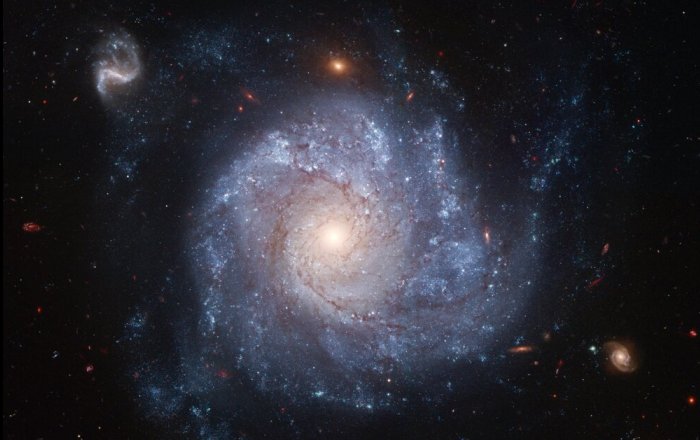
Galaxy NGC 1309. Credit: NASA, ESA, The Hubble Heritage Team (STSCI/AURA), and A. Riess (JHU/STSCI)

Star That Survived A Supernova

Eddie Gonzales Jr. – MessageToEagle.com – A supernova is the catastrophic explosion of a star. Thermonuclear supernovae, in particular, signal the complete destruction of a white dwarf star, leaving nothing behind. At least that’s what models and observations suggested. Galaxy NGC 1309. Credit: NASA, ESA, The Hubble Heritage Team (STSCI/AURA), and A. Riess (JHU/STSCI) So

Star That Survived A Supernova Read More »

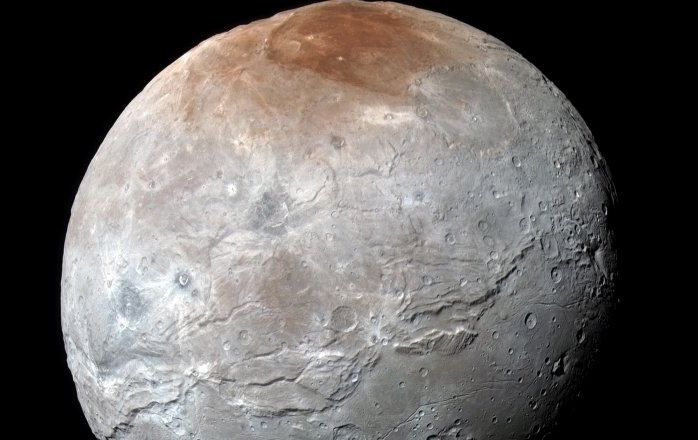
A Possible Source For Charon's Red Cap - Identified

A Possible Source For Charon’s Red Cap – Identified

Eddie Gonzales Jr. – MessageToEagle.com – Southwest Research Institute scientists combined data from NASA’s New Horizons mission with novel laboratory experiments and exospheric modeling to reveal the likely composition of the red cap on Pluto’s moon Charon and how it may have formed. Southwest Research Institute scientists combined data from NASA’s New Horizons mission with

A Possible Source For Charon’s Red Cap – Identified Read More »

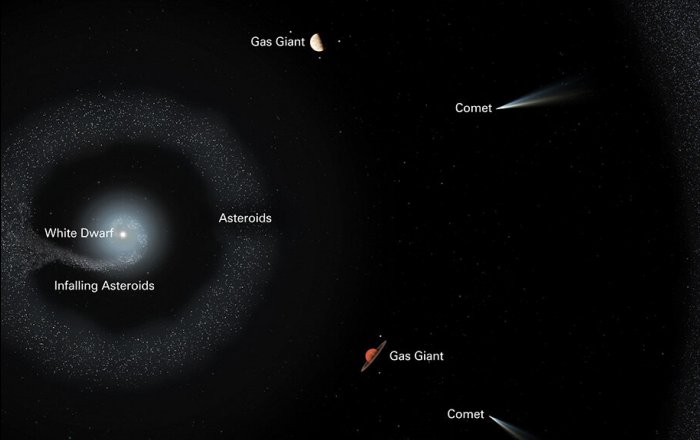
Diagram illustrates the slow destruction of G238-44’s planetary system, with the tiny white dwarf at the center, surrounded by a faint accretion disk made up of pieces of shattered bodies falling onto the dead star. Remaining asteroids form a thin stream of material surrounding the star. Larger gas giant planets may still exist in the system, and much farther out is a belt of icy bodies such as comets. Credit: NASA, ESA, Joseph Olmsted (STScI)

Dead Star’s Cannibalism Of Its Planetary System Is Most Far-Reaching Ever Witnessed

Eddie Gonzales Jr. – MessageToEagle.com – The violent death throes of a nearby star so thoroughly disrupted its planetary system that the dead star left behind—known as a white dwarf—is sucking in debris from both the system’s inner and outer reaches, UCLA astronomers and colleagues report today. This is the first case of cosmic cannibalism

Dead Star’s Cannibalism Of Its Planetary System Is Most Far-Reaching Ever Witnessed Read More »

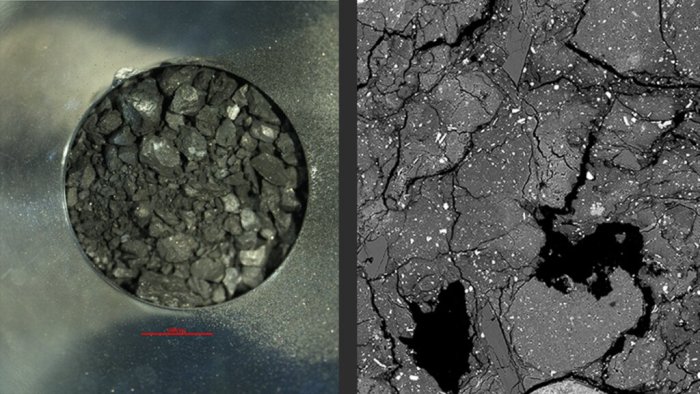
Left: A photograph of the rocks retrieved by Hayabusa2 from the asteroid Ryugu. Right: a zoomed-in image of the structure of one of the pieces, taken by an electron microscope. Credit: JAXA/Yokoyama et al.

First Analysis Of Rocks Plucked From Speeding Asteroid – Announced

Eddie Gonzales Jr. – MessageToEagle.com – After a six-year journey, a plucky spacecraft called Hayabusa2 zinged back into Earth’s atmosphere in late 2020 and landed deep in the Australian outback. When researchers from the Japanese space agency JAXA opened it, they found its precious payload sealed and intact: a handful of dirt that Hayabusa2 managed

First Analysis Of Rocks Plucked From Speeding Asteroid – Announced Read More »

Astronomers May Have Detected A ‘Dark’ Free-Floating Black Hole

Astronomers May Have Detected A ‘Dark’ Free-Floating Black Hole

Eddie Gonzales Jr. – MessageToEagle.com – If, as astronomers believe, the death of large stars leave behind black holes, there should be hundreds of millions of them scattered throughout the Milky Way galaxy. The problem is that isolated black holes are invisible. Hubble Space Telescope image of a distant star that was brightened and distorted

Astronomers May Have Detected A ‘Dark’ Free-Floating Black Hole Read More »