Astronomy

Astronomy

Our Universe is amazing and full of cosmic mysteries and curious anomalies. Since the dawn of history, humans have gazed at the night sky and wondered what is really out there. Where can we find extraterrestrials? What would alien worlds look like? There is still so much we don’t know about the Universe.

In this section, we take you on a journey to distant worlds and explore the secrets of our universe. You’ll find here the latest astronomy news, remarkable facts about the cosmos and space mysteries scientists are still trying to solve.

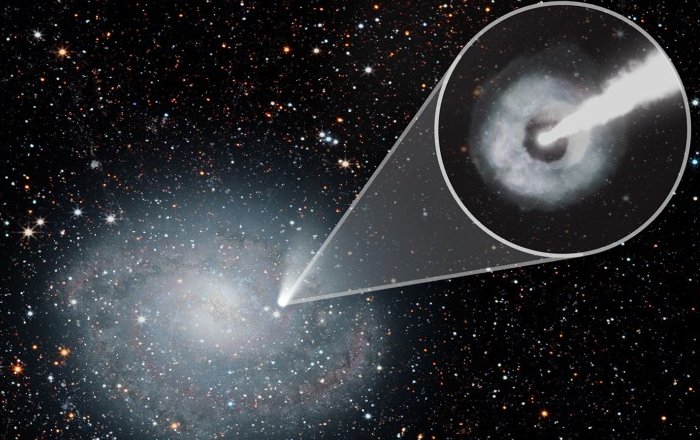
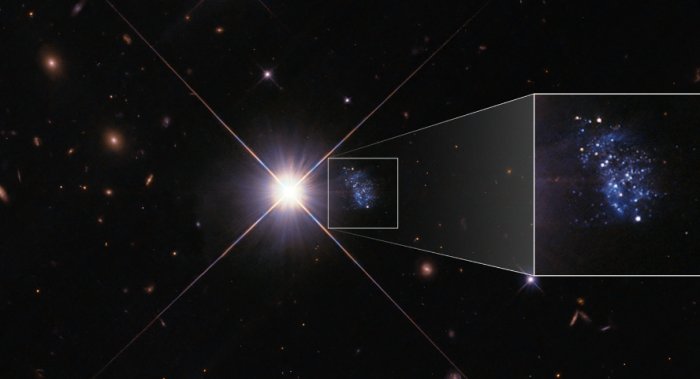
Peekaboo! Tiny, Hidden Galaxy Provides A Peek Into The PastCredits: NASA, ESA, and Igor Karachentsev (SAO RAS); Image Processing: Alyssa Pagan (STScI)

Peekaboo! Tiny, Hidden Galaxy Provides A Peek Into The Past

Eddie Gonzales Jr. – MessageToEagle.com – Peeking out from behind the glare of a bright foreground star, astronomers have uncovered the most extraordinary example yet of a nearby galaxy with characteristics that are more like galaxies in the distant, early universe. NASA’s Hubble Space Telescope captured a detailed image of the tiny galaxy HIPASS J1131–31,

Peekaboo! Tiny, Hidden Galaxy Provides A Peek Into The Past Read More »
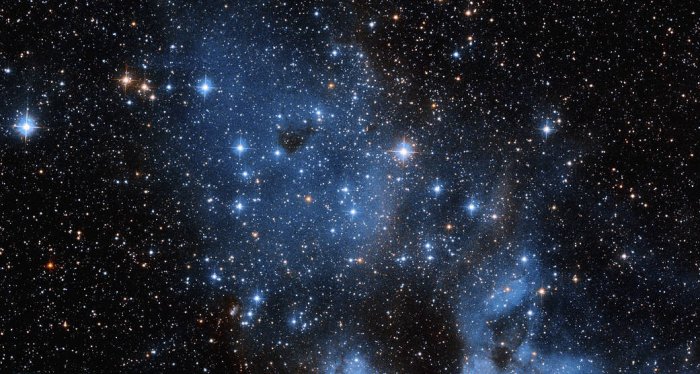
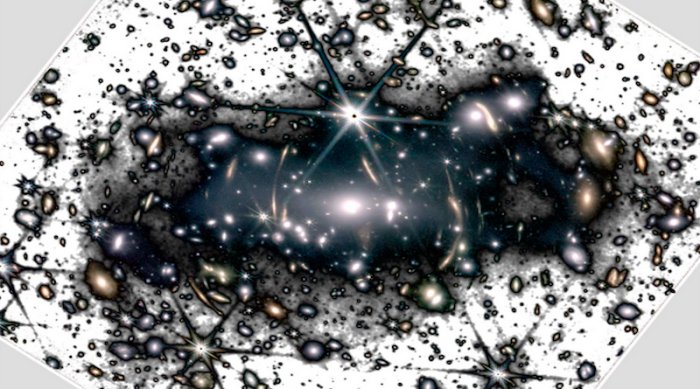
Image of the intracluster light of the cluster SMACS-J0723.3-7327 obtained with the NIRCAM camera on board of JWST. The data have been processed by the IAC team to improve the detection of the faint light between the galaxies (black and white). Credit: NASA, ESA, CSA, STScI

View Of Ghostly Light In Galaxy Clusters – Produced By The James Webb Telescope

Eddie Gonzales Jr. – MessageToEagle.com – In clusters of galaxies, there is a fraction of stars which wander off into intergalactic space because they are pulled out by huge tidal forces generated between the galaxies in the cluster. Image of the intracluster light of the cluster SMACS-J0723.3-7327 obtained with the NIRCAM camera on board of JWST.

View Of Ghostly Light In Galaxy Clusters – Produced By The James Webb Telescope Read More »

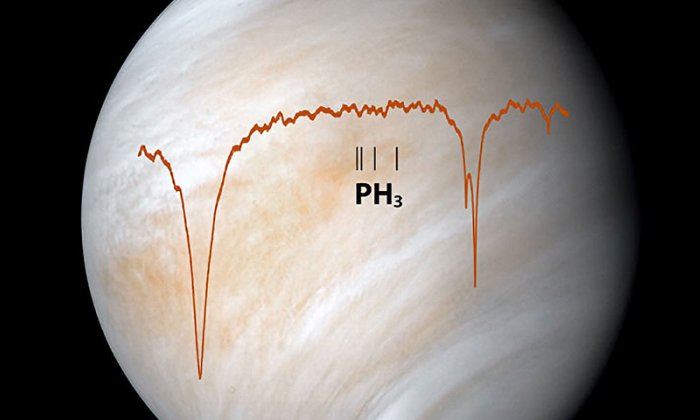
No Phosphine On Venus--According To Observations From SOFIA

No Phosphine On Venus–According To Observations From SOFIA

Eddie Gonzales Jr. – MessageToEagle.com – After the 2020 announcement of the discovery of phosphine above Venus’s clouds, the Stratospheric Observatory for Infrared Astronomy (SOFIA), conducted follow-up observations to confirm or refute the finding. Its observations did not find phosphine in Venus’s atmosphere which is a potential biomarker and could be an indicator of organic

No Phosphine On Venus–According To Observations From SOFIA Read More »

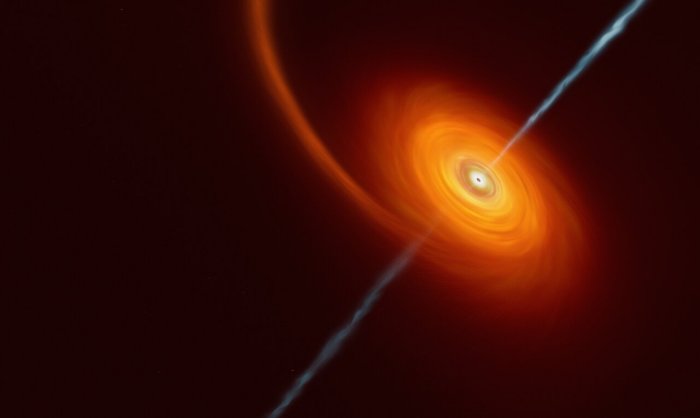
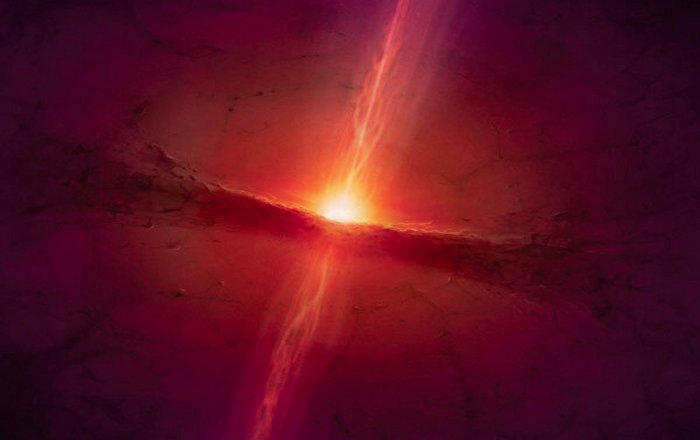
Artist’s impression of a black hole swallowing a star

Most Distant Black Hole Swallowing A Star – Observed

Eddie Gonzales Jr. – MessageToEagle.com – Earlier this year, the European Southern Observatory’s Very Large Telescope (ESO’s VLT) was alerted after an unusual source of visible light had been detected by a survey telescope. The VLT, together with other telescopes, was swiftly repositioned towards the source: a supermassive black hole in a distant galaxy that

Most Distant Black Hole Swallowing A Star – Observed Read More »

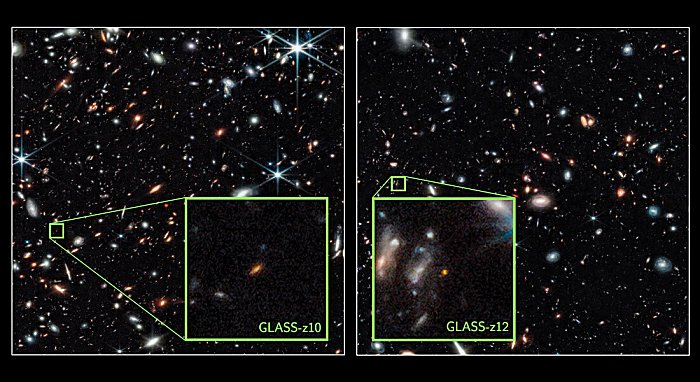
Two regions of the galaxy cluster Abell 2744, the gravity of which magnifies the light from extremely distant background galaxies. The colors are composed of several infrared images, and the large fields are 2 arcminutes across, corresponding to 1/16 of the width of the full moon. The zoom-ins show the galaxies GLASS-z10 and GLASS-z12, where the latter is a candidate for the most distant galaxy ever discovered. Credit: NASA, ESA, CSA, Tommaso Treu (UCLA), Zolt G. Levay (STScI).

Farthest Galaxy Candidate Yet Known Discovered By James Webb Space Telescope

Eddie Gonzales Jr. – MessageToEagle.com – Less than a week after the James Webb Space Telescope was ready for science, the first reports of discoveries of galaxies at record distances and, consequently, at record-early times appeared in preprints. Even more remarkably, these galaxies seem to be so massive that they challenge our understanding of how

Farthest Galaxy Candidate Yet Known Discovered By James Webb Space Telescope Read More »

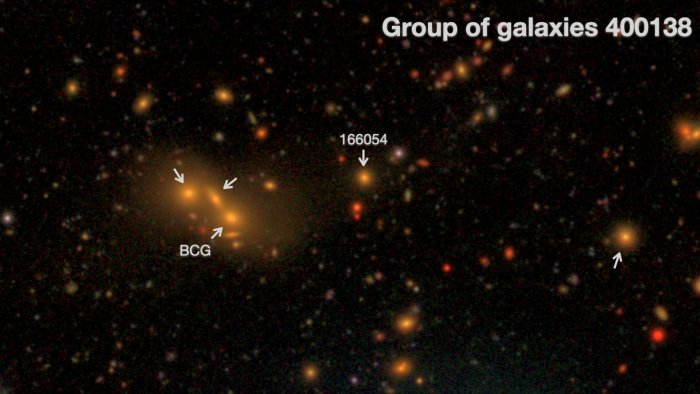
Light 'between' the groups of galaxies – the 'intra-group light' – however dim, is radiated from stars stripped from their home galaxy. Image: Supplied. Credit: Martínez-Lombilla et al./UNSW Sydney

‘Intra-Group Light’ – Elusive Glow Between Distant Galaxies – Observed

Eddie Gonzales Jr. – MessageToEagle.com – An international team of astronomers have turned a new technique onto a group of galaxies and the faint light between them — known as ‘intra-group light’ — to characterise the stars that dwell there. “We know almost nothing about intra-group light,” lead author of the study published in MNRAS,

‘Intra-Group Light’ – Elusive Glow Between Distant Galaxies – Observed Read More »

Credit: W. M. Keck Observatory/Adam Makarenko

Short Gamma-Ray Bursts Traced Farther Into Distant Universe

Eddie Gonzales Jr. – MessageToEagle.com – A Northwestern University-led team of astronomers has developed the most extensive inventory to date of the galaxies where short gamma-ray bursts (SGRBs) originate. Using several highly sensitive instruments and sophisticated galaxy modeling, the researchers pinpointed the galactic homes of 84 SGRBs and probed the characteristics of 69 of the

Short Gamma-Ray Bursts Traced Farther Into Distant Universe Read More »

Credit: Melissa Weiss/Center for Astrophysics | Harvard & Smithsonian

An Exoplanet Atmosphere As Never Seen Before Revealed Thanks To James Webb Space Telescope

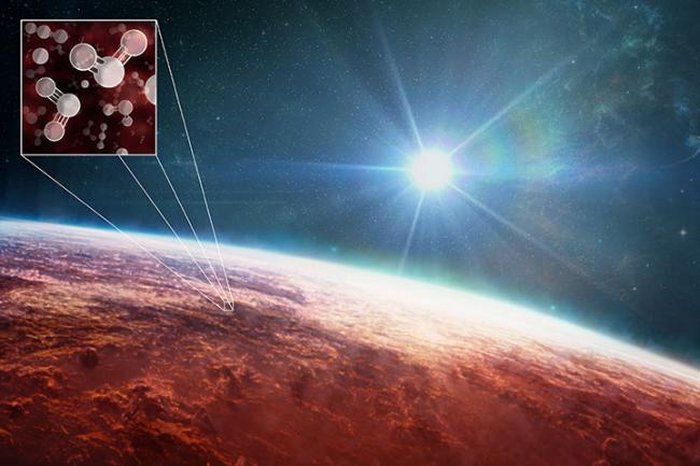
Eddie Gonzales Jr. – MessageToEagle.com – New observations of WASP-39 b reveal a never-before-seen molecule in the atmosphere of a planet — sulfur dioxide — among other details. The telescope’s array of highly sensitive instruments was trained on the atmosphere of a “hot Saturn” — a planet about as massive as Saturn orbiting a star

An Exoplanet Atmosphere As Never Seen Before Revealed Thanks To James Webb Space Telescope Read More »