Astronomy

Astronomy

Our Universe is amazing and full of cosmic mysteries and curious anomalies. Since the dawn of history, humans have gazed at the night sky and wondered what is really out there. Where can we find extraterrestrials? What would alien worlds look like? There is still so much we don’t know about the Universe.

In this section, we take you on a journey to distant worlds and explore the secrets of our universe. You’ll find here the latest astronomy news, remarkable facts about the cosmos and space mysteries scientists are still trying to solve.

Cosmological Enigma of Milky Way’s Satellite Galaxies Solved

Cosmological Enigma of Milky Way’s Satellite Galaxies Solved

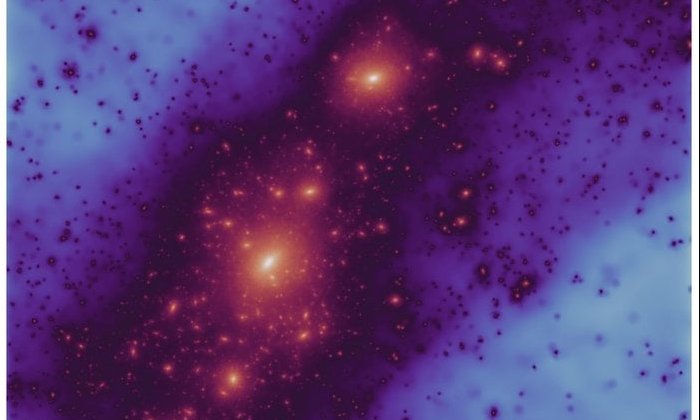
Eddie Gonzales Jr. – MessageToEagle.com – Astronomers say they have solved an outstanding problem that challenged our understanding of how the Universe evolved – the spatial distribution of faint satellite galaxies orbiting the Milky Way. One of the new high-resolution simulations of the dark matter enveloping the Milky Way and its neighbour, the Andromeda galaxy.

Cosmological Enigma of Milky Way’s Satellite Galaxies Solved Read More »

Exotic Clasts In Chang'e-5 Samples Indicate Unexplored Terrane On Moon

Exotic Clasts In Chang’e-5 Samples Indicate Unexplored Terrane On Moon

Eddie Gonzales Jr. – MessageToEagle.com – The Chang’e-5 mission touched down in the Mons Rümker region of the northern Oceanus Procellarum of the Moon and returned 1.731 kg of lunar regolith. Graphical depiction of exotic igneous clasts in Chang’e-5 lunar regolith. Credit: IGCAS Recognizing exotic clasts (i.e., non-Chang’e-5 locally derived materials) in the Chang’e-5 regolith

Exotic Clasts In Chang’e-5 Samples Indicate Unexplored Terrane On Moon Read More »

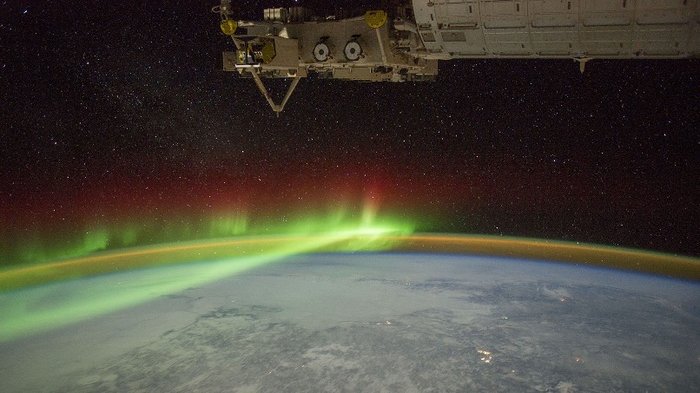
The ionosphere constantly glows and will be the main focus of study for these two satellites. Here, an aurora is captured as seen from the International Space Station. Credit: NASA

SPORT And petitSat CubeSats Will Shed Light On Space Weather Disturbances

Eddie Gonzales Jr. – MessageToEagle.com – Two CubeSats, or small satellites, are on a quest to provide insight on space weather disturbances and the subsequent impact on communication signals. The dynamic duo, the Plasma Enhancements in the Ionosphere-Thermosphere Satellite (petitSat) and Scintillation Prediction Observations Research Task (SPORT), arrived at the International Space Station on Nov. 27,

SPORT And petitSat CubeSats Will Shed Light On Space Weather Disturbances Read More »

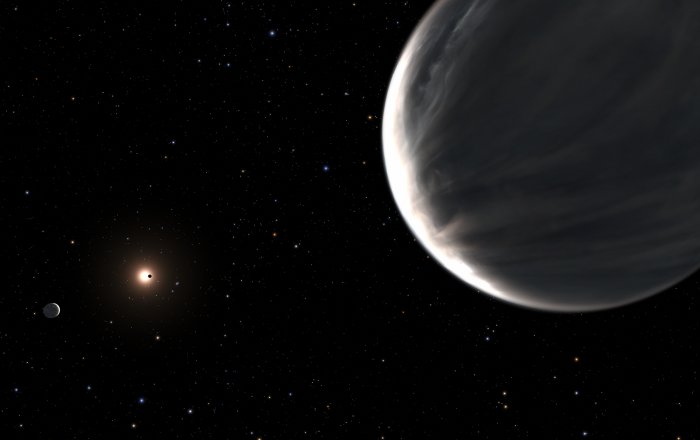
Two Exoplanets May Be Mostly Water, NASA's Hubble and Spitzer Find

Two Exoplanets In The Constellation Lyra May Be Mostly Water, NASA’s Hubble And Spitzer Find

Eddie Gonzales Jr. – MessageToEagle.com – A team led by researchers at the University of Montreal has found evidence that two exoplanets orbiting a red dwarf star are “water worlds,” where water makes up a large fraction of the entire planet. These worlds, located in a planetary system 218 light-years away in the constellation Lyra,

Two Exoplanets In The Constellation Lyra May Be Mostly Water, NASA’s Hubble And Spitzer Find Read More »

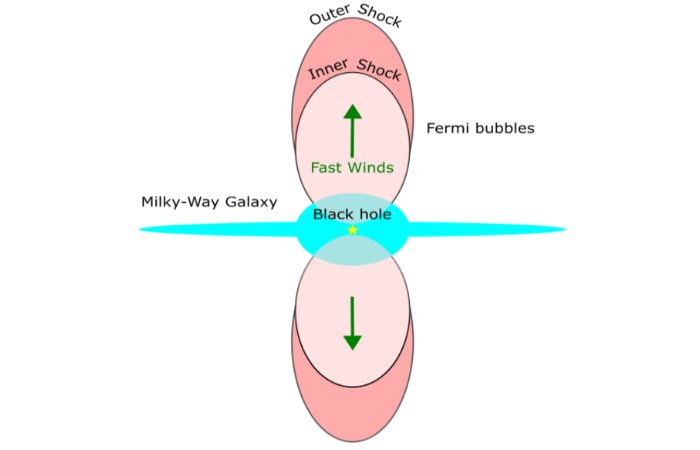
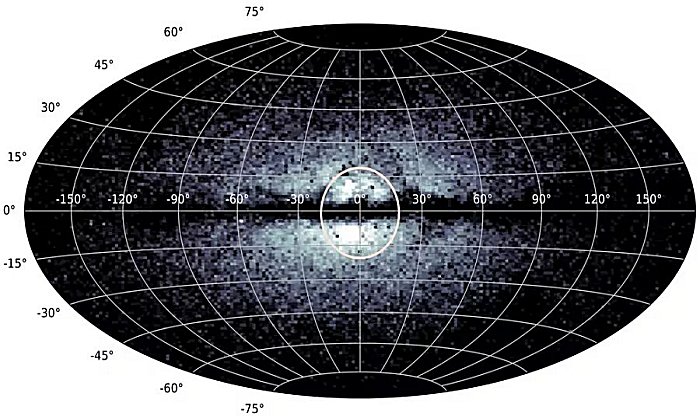
Fast winds flowing out from the Galactic center creates a forward shock and a reverse shock. The latter forms the outline of the Fermi bubbles. Credit: Tokyo Metropolitan University

“Fermi Bubbles”: Mysterious Celestial Phenomenon Around Milky Way Is Yet To Be Deciphered

Eddie Gonzales Jr. – MessageToEagle.com – Evidence shows strong outflowing winds responsible for the “Fermi bubbles”. A scientist from Tokyo Metropolitan University has shown that large gamma-ray emitting bubbles around the center of our Galaxy were produced by fast blowing outward winds and the associated “reverse shock.” Fast winds flowing out from the Galactic center

“Fermi Bubbles”: Mysterious Celestial Phenomenon Around Milky Way Is Yet To Be Deciphered Read More »

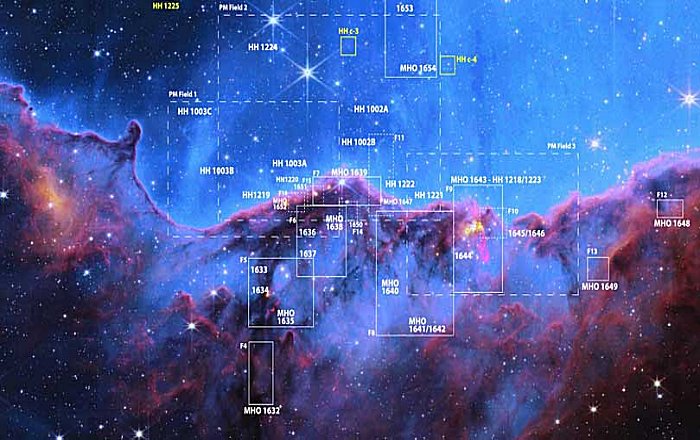
The image shows a star-forming region in the constellation Carina known as the Cosmic Cliffs. Many newborn stars in such regions are shrouded in thick clouds of dust. Webb’s infrared camera penetrated the dust, allowing astronomers to discover telltale signs of two dozen infant stars that hadn’t been previously detected. (Image courtesy of NASA, ESA, CSA and STScI)

Previously Shrouded Newborn Stars – Revealed With NASA’s James Webb Space Telescope

Eddie Gonzales Jr. – MessageToEagle.com – Rice University astronomer Megan Reiter and colleagues took a “deep dive” into one of the first images from NASA’s James Webb Space Telescope and were rewarded with the discovery of telltale signs from two dozen previously unseen young stars about 7,500 light years from Earth. The image shows a

Previously Shrouded Newborn Stars – Revealed With NASA’s James Webb Space Telescope Read More »

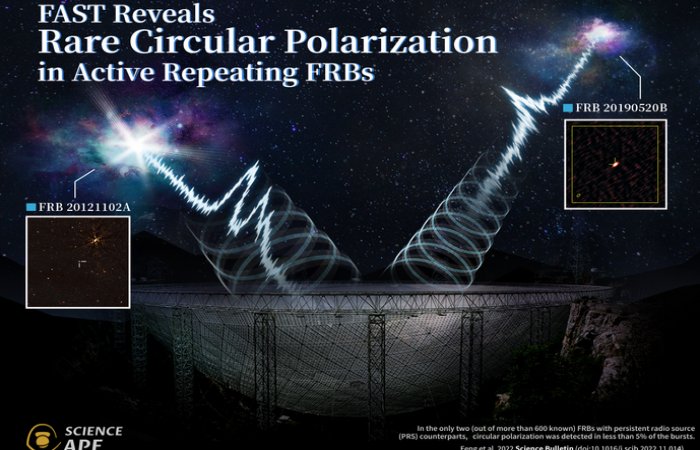
The artist impression of FAST detected the circular polarization from two active repeating FRBs with PRSs. Credit: ScienceApe and LI Di

Circular Polarization In Two Active Repeating Fast Radio Bursts – Revealed By FAST Observations

Eddie Gonzales Jr. – MessageToEagle.com – A research team led by Prof. LI Di from the National Astronomical Observatories of the Chinese Academy of Sciences (NAOC) has revealed circular polarization in active repeating fast radio bursts based on precise observations of the Five-hundred-meter Aperture Spherical Telescope (FAST). The artist impression of FAST detected the circular

Circular Polarization In Two Active Repeating Fast Radio Bursts – Revealed By FAST Observations Read More »