Astronomy

Astronomy

Our Universe is amazing and full of cosmic mysteries and curious anomalies. Since the dawn of history, humans have gazed at the night sky and wondered what is really out there. Where can we find extraterrestrials? What would alien worlds look like? There is still so much we don’t know about the Universe.

In this section, we take you on a journey to distant worlds and explore the secrets of our universe. You’ll find here the latest astronomy news, remarkable facts about the cosmos and space mysteries scientists are still trying to solve.

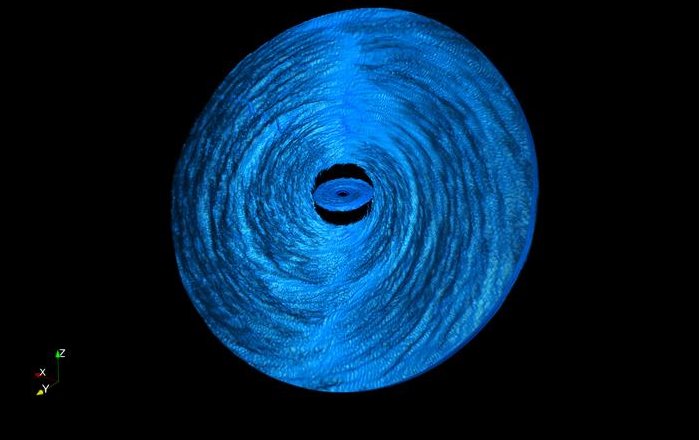
Why Quasars Flare And Fade So Quickly? New Study Explains

Why Quasars Flare And Fade So Quickly? New Study Explains

Eddie Gonzales Jr. – MessageToEagle.com – A new Northwestern University-led study is changing how astrophysicists understand supermassive black holes’ eating habits. A new study shows that, by dragging space-time, supermassive black holes can rip apart the violent whirlpool of debris (or accretion disks) that encircle them, resulting in an inner and outer subdisk. Image credit:

Why Quasars Flare And Fade So Quickly? New Study Explains Read More »
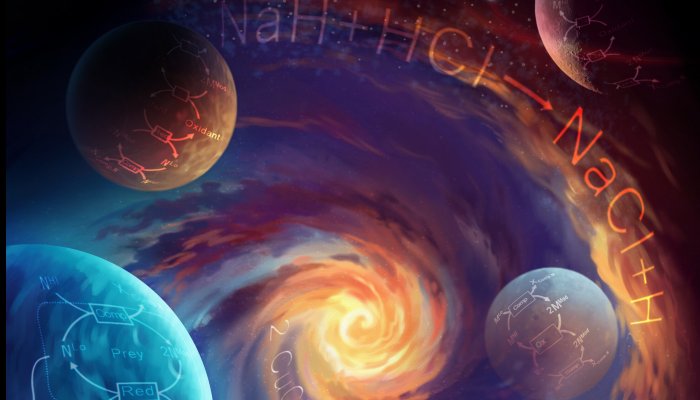
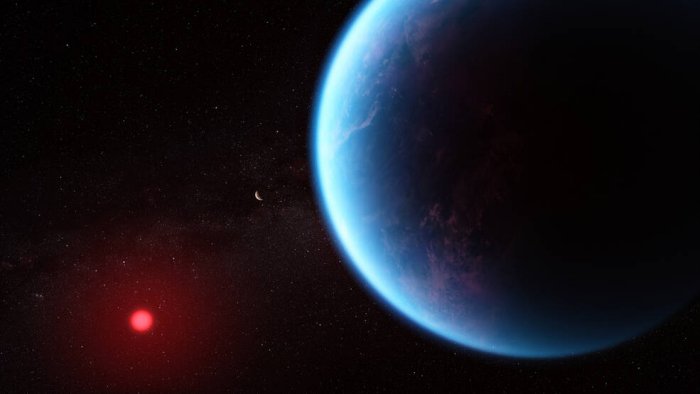
Webb Discovers Methane, Carbon Dioxide In Atmosphere Of K2-18 b

Webb Discovers Methane, Carbon Dioxide In Atmosphere Of K2-18 b

Eddie Gonzales Jr. – MessageToEagle.com – A new investigation with NASA’s James Webb Space Telescope into K2-18 b, an exoplanet 8.6 times as massive as Earth, has revealed the presence of carbon-bearing molecules including methane and carbon dioxide. This artist’s concept shows what exoplanet K2-18 b could look like based on science data. K2-18 b,

Webb Discovers Methane, Carbon Dioxide In Atmosphere Of K2-18 b Read More »

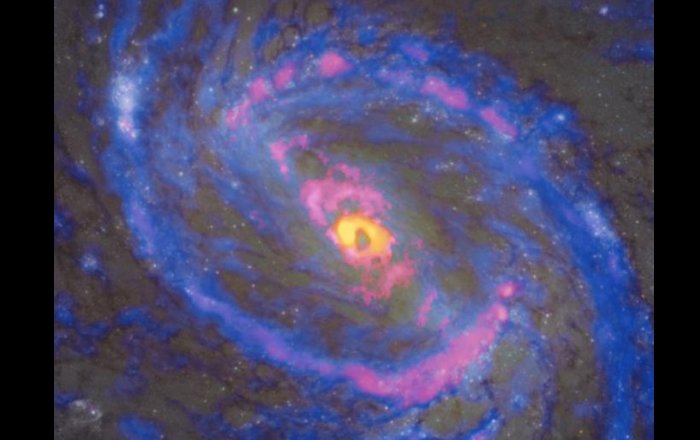
Spiral Galaxy Messier 77 (NGC 1068) As Seen By ALMA And The Hubble Space Telescope

Spiral Galaxy Messier 77 (NGC 1068) As Seen By ALMA And The Hubble Space Telescope

Eddie Gonzales Jr. – MessageToEagle.com – New research shows that the supermassive black hole at the center of a galaxy can have a direct impact on the chemical distribution of the host galaxy. This provides another piece of the puzzle for understanding how galaxies evolve. Hydrogen cyanide isotopes (H13CN), shown in yellow, are found only

Spiral Galaxy Messier 77 (NGC 1068) As Seen By ALMA And The Hubble Space Telescope Read More »

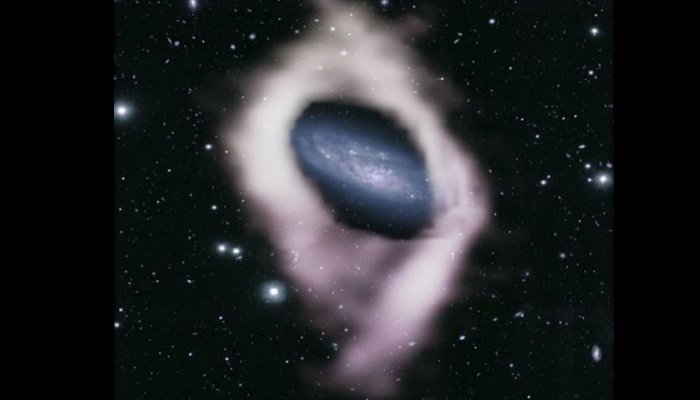
Two Rare Polar Ring Galaxies Discovered Astronomers From Queen's University

Two Rare Polar Ring Galaxies Discovered By ASKAP Radio Telescope

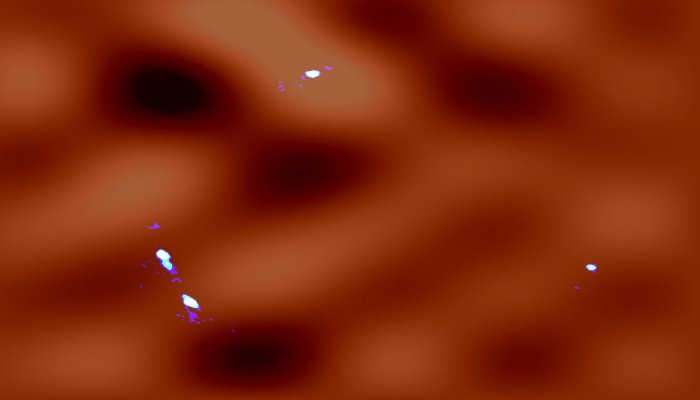
Eddie Gonzales Jr. – MessageToEagle.com – A group of international astronomers, including researchers from Queen’s University, has identified two potential polar ring galaxies, according to results published today in the Monthly Notices of the Royal Astronomical Society. Potential polar ring galaxy NGC 4632. The picture shows a gaseous ring perpendicularly circulating the main spiral disk

Two Rare Polar Ring Galaxies Discovered By ASKAP Radio Telescope Read More »

The Hyades Star Cluster And Existence Of The Closest Black Holes To Earth  - Study

The Hyades Star Cluster And Existence Of The Closest Black Holes To Earth  – Study

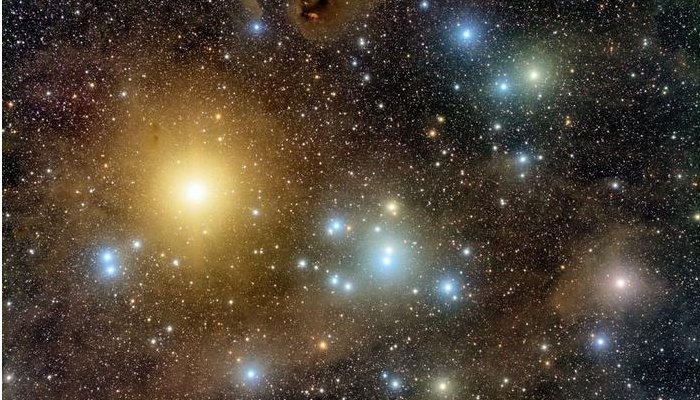
Eddie Gonzales Jr. – MessageToEagle.com – A new paper focuses on the existence of several black holes in the Hyades cluster. The Hyades is the closest open cluster to our solar system, and it makes them the closest black holes to Earth ever detected. Image of the Hyades star cluster. Image credit: Jose Mtanous –

The Hyades Star Cluster And Existence Of The Closest Black Holes To Earth  – Study Read More »

Two Of  The Longest-Period Exoplanets Known As Warm Jupiters - Detected By TESS 

Two Of  The Longest-Period Exoplanets Known As Warm Jupiters – Detected By TESS 

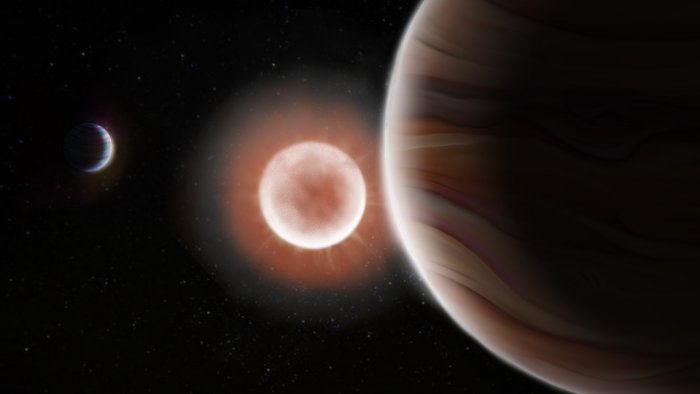
Eddie Gonzales Jr. – MessageToEagle.com – Scientists from The University of New Mexico (UNM), and Massachusetts Institute of Technology (MIT) have detected and validated two of the longest-period exoplanets found by TESS to date. Astronomers have discovered a unique system around a star, TOI-4600, containing two long-period planets. This artist’s rendition shows the two planets

Two Of  The Longest-Period Exoplanets Known As Warm Jupiters – Detected By TESS  Read More »

Hunting For Supermassive Black Holes In The Early Universe

Hunting For Supermassive Black Holes In The Early Universe

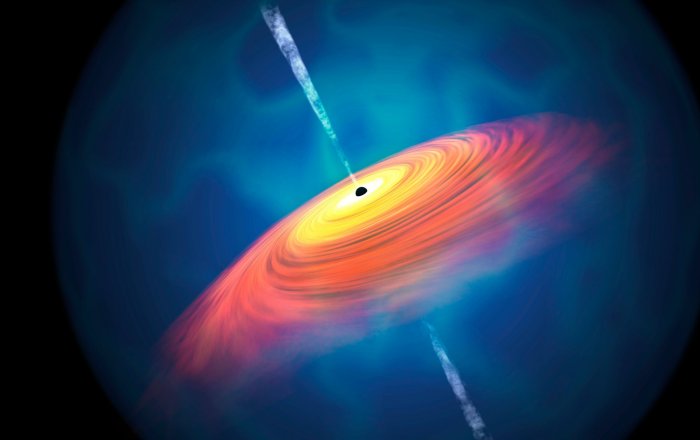
Eddie Gonzales Jr. – MessageToEagle.com – Supermassive black holes (SMBHs)—black holes with masses exceeding a million times that of the sun—are known to prevail in the universe today. A supermassive black hole (SMBH; the small black dot at the center) absorbs surrounding material, which forms a spiral disk-like shape as it flows in. The gravitational energy

Hunting For Supermassive Black Holes In The Early Universe Read More »