Astronomy

Astronomy

Our Universe is amazing and full of cosmic mysteries and curious anomalies. Since the dawn of history, humans have gazed at the night sky and wondered what is really out there. Where can we find extraterrestrials? What would alien worlds look like? There is still so much we don’t know about the Universe.

In this section, we take you on a journey to distant worlds and explore the secrets of our universe. You’ll find here the latest astronomy news, remarkable facts about the cosmos and space mysteries scientists are still trying to solve.

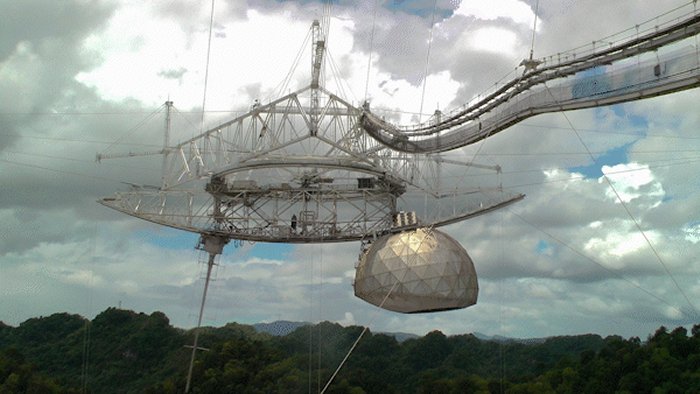
Receiver of the Arecibo Telescope, Puerto Rico. FRB data was provided by the Five-hundred-meter Aperture Spherical Telescope (FAST) in China and the Arecibo Telescope in Puerto Rico, two of the largest single-dish telescopes in the world. Unfortunately, the Arecibo Telescope was damaged and subsequently decommissioned in 2020.

Astronomical Mystery – ‘Starquakes’ Could Explain Mystery Signals

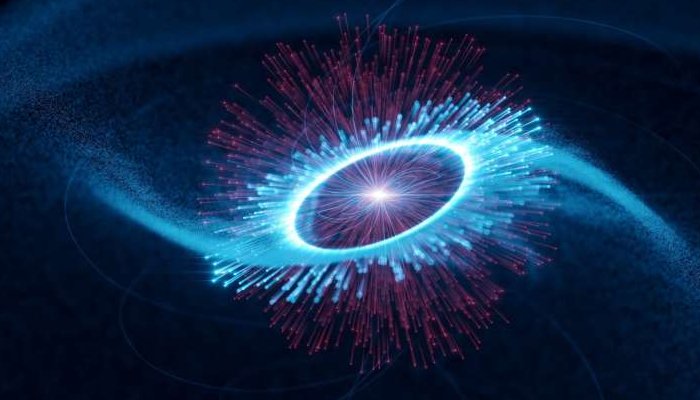
Eddie Gonzales Jr. – MessageToEagle.com – Fast radio bursts, or FRBs, are an astronomical mystery, with their exact cause and origins still unconfirmed. These intense bursts of radio energy are invisible to the human eye, but show up brightly on radio telescopes. Receiver of the Arecibo Telescope, Puerto Rico. FRB data was provided by the Five-hundred-meter Aperture

Astronomical Mystery – ‘Starquakes’ Could Explain Mystery Signals Read More »
Heat Glow Of Two Colliding Ice Giant Planets Seen By Astronomers For The First Time

Heat Glow Of Two Colliding Ice Giant Planets Seen By Astronomers For The First Time

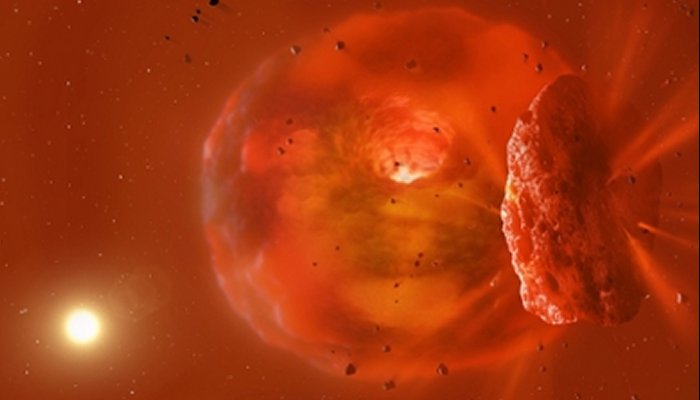
Eddie Gonzales Jr. – MessageToEagle.com – For the first time, an international group of astronomers have seen the heat glow of two ice giant planets colliding. They could also observe the resultant dust cloud move in front of the parent star several years later. Led by Leiden astronomer Matthew Kenworthy, they monitored the star’s brightness

Heat Glow Of Two Colliding Ice Giant Planets Seen By Astronomers For The First Time Read More »

Only Hubble Could Pinpoint This Bizarre Explosion In Unexpected Place  

Only Hubble Could Pinpoint This Bizarre Explosion In Unexpected Place  

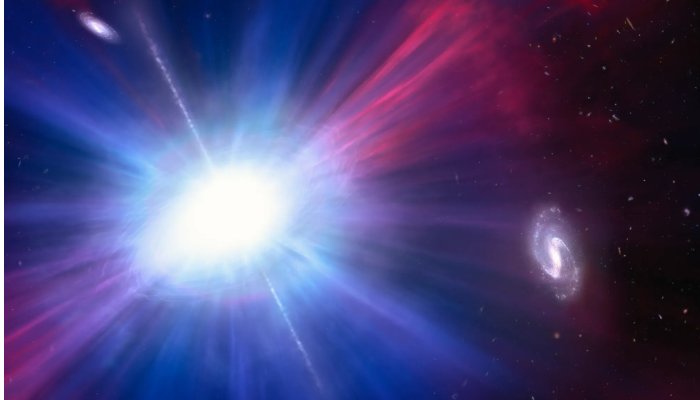
Eddie Gonzales Jr. – MessageToEagle.com – A very rare, strange burst of extraordinarily bright light in the universe just got even stranger – thanks to the eagle-eye of NASA’s Hubble Space Telescope. This is an artist’s concept of one of brightest explosions ever seen in space. Called a Luminous Fast Blue Optical Transient (LFBOT), it

Only Hubble Could Pinpoint This Bizarre Explosion In Unexpected Place   Read More »

Lava Worlds: How Magma Oceans May Affect The Evolution Of Hot Exoplanets

Lava Worlds: How Magma Oceans May Affect The Evolution Of Hot Exoplanets

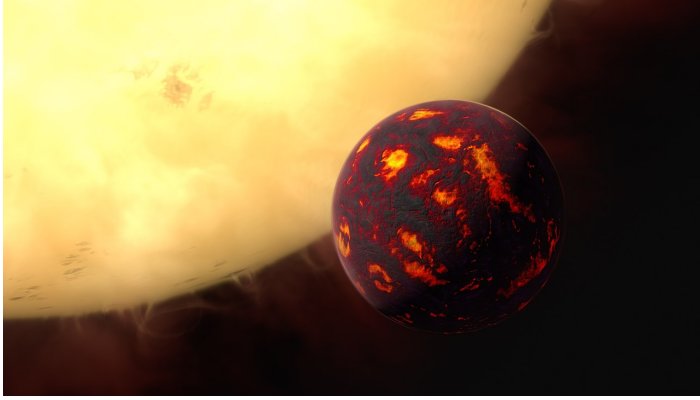
Eddie Gonzales Jr. – MessageToEagle.com – Lava worlds, massive exoplanets home to sparkling skies and roiling volcanic seas called magma oceans, are distinctly unlike the planets in our solar system. This artist’s impression shows the super-Earth 55 Cancri e in front of its parent star. Using observations made with the NASA/ESA Hubble Space Telescope and

Lava Worlds: How Magma Oceans May Affect The Evolution Of Hot Exoplanets Read More »

Explosion 20,000 Years Ago - Star 's Remnants Still Running Into Space With Tremendous Speed

Explosion 20,000 Years Ago – Star ‘s Remnants Still Running Into Space With Tremendous Speed

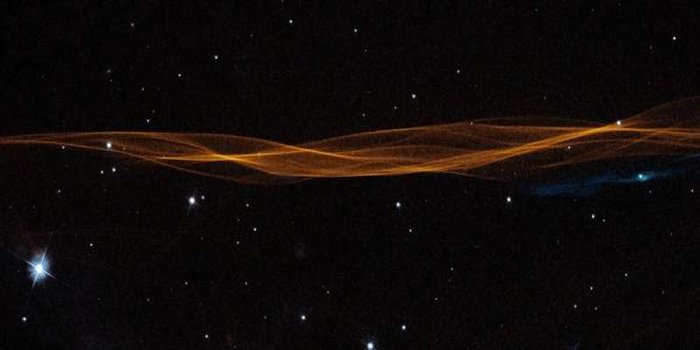
Eddie Gonzales Jr. – MessageToEagle.com – Though a doomed star exploded some 20,000 years ago, its tattered remnants continue racing into space at breakneck speeds—and NASA’s Hubble Space Telescope has caught the action. Credit: NASA, ESA, Ravi Sankrit (STScI) The nebula, called the Cygnus Loop, forms a bubble-like shape that is about 120 light-years in

Explosion 20,000 Years Ago – Star ‘s Remnants Still Running Into Space With Tremendous Speed Read More »

Extreme Pre-Explosion Mass Loss Before Going Supernova - Evidence

Extreme Pre-Explosion Mass Loss Before Going Supernova – Evidence

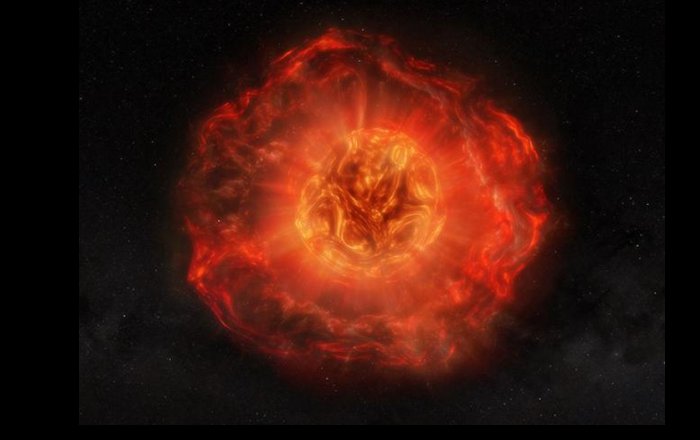
Eddie Gonzales Jr. – MessageToEagle.com – Evidence of extreme pre-explosion mass loss in a recently discovered supernova indicates there may be more going on in the last year of a star’s life than previously thought. Image credit: Melissa Weiss/CfA A newly discovered nearby supernova whose star ejected up to a full solar mass of material in

Extreme Pre-Explosion Mass Loss Before Going Supernova – Evidence Read More »

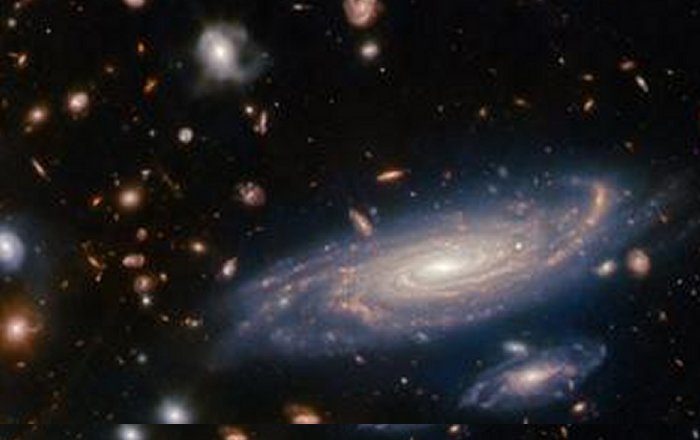
The big galaxy in the foreground is named LEDA 2046648, and is seen just over a billion years back in time, while most of the others lie even farther away, and hence are seen even further back in time. ESA/Webb, NASA & CSA, A. Martel.

Astronomers And James Webb Telescope Observe Creation Of The First “Unpolluted” Galaxies

Eddie Gonzales Jr. – MessageToEagle.com – Using JWST, astronomers can now peer back in time and approach the epoch when the first galaxies were probably created. The James Webb Space Telescope (JWST) is a space telescope specifically designed to conduct infrared astronomy. It is a field of study in astronomy that specializes in observing and analyzing astronomical objects using infrared (IR) radiation.

Astronomers And James Webb Telescope Observe Creation Of The First “Unpolluted” Galaxies Read More »