Astronomy

Astronomy

Our Universe is amazing and full of cosmic mysteries and curious anomalies. Since the dawn of history, humans have gazed at the night sky and wondered what is really out there. Where can we find extraterrestrials? What would alien worlds look like? There is still so much we don’t know about the Universe.

In this section, we take you on a journey to distant worlds and explore the secrets of our universe. You’ll find here the latest astronomy news, remarkable facts about the cosmos and space mysteries scientists are still trying to solve.

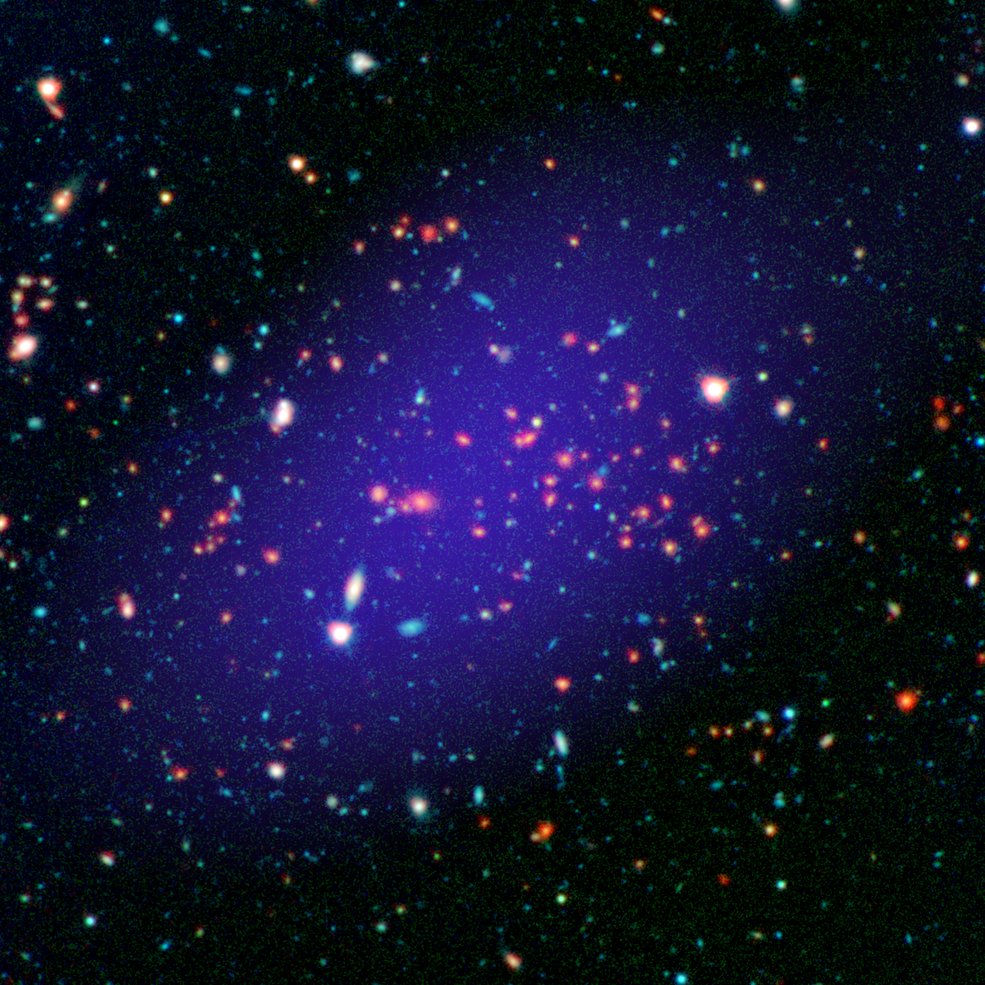
The galaxy cluster called MOO J1142+1527 can be seen here as it existed when light left it 8.5 billion years ago. The red galaxies at the center of the image make up the heart of the galaxy cluster. Credits: NASA/JPL-Caltech/Gemini/CARMA

NASA’s Spitzer And WISE Telescopes Helped To Spot Massive Remote Galaxy Cluster

MessageToEagle.com – Using NASA’s Spitzer Space Telescope and WISE (Wide-field Infrared Survey Explorer), astronomers have spotted a giant gathering of galaxies in a very remote part of the universe. The galaxy cluster, located 8.5 billion light-years away, is the most massive structure yet found at such great distances. Galaxy clusters are gravitationally bound groups of thousands of galaxies, which themselves

NASA’s Spitzer And WISE Telescopes Helped To Spot Massive Remote Galaxy Cluster Read More »
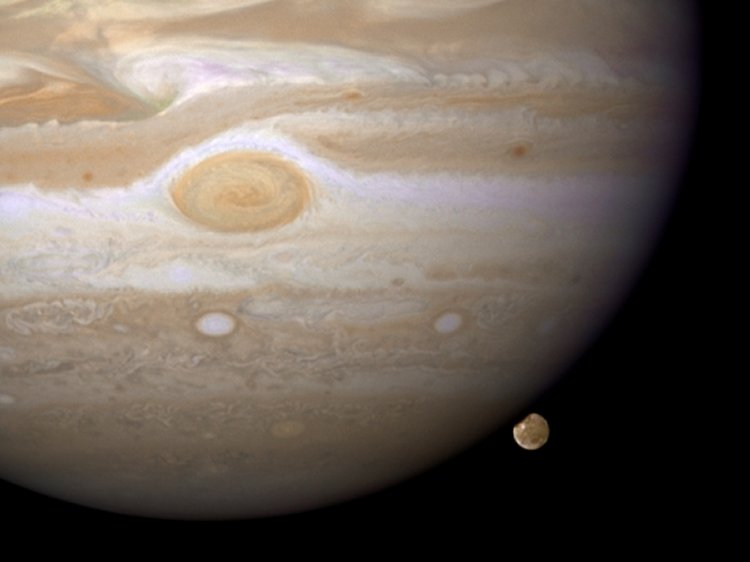
A new study conducted by University of Toronto researchers suggests that a potential fifth gas planet existed in the Solar System during its formation. Computer simulations, however, reveal that the gas planet may have been ejected from the system as a result of gravitational activity from Jupiter. Photo credits: NASA Goddard Space Flight Center

Could Jupiter Or Saturn Have Ejected A Fifth Giant Planet Out Of The Solar System 4 Billion Years Ago?

MessageToEagle.com – Astrophysicists at the University of Toronto have found that a close encounter with Jupiter about four billion years ago may have resulted in another planet’s ejection from the Solar System altogether. The existence of a fifth giant gas planet at the time of the Solar System’s formation – in addition to Jupiter, Saturn,

Could Jupiter Or Saturn Have Ejected A Fifth Giant Planet Out Of The Solar System 4 Billion Years Ago? Read More »

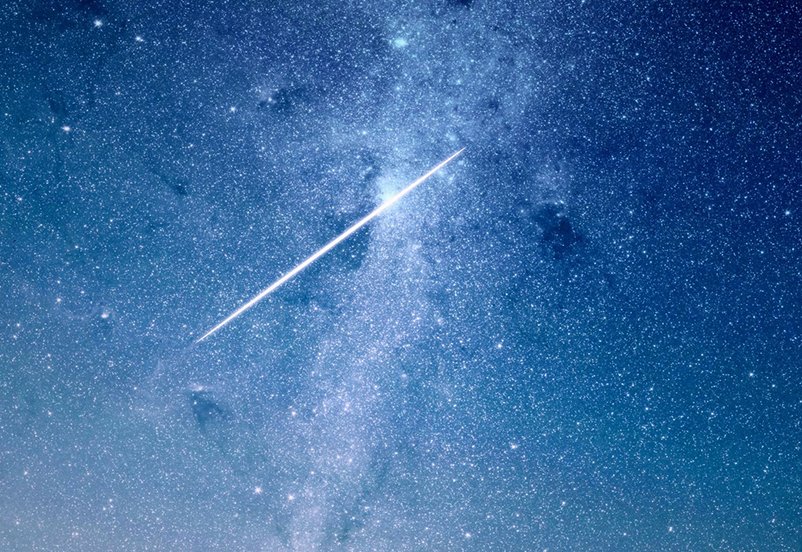
The Taurids is a long-running minor meteor shower producing only about 5-10 meteors per hour. Credit: Astronomy Live

Watch The skies! – Great Balls Of Fire -Taurid Meteor Shower In November

MessageToEagle.com – If you see fireballs streaking across the night sky this week, don’t panic: It’s just the annual visit from the Taurid meteor shower. “The Taurids are not known for their high numbers, rather they are known more for the fireballs they produce,” the American Meteor Society said in a statement. Fireballs are just extremely

Watch The skies! – Great Balls Of Fire -Taurid Meteor Shower In November Read More »

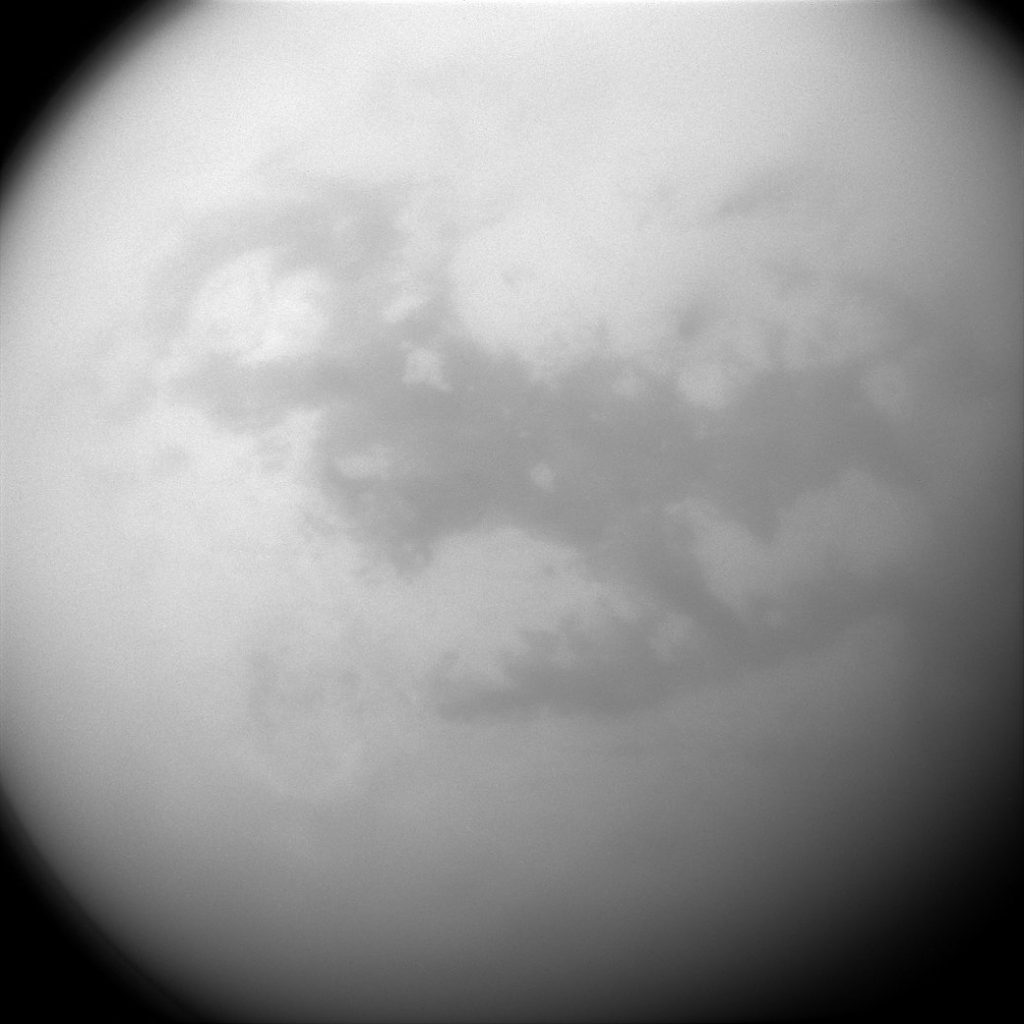
NASA's Cassini Spacecraft delivers - a new image showing Titan's hydrocarbon sand dunes. Photo by NASA/JPL-Caltech/Space Science Institute

Dunelands Of Titan – NASA’s Cassini Spacecraft Delivers A New Image

MessageToEagle.com – Saturn’s frigid moon Titan has some characteristics that are oddly similar to Earth, but still slightly alien. It has clouds, rain and lakes (made of methane and ethane), a solid surface (made of water ice), and vast dune fields (filled with hydrocarbon sands). The dark, H-shaped area seen here contains two of the dune-filled

Dunelands Of Titan – NASA’s Cassini Spacecraft Delivers A New Image Read More »

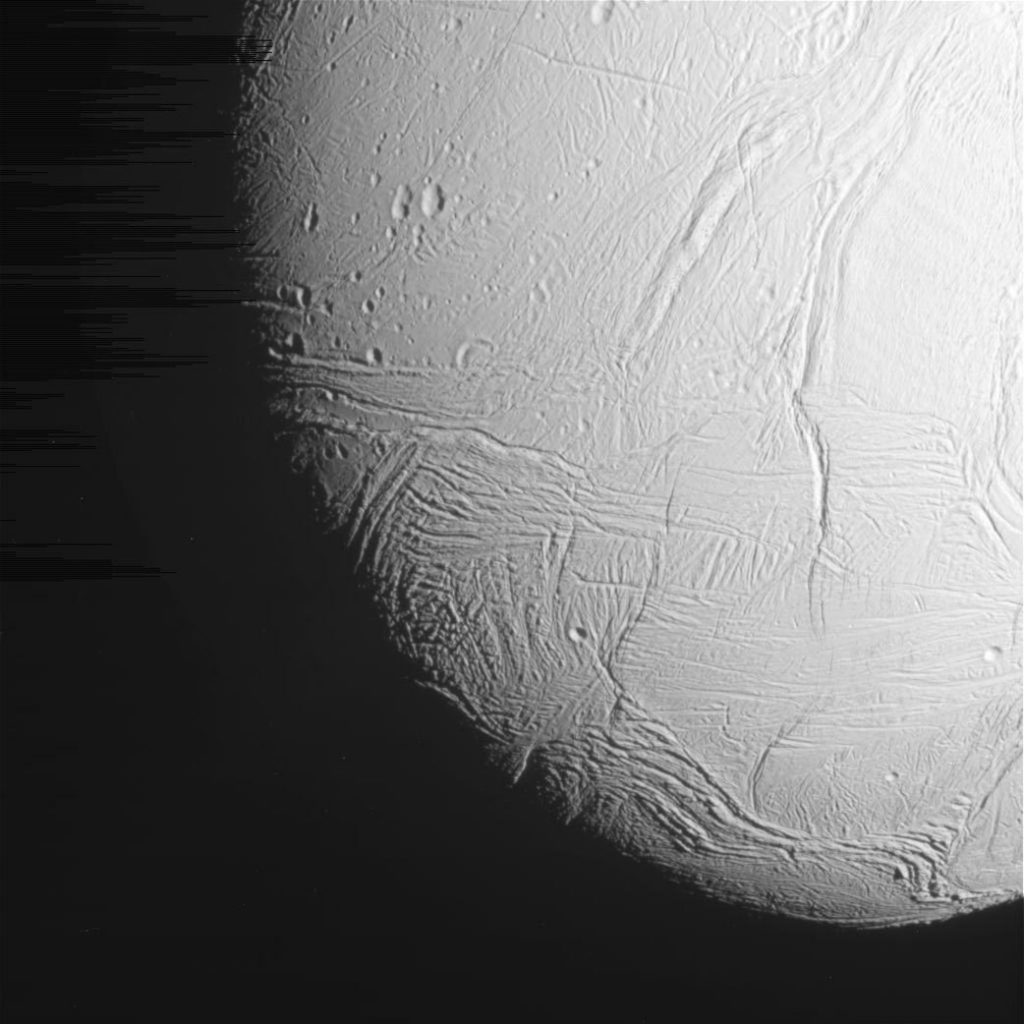
The south polar region of Saturn's active, icy moon Enceladus awaits NASA's Cassini spacecraft in this view, acquired on approach to the mission's deepest-ever dive through the moon's plume of icy spray. Credits: NASA/JPL-Caltech/Space Science Institute

NASA’s Cassini Spacecraft Has Begun Transmitting Latest Images Of Saturn’s Icy Moon – Enceladus

MessageToEagle.com – NASA’s Cassini spacecraft has begun transmitting its latest images of Saturn’s icy, geologically active moon Enceladus, acquired during the dramatic Oct. 28 flyby in which the probe passed about 30 miles (49 kilometers) above the moon’s south polar region. The spacecraft will continue transmitting its data from the encounter for the next several days.

NASA’s Cassini Spacecraft Has Begun Transmitting Latest Images Of Saturn’s Icy Moon – Enceladus Read More »

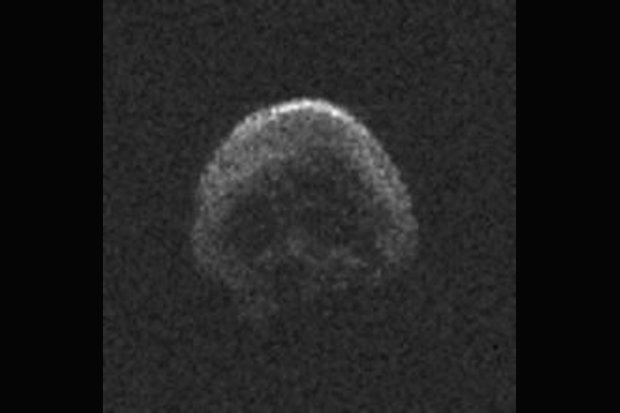
Great Pumkin asteroid

The “Great Pumpkin” Is Coming – Spooky Skull-Like Asteroid Will Fly By Just In Time For Halloween!

MessageToEagle.com – Something strange will appear in the skies this Halloween, and it’s not a witch on a broomstick. NASA says an asteroid dubbed the “great pumpkin” will fly by Earth on Oct. 31 at 1:01 p.m. E.T. What is unusual about this particular asteroid is that it resembles  a skull, it’s scary. NASA scientists are

The “Great Pumpkin” Is Coming – Spooky Skull-Like Asteroid Will Fly By Just In Time For Halloween! Read More »

Exoplanets

20 Most Intriguing Exoplanets Selected By Astronomers – A Journey To Alien Worlds

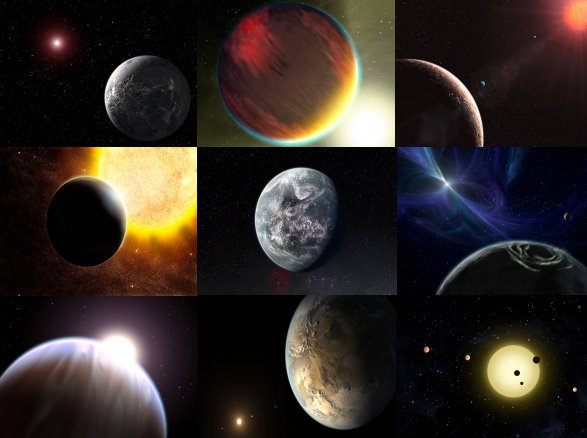
MessageToEagle.com – In celebration of the 20th anniversary of the first confirmed planet around a sun-like star, more than 60 leaders in the field of exoplanet observations chose their favorites among the nearly 2,000 known exoplanets. Some of the exoplanets are rocky, some are gaseous, and some are very, very odd. But there’s one thing each

20 Most Intriguing Exoplanets Selected By Astronomers – A Journey To Alien Worlds Read More »

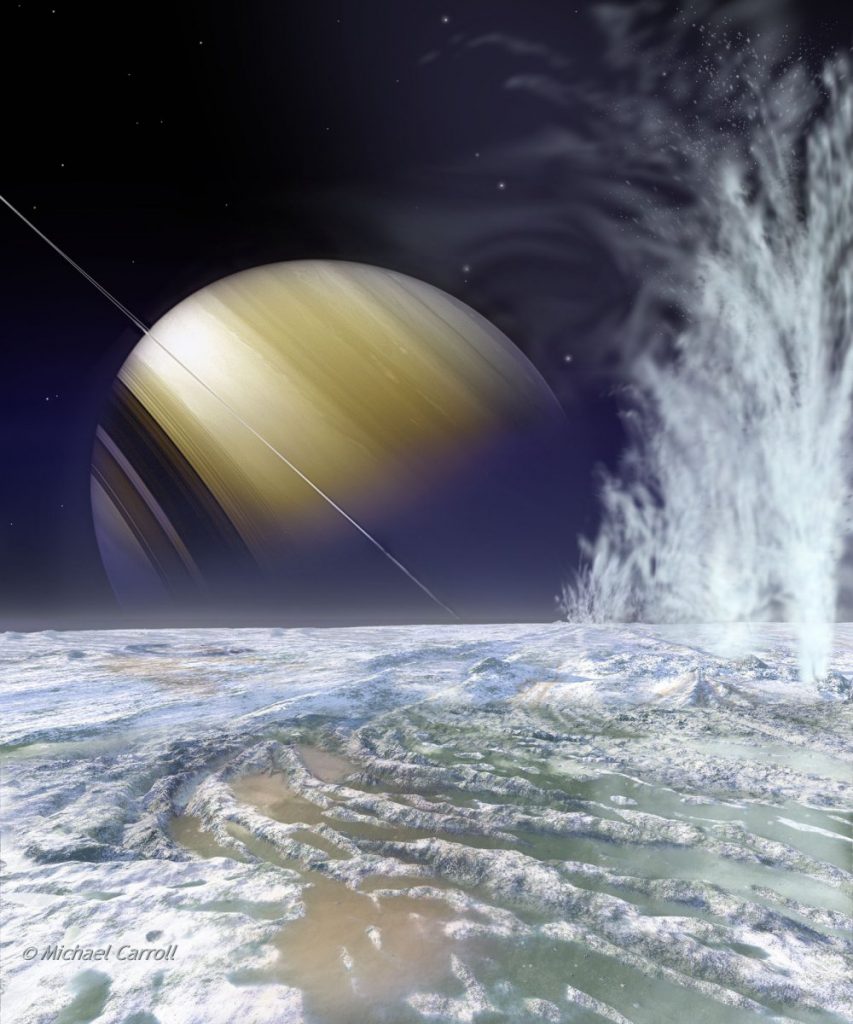
Enceladus Ice Volcanos Illustration Credit & Copyright: Michael Carrolleladus Ice Volcanos Illustration Credit & Copyright: Michael Carroll

Wednesday Oct. 28, 2015 – NASA’s Cassini Spacecraft Samples An Extraterrestrial Ocean Of Enceladus

MessageToEagle.com – On Oct. 28, 2015, NASA’s Cassini spacecraft will take the deepest dive ever through the plume of Saturn’s moon Enceladus. when it flies through the moon’s plume of icy spray. Scientists hope this close flyby through the moon’s plume of icy spray, will shed light on what’s happening beneath the moon’s icy surface.

Wednesday Oct. 28, 2015 – NASA’s Cassini Spacecraft Samples An Extraterrestrial Ocean Of Enceladus Read More »