Astronomy

Astronomy

Our Universe is amazing and full of cosmic mysteries and curious anomalies. Since the dawn of history, humans have gazed at the night sky and wondered what is really out there. Where can we find extraterrestrials? What would alien worlds look like? There is still so much we don’t know about the Universe.

In this section, we take you on a journey to distant worlds and explore the secrets of our universe. You’ll find here the latest astronomy news, remarkable facts about the cosmos and space mysteries scientists are still trying to solve.

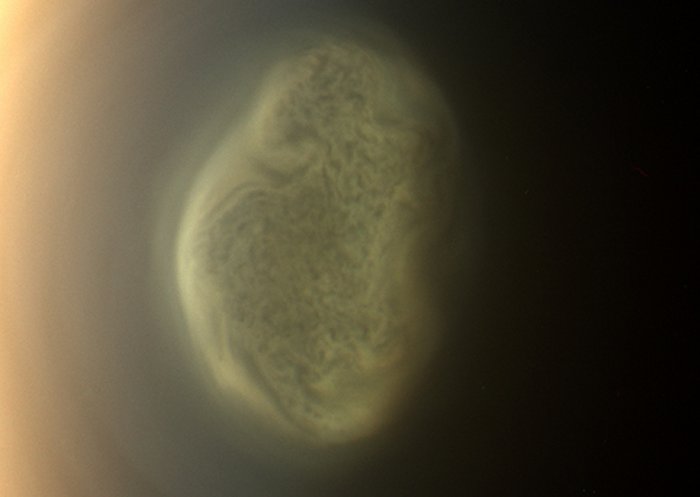
This 2012 close-up offers an early snapshot of the changes taking place at Titan’s south pole. Cassini’s camera spotted this impressive cloud hovering at an altitude of about 186 miles (300 kilometers). Cassini’s thermal infrared instrument has now detected a massive ice cloud below it. Credits: NASA/JPL-Caltech/Space Science Institute

Monstrous Ice Cloud Clearly Seen In Titan’s South Polar Region

MessageToEagle.com – An impressive cloud hovering over Titan’s south pole at an altitude of about 186 miles (300 kilometers) was first seen when Cassini’ camera imaged it in 2012. Now, a much more massive ice cloud system has been found lower in the stratosphere, peaking at an altitude of about 124 miles (200 kilometers). Scientists have

Monstrous Ice Cloud Clearly Seen In Titan’s South Polar Region Read More »
Rosetta video

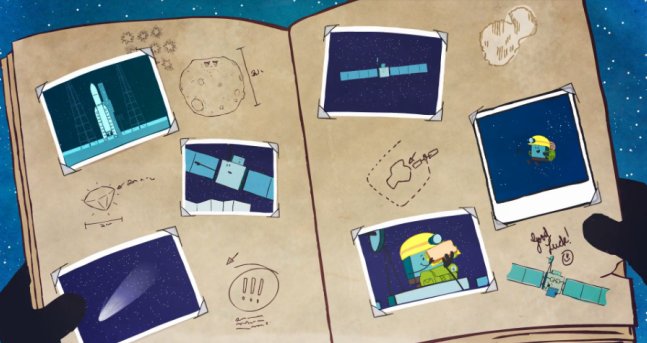
Adorable Animation Video Showing How Rosetta And Philae Investigate A Comet

MessageToEagle.com – This adorable and informative animation video shows how Rosetta and Philae are investigating a comet. It’s a must see! Rosetta tells us what she’s learned in her first year studying Comet 67P/Churyumov-Gerasimenko, and Philae wakes up from hibernation. Rosetta was launched in 2004 and arrived at Comet 67P/Churyumov-Gerasimenko on 6 August 2014. It is the

Adorable Animation Video Showing How Rosetta And Philae Investigate A Comet Read More »

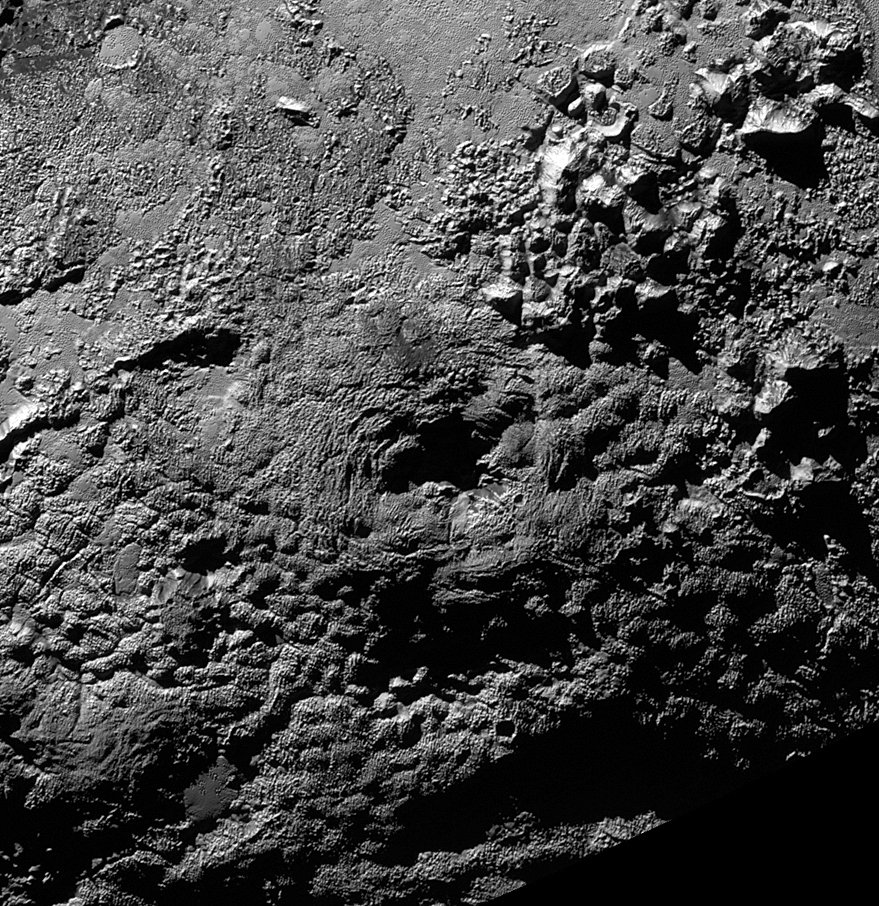
A possible ice volcano on Pluto (visible at center) is seen in this NASA image, captured by the New Horizons spacecraft, released on Nov. 9, 2015. The feature, called Wright Mons, is a strange feature 100 miles wide and 13,000 feet high with a summit depression at its center. New Horizons scientists suspect Wright Mons and another mountain may be signs of cryovolcanic eruptions on Pluto. Credit: NASA/Johns Hopkins University Applied Physics Laboratory/Southwest Research Institute

New Horizons Discovers Possible Ice Volcanoes On Pluto

MessageToEagle.com – From possible ice volcanoes to twirling moons, NASA’s New Horizons science team is discussing more than 50 exciting discoveries about Pluto at this week’s 47th Annual Meeting of the American Astronomical Society’s Division for Planetary Sciences in National Harbor, Maryland. “The New Horizons mission has taken what we thought we knew about Pluto and

New Horizons Discovers Possible Ice Volcanoes On Pluto Read More »

Carl Sagan

Tribute To Carl Sagan – One Of The Greatest Scientists To Have Ever Walked The Earth

MessageToEagle.com – This article is written in memory of one of the greatest minds ever – Carl Sagan. Today is namely the 81st birthday of Carl Sagan (1934-96), and there is no doubt that this great man holds a special place in the heart of anyone who is truly interested in the many wonders and

Tribute To Carl Sagan – One Of The Greatest Scientists To Have Ever Walked The Earth Read More »

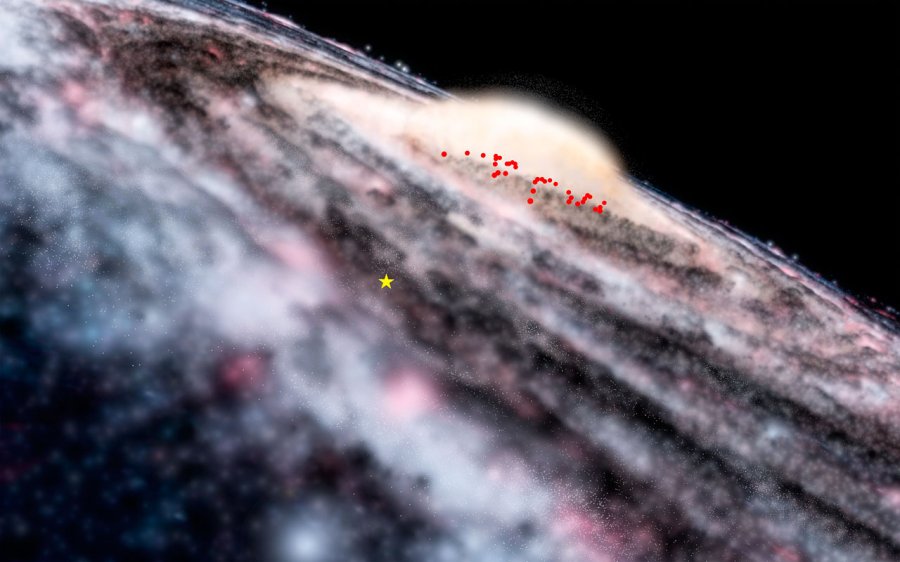
This diagram shows the locations of the newly discovered Cepheids in an artist’s rendering of the Milky Way. The yellow star indicates the position of the Sun.

Unique Cepheids Helped Astronomers To Discover Hidden Feature Of Milky Way

MessageToEagle.com – Astronomers using the VISTA telescope at ESO’s Paranal Observatory have discovered a previously unknown component of the Milky Way. A thin disc of young stars buried behind thick dust clouds in the central bulge has been found, when astronomers mapped out the locations of a class of stars that vary in brightness called Cepheids.

Unique Cepheids Helped Astronomers To Discover Hidden Feature Of Milky Way Read More »

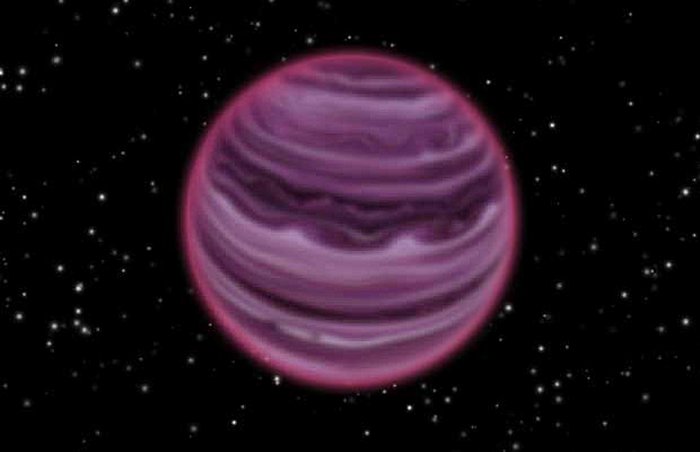
An extrasolar object 75 light-years away that does not appear to have a host star. This is an artist’s impression. Image credit: MPIA/V.Ch.Quetz.

Weather Map Of Distant Planet-Like Object With Clouds Of Hot Dust And Droplets Of Molten Iron

MessageToEagle.com – Weather patterns in a mysterious world beyond our solar system have been revealed for the first time, according to a  study conducted by a team of astronomers led by the University of Edinburgh. Layers of clouds, made up of hot dust and droplets of molten iron, have been detected on a planet-like object found 75

Weather Map Of Distant Planet-Like Object With Clouds Of Hot Dust And Droplets Of Molten Iron Read More »

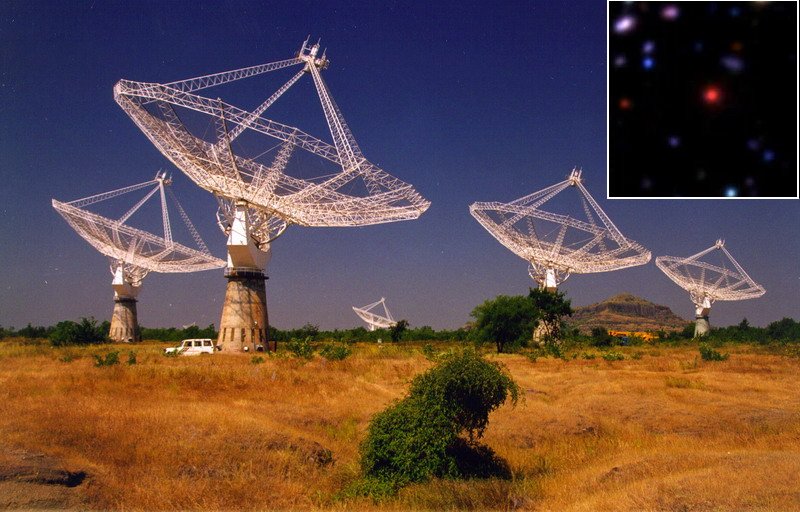
Extremely Rare Gigantic Radio Galaxy Extending 4 Million Light Years Is Dying Out There In The Distant Universe

MessageToEagle.com – Giant radio galaxies (GRGs) are the largest structures associated with single galaxies. However, they are very rare. About one galaxy in a million is a radio galaxy! Now, an extremely rare galaxy of gigantic size – located about 9 billion light years away towards the constellation Cetus – has been discovered by a team of

Extremely Rare Gigantic Radio Galaxy Extending 4 Million Light Years Is Dying Out There In The Distant Universe Read More »

“Cosmic Archeological Dig” Uncovers The Blueprints Of The Milky Way’s Early Construction Phase

MessageToEagle.com – A “cosmic archaeological dig” has been conducted at the very heart of our Milky Way galaxy by astronomers using NASA’s Hubble Space Telescope. They have uncovered the blueprints of our galaxy’s early construction phase. Peering deep into the Milky Way’s crowded central hub of stars, Hubble researchers have uncovered for the first time a

“Cosmic Archeological Dig” Uncovers The Blueprints Of The Milky Way’s Early Construction Phase Read More »

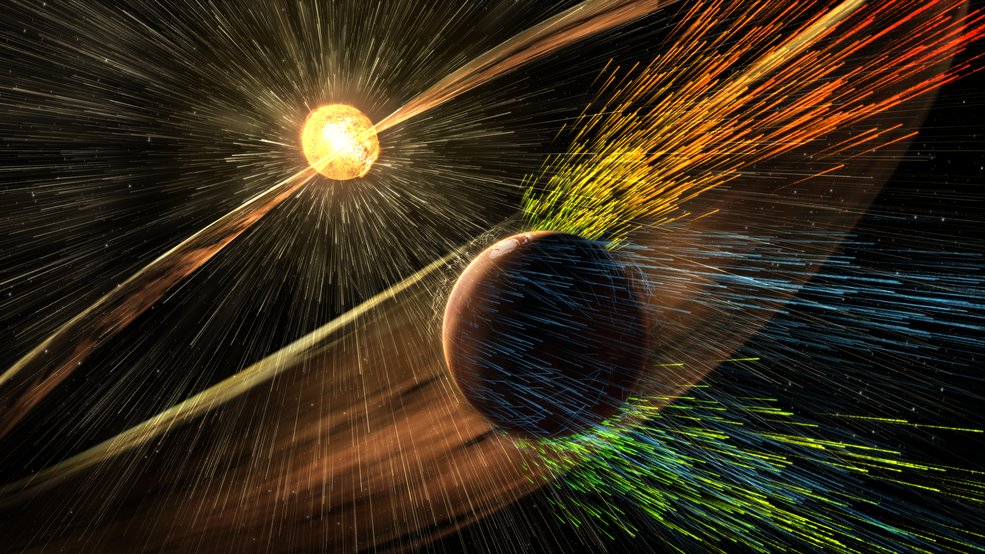
Artist’s rendering of a solar storm hitting Mars and stripping ions from the planet's upper atmosphere. Credits: NASA/GSFC

NASA’s MAVEN Spacecraft Reveals Speed of Solar Wind Stripping Martian Atmosphere

MessageToEagle.com – Why Mars lost much of its atmosphere and whether life could have started on what now seems to be a barren world, are two most important goals for NASA’s MAVEN spacecraft. A Martian explorer – Mars Atmosphere and Volatile Evolution (MAVEN) spacecraft –  will explore Martian upper atmosphere and perform “deep-dip” campaigns taking measurements down

NASA’s MAVEN Spacecraft Reveals Speed of Solar Wind Stripping Martian Atmosphere Read More »