Astronomy

Astronomy

Our Universe is amazing and full of cosmic mysteries and curious anomalies. Since the dawn of history, humans have gazed at the night sky and wondered what is really out there. Where can we find extraterrestrials? What would alien worlds look like? There is still so much we don’t know about the Universe.

In this section, we take you on a journey to distant worlds and explore the secrets of our universe. You’ll find here the latest astronomy news, remarkable facts about the cosmos and space mysteries scientists are still trying to solve.

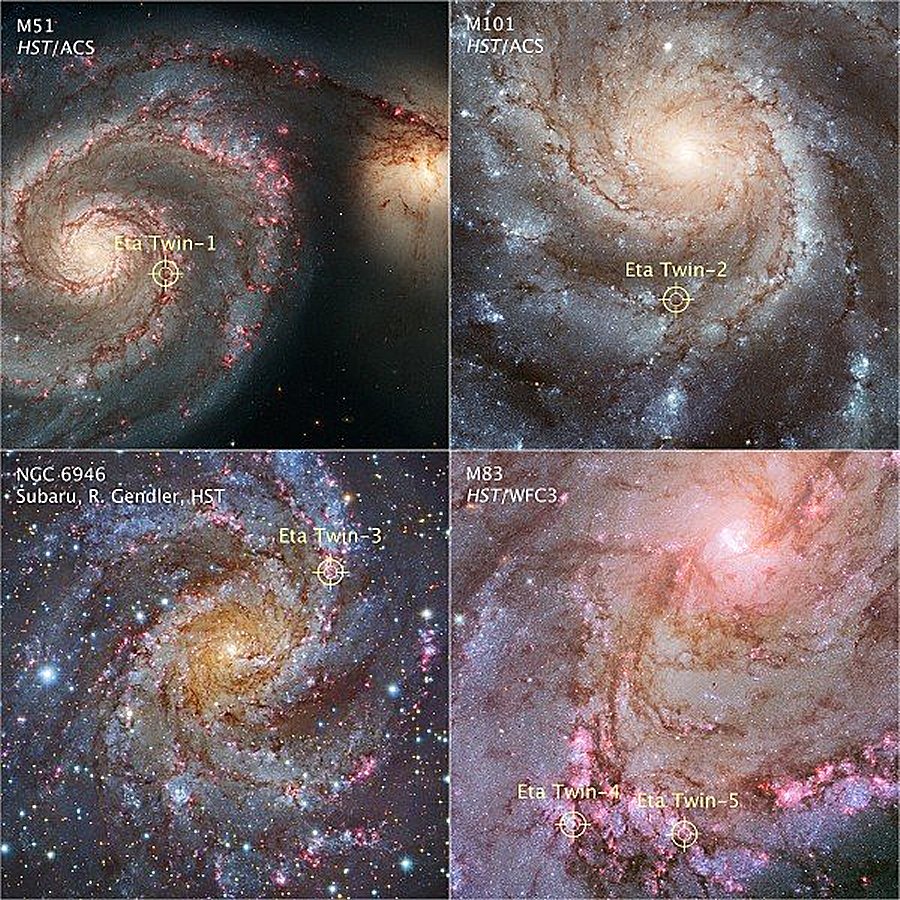
Location of Eta twins in galaxies M51, M101, NGC 6946, and M83. Individual Image Credits: M51: NASA/ESA/Hubble Heritage Team (STScI/AURA); M101:NASA/ESA/K. Kuntz (JHU), F. Bresolin (U. Hawaii), J. Trauger (Jet Propulsion Lab), J. Mould (NOAO), Y.-H. Chu (U. Illinois, Urbana), Canada-France-Hawaii Telescope/ J.-C. Cuillandre/Coelum/, Jacoby, B. Bohannan, and M. Hanna/ NOAO/AURA/NSF; NGC 6946: NASA/ESA/STScI/R. Gendler/Subaru Telescope (NAOJ); M83: NASA/ESA/Hubble Heritage Team (STScI/AURA) Credit: NASA, ESA and R. Khan (GSFC and ORAU)

Eta Carinae: Most Luminous And Massive Stellar System And Its ‘Twins’

MessageToEagle.com – Eta Carinae is the most luminous and massive stellar system within 10,000 light-years. It is best known for an enormous eruption seen in the mid-19th century that hurled an amount of material at least 10 times the sun’s mass into space. This expanding veil of gas and dust, which still shrouds Eta Carinae, makes

Eta Carinae: Most Luminous And Massive Stellar System And Its ‘Twins’ Read More »

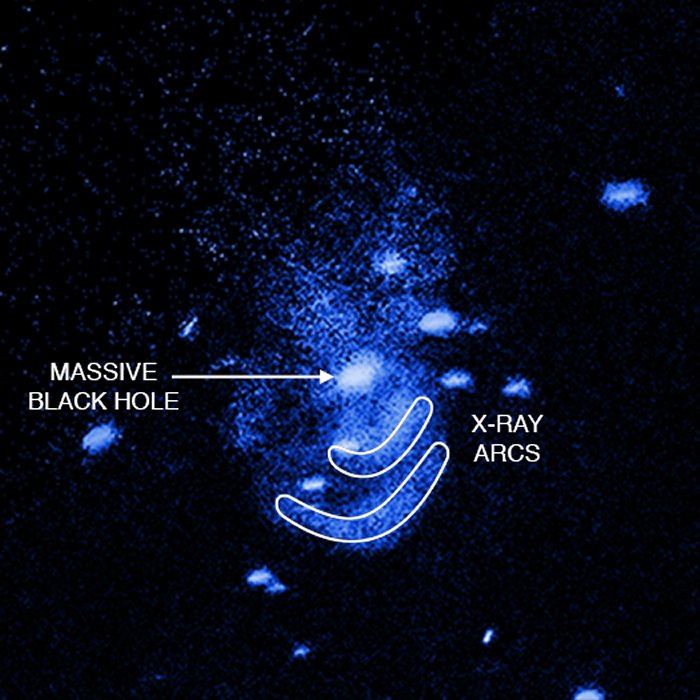
X-ray close-up. X-ray: NASA/CXC/Univ of Texas/E.Schlegel et al; Optical: NASA/STScI

Outburst In Supermassive Black Hole Observed By NASA’s Chandra

MessageToEagle.com – Astronomers, using NASA’s Chandra X-ray Observatory, have discovered evidence of powerful blasts produced by a giant black hole centered in the small galaxy NGC 5195, located 26 million light-years from Earth. This is one of the nearest supermassive black holes to Earth that is currently undergoing such violent outbursts. This companion galaxy is merging

Outburst In Supermassive Black Hole Observed By NASA’s Chandra Read More »

The James Webb Space Telescope will be a large infrared telescope with a 6.5-meter primary mirror. JWST will be the premier observatory of the next decade, that will study every phase in the history of our Universe, ranging from the first luminous glows after the Big Bang, to the formation of solar systems capable of supporting life on planets like Earth, to the evolution of our own Solar System. Credits: NASA

Search For Population III Stars And Hope To Observe Them With JWST

MessageToEagle.com – The first stars were made from completely pristine gas, and astronomers think they formed quite differently from stars today. Astronomers have long theorized the existence of these stars, also known as the Population III stars, which were born out of the primordial material from the Big Bang. The Population III stars, exploded in powerful supernovae, spreading

Search For Population III Stars And Hope To Observe Them With JWST Read More »

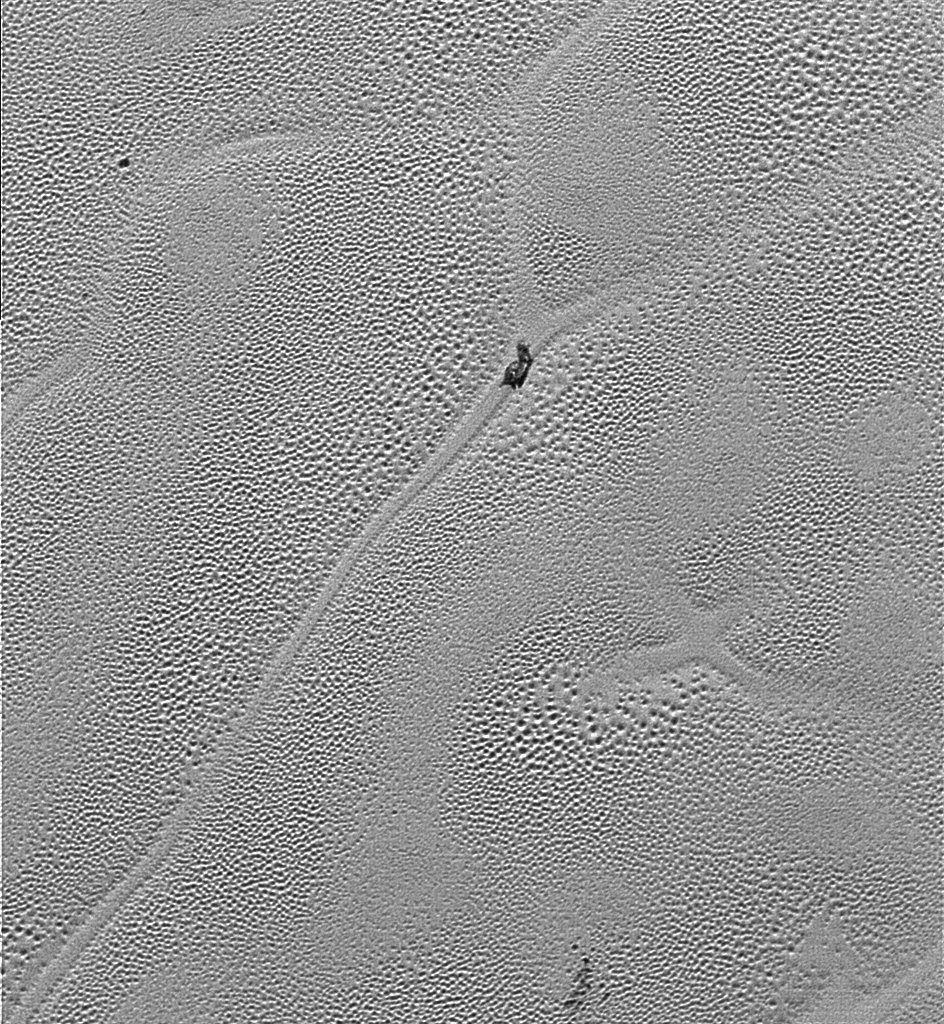
Transmitted to Earth on Dec. 24, 2015, this image from the Long Range Reconnaissance Imager (LORRI) extends New Horizons’ highest-resolution swath of Pluto to the center of Sputnik Planum, the informally named plain that forms the left side of Pluto’s “heart.” Mission scientists believe the pattern of the cells stems from the slow thermal convection of the nitrogen-dominated ices. The darker patch at the center of the image is likely a dirty block of water ice “floating” in denser solid nitrogen, and which has been dragged to the edge of a convection cell. Also visible are thousands of pits in the surface, which scientists believe may form by sublimation. Credits: NASA/JHUAPL/SwRI

Intriguing “X” On Pluto’s Icy Surface Of Sputnik Planum

MessageToEagle.com – A curious X-shaped feature located in the Pluto’s region known as Sputnik Planum, is clearly visible in the image recently delivered home by NASA’s New Horizons spacecraft. Sputnik Planum is an icy plain that forms the left side of Pluto’s “heart” feature. It’s located at a lower elevation than most of the surrounding area

Intriguing “X” On Pluto’s Icy Surface Of Sputnik Planum Read More »

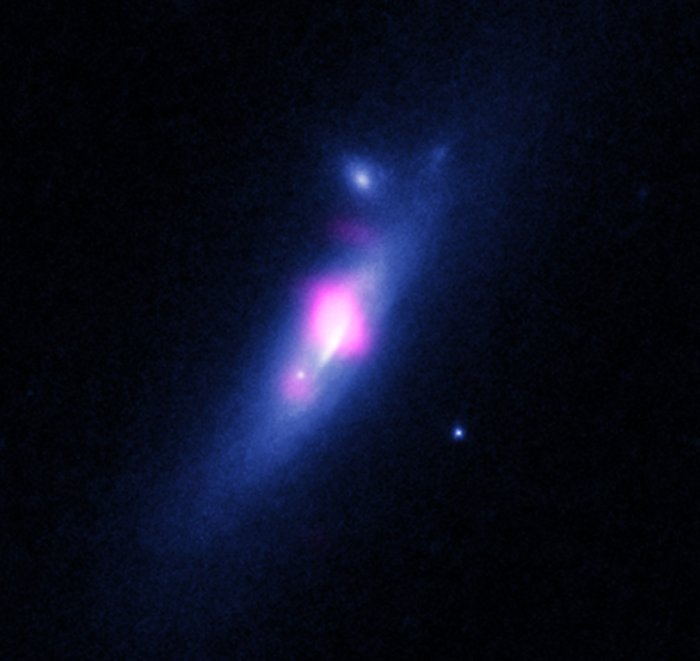
Credit: X-ray: NASA/CXC/Univ of Colorado/J.Comerford et al; Optical: NASA/STScI

Rare Double-Black Hole Galaxy Located 1.3 Billion Light Years Away

MessageToEagle.com – An unusually star-deprived black hole at the site of two merged galaxies is showing that these massive gravitational voids can shed weight too, according to astronomers. The recently discovered black hole, which does not have the expected number of stars surrounding it, could provide new insight into black hole evolution and behavior, according to

Rare Double-Black Hole Galaxy Located 1.3 Billion Light Years Away Read More »

Fukang: One Of The Greatest Extraterrestrial Gemstones Of The 21st Century

MessageToEagle.com – When the Fukang meteorite slammed into the surface of Earth, one suspected this extraterrestrial gemstone could mirror the stellar beauty of the cosmos, and it really did. Its true beauty was revealed when the Fukang meteorite was divided into slices. The Fukang pallasite is one of the greatest meteorite discoveries of the 21st century. Pallasites are extremely

Fukang: One Of The Greatest Extraterrestrial Gemstones Of The 21st Century Read More »

Missions Show All Missions Mission Home Summary Fact Sheet Objectives Spacecraft Spacecraft 3D Model Instruments X-ray Mirrors Engineering Mission Operations Launch Vehicle Launch Campaign Orbit/Navigation Science Operations Slew Survey and Catalogue SOC Data Archive Resources News Archive Multimedia Gallery Publication Archive Calendar of Events Services Contact Us Subscribe Terms and Conditions ESA's X-ray space observatory XMM-Newton is unique. It is the biggest scientific satellite ever built in Europe, its telescope mirrors are amongst the most powerful ever developed in the world, and with its sensitive cameras it can see much more than any previous X-ray satellite. Credits. ESA

Hunt For Dark Matter-Fueled Galaxy Clusters With ESO Sophisticated Telescopes

MessageToEagle.com – Sophisticated ESO telescopes give astronomers an opportunity to conduct advanced search for the largest gravitationally bound structures in the Universe — galaxy clusters. Observations by the VLT and the NTT complement those from other observatories across the globe and in space as part of the XXL survey — one of the largest ever such quests

Hunt For Dark Matter-Fueled Galaxy Clusters With ESO Sophisticated Telescopes Read More »