Astronomy

Astronomy

Our Universe is amazing and full of cosmic mysteries and curious anomalies. Since the dawn of history, humans have gazed at the night sky and wondered what is really out there. Where can we find extraterrestrials? What would alien worlds look like? There is still so much we don’t know about the Universe.

In this section, we take you on a journey to distant worlds and explore the secrets of our universe. You’ll find here the latest astronomy news, remarkable facts about the cosmos and space mysteries scientists are still trying to solve.

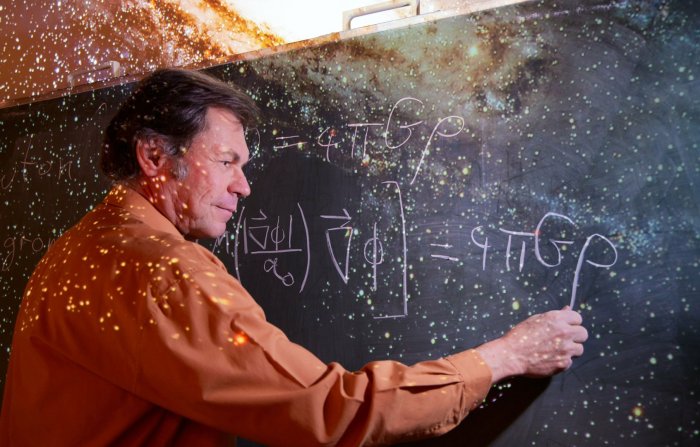
UPV/EHU Ikerbasque Research Professor and DIPC Associate Tom Broadhurst | Photo: Ikerbasque

Supernova In Distant Space Allows Us To Understand Origin Of The Elements In The Universe

Eddie Gonzales Jr. – MessageToEagle.com – A supernova is a stellar explosion, which occurs when the lives of some really massive stars come to an end. In this violent epilogue, the star expels the material from its outer layers by means of a shock wave, allowing us to see the various elements it was composed
Supernova In Distant Space Allows Us To Understand Origin Of The Elements In The Universe Read More »

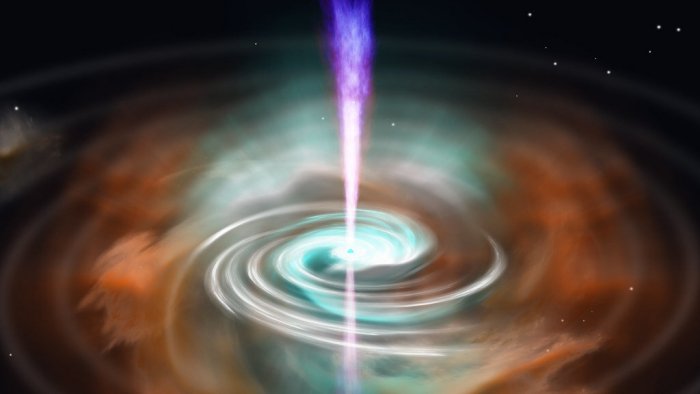
An artist's impression of a gamma-ray burst powered by a neutron star. Credit: Nuria Jordana-Mitjans

Black Holes Don’t Always Power Gamma-Ray Bursts – New Study 

Eddie Gonzales Jr. – MessageToEagle.com – Gamma-ray bursts (GRBs) have been detected by satellites orbiting Earth as luminous flashes of the most energetic gamma-ray radiation lasting milliseconds to hundreds of seconds. These catastrophic blasts occur in distant galaxies, billions of light years from Earth. An artist’s impression of a gamma-ray burst powered by a neutron

Black Holes Don’t Always Power Gamma-Ray Bursts – New Study  Read More »

Death Of A Star Reveals Midsize Black Hole Lurking In A Dwarf Galaxy

Death Of A Star Reveals Midsize Black Hole Lurking In A Dwarf Galaxy

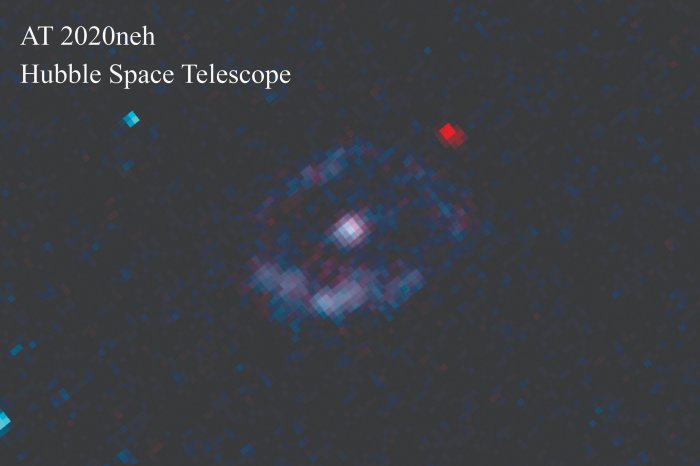
Eddie Gonzales Jr. – MessageToEagle.com – An intermediate-mass black hole lurking undetected in a dwarf galaxy revealed itself to astronomers when it gobbled up an unlucky star that strayed too close. The shredding of the star, known as a “tidal disruption event” or TDE, produced a flare of radiation that briefly outshone the combined stellar

Death Of A Star Reveals Midsize Black Hole Lurking In A Dwarf Galaxy Read More »

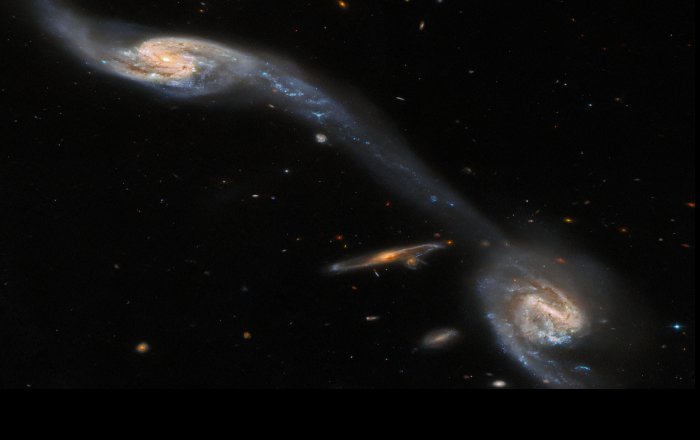
Hubble Inspects Two Galaxies Connected By A Luminous Bridge

Hubble Inspects Two Galaxies Connected By A Luminous Bridge

Eddie Gonzales Jr. – MessageToEagle.com – This image from the NASA/ESA Hubble Space Telescope shows two of the galaxies in the galactic triplet Arp 248—also known as Wild’s Triplet—which lies around 200 million light-years from Earth in the constellation Virgo. Credit: ESA/Hubble & NASA, Dark Energy Survey/Department of Energy/Fermilab Cosmic Physics Center/Dark Energy Camera/Cerro Tololo Inter-American

Hubble Inspects Two Galaxies Connected By A Luminous Bridge Read More »

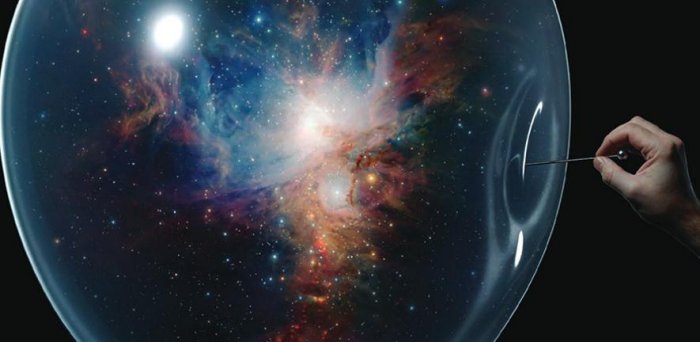
Cosmic inflation is a popular scenario for the earliest phase in the evolution of the Universe Credit: A. Ijjas, P.J. Steinhardt and A. Loeb (Scientific American, February 2017)

Can Cosmic Inflation Be Ruled Out?

Eddie Gonzales Jr. – MessageToEagle.com – Astrophysicists say that cosmic inflation – a point in the Universe’s infancy when space-time expanded exponentially, and what physicists really refer to when they talk about the ‘Big Bang’ – can in principle be ruled out in an assumption-free way. Cosmic inflation is a popular scenario for the earliest

Can Cosmic Inflation Be Ruled Out? Read More »

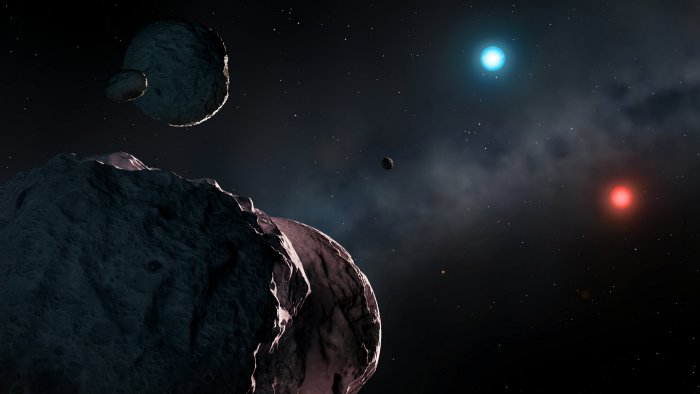
Artist’s impression of the old white dwarfs WDJ2147-4035 and WDJ1922+0233 surrounded by orbiting planetary debris, which will accrete onto the stars and pollute their atmospheres. WDJ2147-4035 is extremely red and dim, while WDJ1922+0233 is unusually blue. Credit: University of Warwick/Dr Mark Garlick. Credit: University of Warwick/Dr Mark Garlick

Oldest Planetary Debris Found In Our Galaxy – New Study

Eddie Gonzales Jr. – MessageToEagle.com – Astronomers led by the University of Warwick have identified the oldest star in our galaxy that is accreting debris from orbiting planetesimals, making it one of the oldest rocky and icy planetary systems discovered in the Milky Way. Artist’s impression of the old white dwarfs WDJ2147-4035 and WDJ1922+0233 surrounded

Oldest Planetary Debris Found In Our Galaxy – New Study Read More »