Astronomy

Astronomy

Our Universe is amazing and full of cosmic mysteries and curious anomalies. Since the dawn of history, humans have gazed at the night sky and wondered what is really out there. Where can we find extraterrestrials? What would alien worlds look like? There is still so much we don’t know about the Universe.

In this section, we take you on a journey to distant worlds and explore the secrets of our universe. You’ll find here the latest astronomy news, remarkable facts about the cosmos and space mysteries scientists are still trying to solve.

Footprints Of 'Galactic Immigration' Uncovered In Andromeda Galaxy

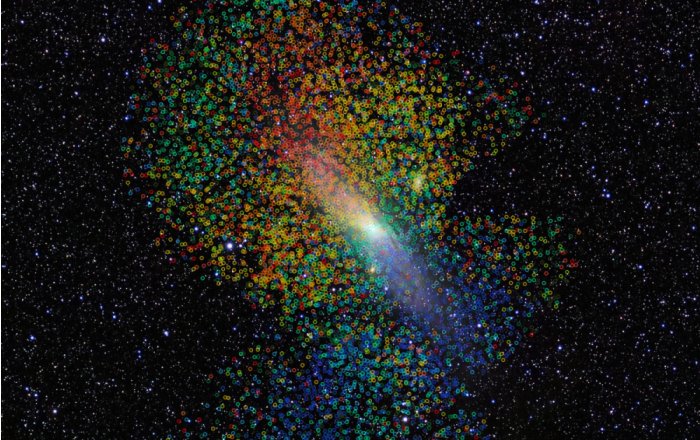
Footprints Of ‘Galactic Immigration’ Uncovered In Andromeda Galaxy

Eddie Gonzales Jr. – MessageToEagle.com – Over the course of billions of years, galaxies grow and evolve by forging new stars and merging with other galaxies through aptly named “galactic immigration” events. Astronomers try to uncover the histories of these immigration events by studying the motions of individual stars throughout a galaxy and its extended

Footprints Of ‘Galactic Immigration’ Uncovered In Andromeda Galaxy Read More »

‘Engine’ Of Luminous Merging Galaxies Pinpointed For The First Time

‘Engine’ Of Luminous Merging Galaxies Pinpointed For The First Time

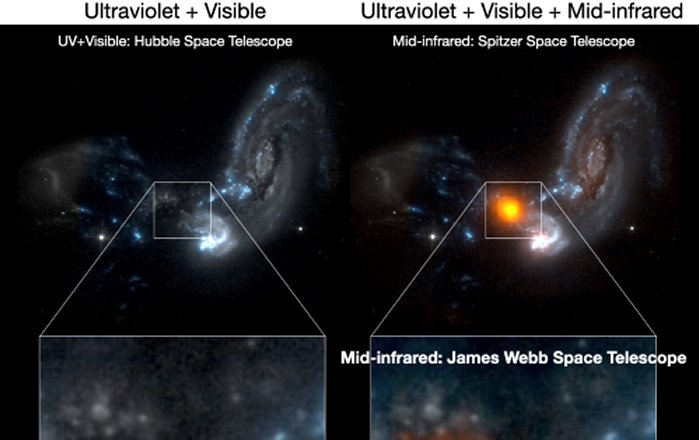
Eddie Gonzales Jr. – MessageToEagle.com – Roughly 500 million light-years away, near the constellation Delphinus, two galaxies are colliding. Known as merging galaxy IIZw096, this luminous phenomenon is obscured by cosmic dust, but researchers first identified a bright, energetic source of light 12 years ago. JWST pinpoints the ‘invisible’ engine that powers the galaxies in

‘Engine’ Of Luminous Merging Galaxies Pinpointed For The First Time Read More »

Canyons On Pluto's Large Moon Charon Explained By SwRI Models

Canyons On Pluto’s Large Moon Charon Explained By SwRI Models

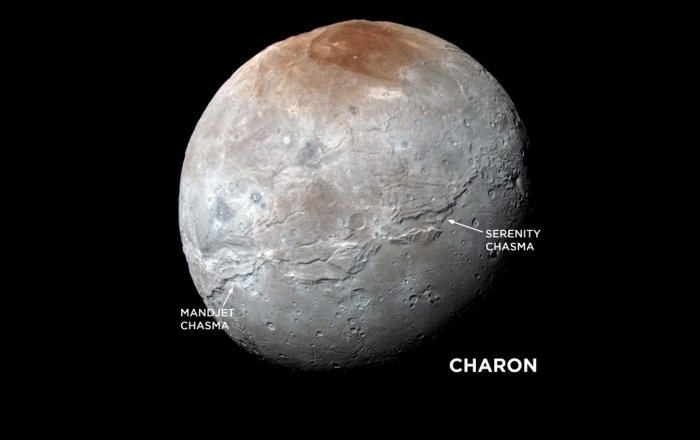
Eddie Gonzales Jr. – MessageToEagle.com – In 2015, when NASA’s New Horizons spacecraft encountered the Pluto-Charon system, the Southwest Research Institute-led science team discovered interesting, geologically active objects instead of the inert icy orbs previously envisioned. An SwRI scientist has revisited the data to explore the source of cryovolcanic flows and an obvious belt of

Canyons On Pluto’s Large Moon Charon Explained By SwRI Models Read More »

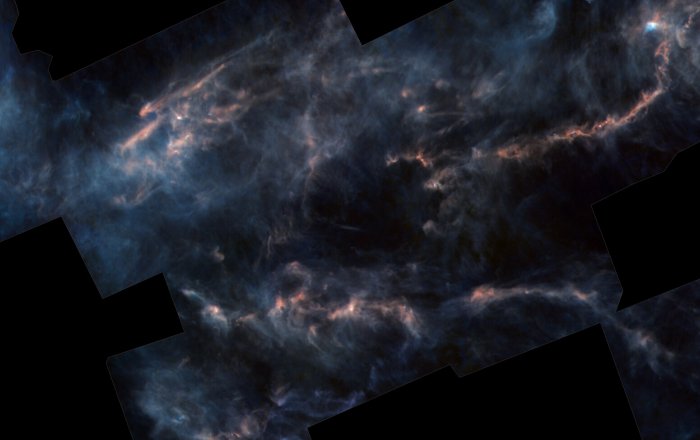
This mosaic combines several observations of the Taurus Molecular Cloud performed by ESA’s Herschel observatory. Located about 450 light-years from us, in the constellation Taurus, the Bull, this vast complex of interstellar clouds is where a myriad of stars are being born, and is the closest large region of star formation. Credit: ESA/Herschel/NASA/JPL-Caltech; acknowledgement: R. Hurt (JPL-Caltech),CC BY-SA 3.0 IGO

A Star Is Born: Study Reveals Complex Chemistry Inside ‘Stellar Nurseries’

Eddie Gonzales Jr. – MessageToEagle.com – An international team of researchers has uncovered what might be a critical step in the chemical evolution of molecules in cosmic “stellar nurseries.” In these vast clouds of cold gas and dust in space, trillions of molecules swirl together over millions of years. The collapse of these interstellar clouds

A Star Is Born: Study Reveals Complex Chemistry Inside ‘Stellar Nurseries’ Read More »

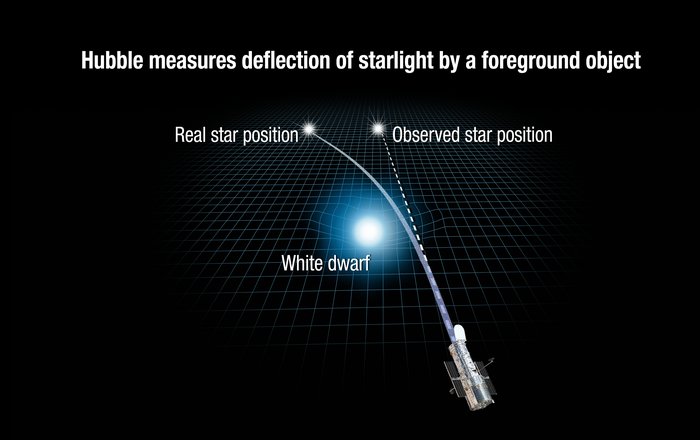
This artist's illustration shows how the gravity of a foreground white dwarf star warps space and bends the light of a distant star behind it.  ARTWORK: NASA, ESA, Ann Feild (STScI)

For The First Time Hubble Directly Measures Mass Of A Lone White Dwarf

Eddie Gonzales Jr. – MessageToEagle.com – Astronomers using NASA’s Hubble Space Telescope have for the first time directly measured the mass of a single, isolated white dwarf – the surviving core of a burned-out, Sun-like star. Researchers found that the white dwarf is 56 percent the mass of our Sun. This agrees with earlier theoretical predictions of the

For The First Time Hubble Directly Measures Mass Of A Lone White Dwarf Read More »

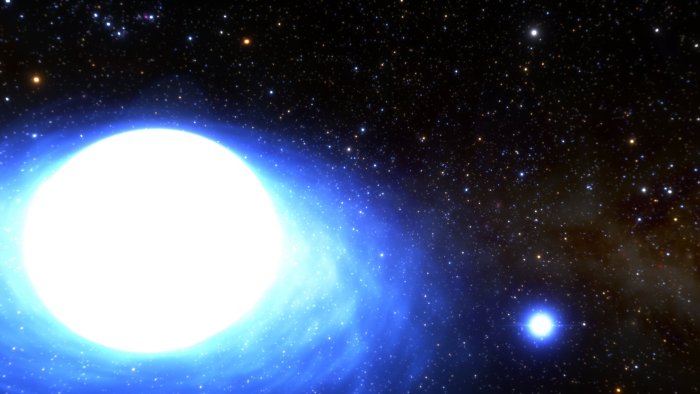
By studying the binary star system CPD-29 2176 (shown here), researchers are unraveling new clues to our earliest beginnings, as stardust. Scientists estimate that there are probably only about 10 such star systems in the Galaxy at present. Credit: NOIRLab/NSF/AURA/J. da Silva/Spaceengine

Rare Binary Star Features Weirdly Round Orbit – Researchers Report

Eddie Gonzales Jr. – MessageToEagle.com – After crunching a mountain of astronomy data, Clarissa Pavao, an undergraduate at Embry-Riddle Aeronautical University’s Prescott, Arizona campus, submitted her preliminary analysis. Her mentor’s response was swift and in all-caps: “THERE’S AN ORBIT!” he wrote. That was when Pavao, a senior space physics major, realized she was about to

Rare Binary Star Features Weirdly Round Orbit – Researchers Report Read More »

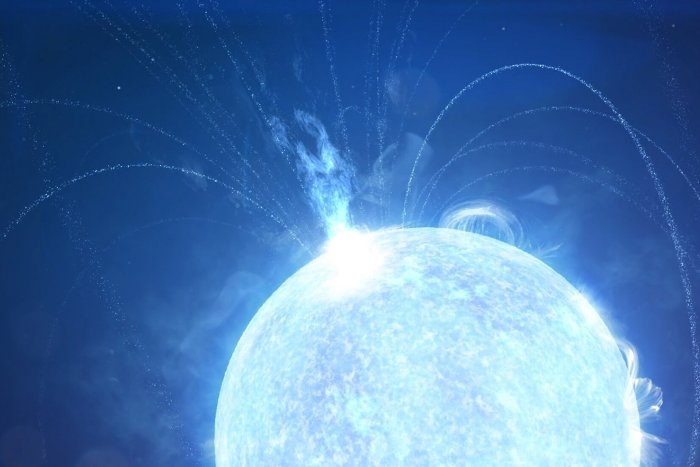
An artist's impression of a magnetar eruption. Credit: NASA's Goddard Space Flight Center

Volcano-Like Rupture Could Have Caused Magnetar Slowdown Or “Anti-Glitch”

Eddie Gonzales Jr. – MessageToEagle.com – On Oct. 5, 2020, the rapidly rotating corpse of a long-dead star about 30,000 light years from Earth changed speeds. In a cosmic instant, its spinning slowed. And a few days later, it abruptly started emitting radio waves. Thanks to timely measurements from specialized orbiting telescopes, Rice University astrophysicist

Volcano-Like Rupture Could Have Caused Magnetar Slowdown Or “Anti-Glitch” Read More »

Meteorites Reveal Likely Origin Of Earth's Volatile Chemicals

Meteorites Reveal Likely Origin Of Earth’s Volatile Chemicals

Eddie Gonzales Jr. – MessageToEagle.com – Meteorites have told Imperial researchers the likely far-flung origin of Earth’s volatile chemicals, some of which form the building blocks of life. They found that around half the Earth’s inventory of the volatile element zinc came from asteroids originating in the outer solar system—the part beyond the asteroid belt that includes the planets

Meteorites Reveal Likely Origin Of Earth’s Volatile Chemicals Read More »