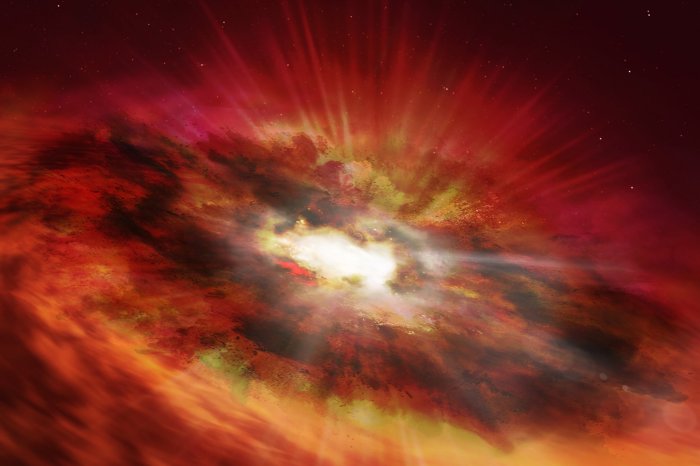
A Dusty Compact Object Bridging Galaxies And Quasars At Cosmic Dawn
Eddie Gonzales Jr. – MessageToEagle.com – Astrophysicists at the Niels Bohr Institute, University of Copenhagen, and the Technical University of […]
Eddie Gonzales Jr. – MessageToEagle.com – Astrophysicists at the Niels Bohr Institute, University of Copenhagen, and the Technical University of […]

