Massive Crater Discovered After Iron Meteorite Smashed Into Northern Greenland
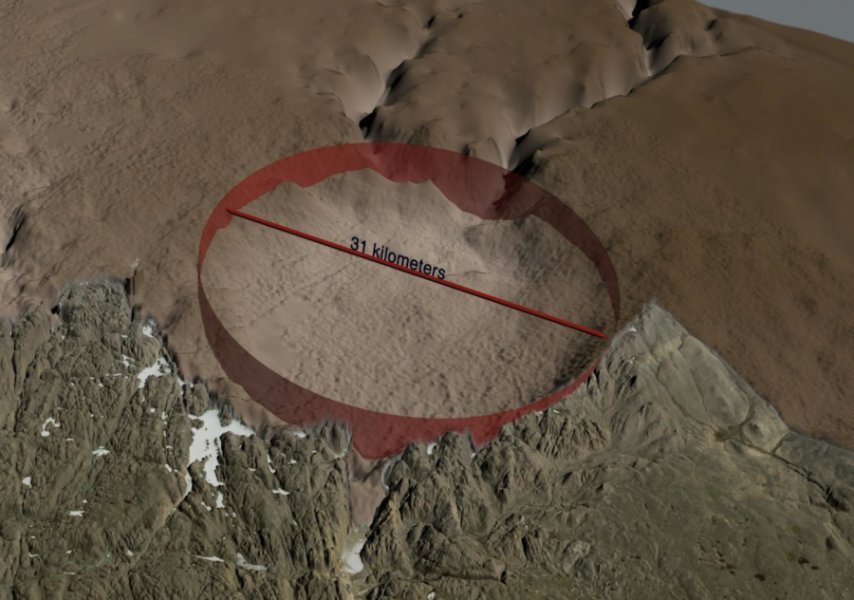
MessageToEagle.com – A 31-km wide meteorite impact crater buried beneath the ice-sheet in the northern Greenland has been discovered by an international […]
MessageToEagle.com – A 31-km wide meteorite impact crater buried beneath the ice-sheet in the northern Greenland has been discovered by an international […]

