

Eddie Gonzales Jr. – MessageToEagle.com – The discovery of an unexpectedly hot rock beneath Earth’s surface is challenging scientists’ understanding of how heat is distributed deep inside the planet, with potential implications for how they understand earthquakes, volcanic activity, and carbon movement through Earth.
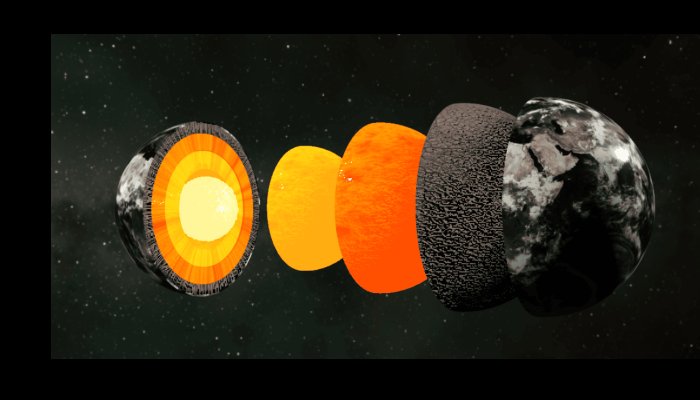
Image credit: A.shteiwi – CC BY-SA 4.0
An international research team focused on a rock from northern Papua New Guinea, where the Australian and Pacific tectonic plates move toward each other, causing rocks to be carried into the deep underground through a process known as subduction.
The researchers found the rock reached about 800°C at 45 kilometers below the surface, then cooled by about 100°C after reaching more than 90 kilometers deep.
Curtin University co-author Dr Axel Schmitt said the finding was unexpected because temperatures would normally be expected to gently increase with depth.
“What makes this rock so interesting is that it records two very different thermal conditions at different stages of its time deep inside Earth,” Dr Schmitt said.
“At about 45 kilometers depth, the rock was surprisingly hot, but as it traveled deeper it entered an environment that was cooler than we would normally expect at that depth.”
The researchers reconstructed the rock’s history by analyzing tiny inclusions of the minerals coesite and zircon trapped inside the mineral garnet. Coesite forms under extremely high pressures, providing evidence that the rock reached depths of at least 90 kilometers beneath Earth’s surface, whereas zircon provides age information on when this happened.
Dr Schmitt said the findings challenged current models of the thermal conditions within subduction zones.
“Finding this change from relatively hot conditions at shallower depth to colder conditions deeper down was unexpected,” Dr Schmitt said.
“One possibility is that intense shearing where the tectonic plates meet generates additional heat at relatively shallow depths. Another is that the subduction zone had not yet cooled to the lower temperatures expected.”
Dr Schmitt said subduction zones are sites of earthquakes and volcanic activity, and play an important role in Earth’s long-term carbon cycle, carrying rocks and elements deep into the planet.
“The findings suggest the thermal structure of these zones may be more complex than previously thought, helping scientists better understand how subduction operates over millions to billions of years,” Dr Schmitt said.
“Understanding these temperature changes helps us build a clearer picture of the extreme conditions deep inside Earth, where tectonic plates collide and drive processes that shape the planet’s surface.”
Written by Eddie Gonzales Jr. – MessageToEagle.com Staff Writer