New Science

New Science

Are you interested in cutting-edge science? Then you have come to the right place. We publish the most interesting and vital stories dealing with subjects such as mysteries of the mind and brain, astronomy, quantum physics, extraterrestial life, earth changes, health – just to mention a few. We also dig deeper into the unknown and investigate the possibility of parallel universes and time travel.
There is still so much to learn – so enjoy!

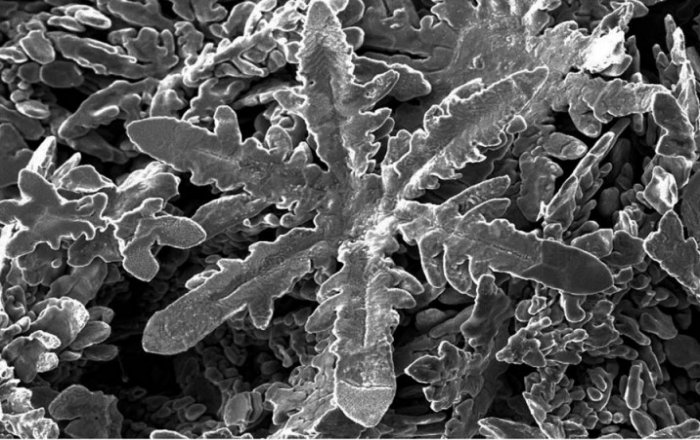
This metallic snowflake is about 100 microns across, roughly the thickness of a human hair

Adventures In Nanotech: Growing A Metallic Snowflake

Eddie Gonzales Jr. – MessageToEagle.com – Scientists in New Zealand and Australia working at the level of atoms created something unexpected: tiny metallic snowflakes. Why’s that significant? Because coaxing individual atoms to cooperate is leading to a revolution in engineering and technology via nanomaterials. (And creating snowflakes is cool.) This metallic snowflake is about 100

Adventures In Nanotech: Growing A Metallic Snowflake Read More »
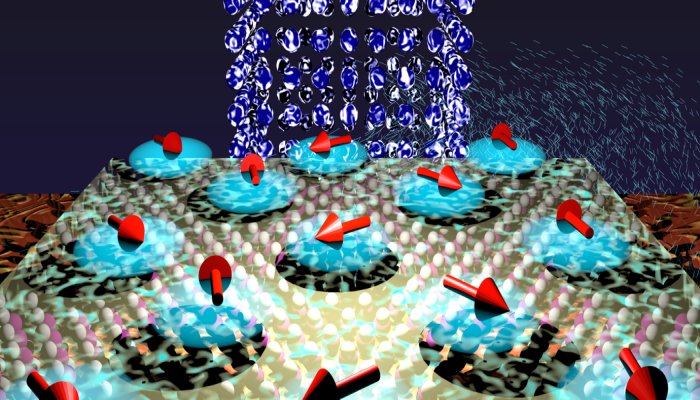
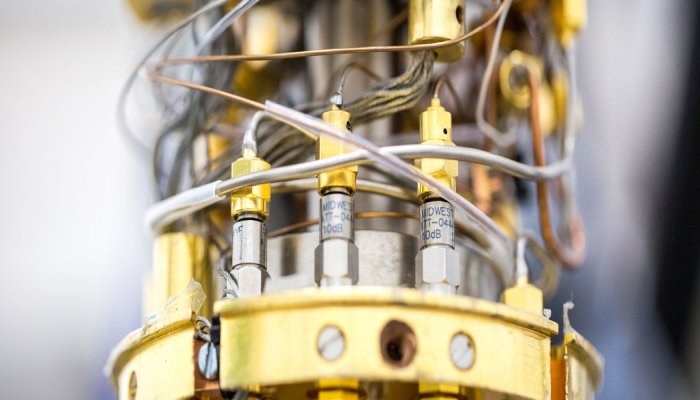
Predicting the behavior of collective quantum systems in beyond the capabilities of ordinary computers, but not quantum computers. Photo by Jose Lado/Aalto University.

Quantum Materials Designed With Quantum Computers

Eddie Gonzales Jr. – MessageToEagle.com – Designing quantum materials with specific exotic quantum properties is one of the greatest challenges in quantum technologies and material science. Specifically, predicting the behavior of collective quantum systems pushes computational capabilities to their limit, and predicting correlated quantum materials is beyond even the most powerful classical computers, present or

Quantum Materials Designed With Quantum Computers Read More »

Three Time Dimensions, One Space Dimension: Relativity Of Superluminal Observers In 1+3 Spacetime

Three Time Dimensions, One Space Dimension: Relativity Of Superluminal Observers In 1+3 Spacetime

Conny Waters – AncientPages.com – How would our world be viewed by observers moving faster than light in a vacuum? Such a picture would be clearly different from what we encounter every day. “We should expect to see not only phenomena that happen spontaneously, without a deterministic cause, but also particles traveling simultaneously along multiple

Three Time Dimensions, One Space Dimension: Relativity Of Superluminal Observers In 1+3 Spacetime Read More »

Aalto University quantum researchers use quantum coherence to detect objects without looking at them. Credit: Mikko Raskinen/Aalto University

Quantum Mechanics Used To See Objects Without Looking At Them

Eddie Gonzales Jr. – MessageToEagle.com – We see the world around us because light is being absorbed by specialized cells in our retina. But can vision happen without any absorption at all—without even a single particle of light? Surprisingly, the answer is yes. Aalto University quantum researchers use quantum coherence to detect objects without looking

Quantum Mechanics Used To See Objects Without Looking At Them Read More »

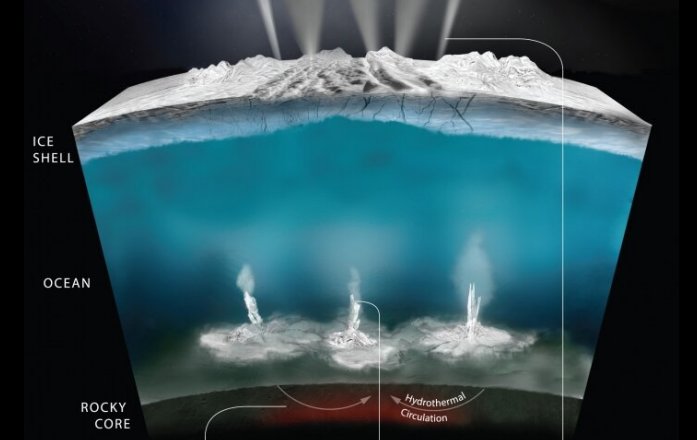
What It Would Take To Discover Life On Saturn's Icy Moon Enceladus

What It Would Take To Discover Life On Saturn’s Icy Moon Enceladus

Eddie Gonzales Jr. – MessageToEagle.com – Surrounded by a vast ocean underneath a thick ice shell, Enceladus is a hot candidate for potentially harboring alien life. A team of researchers led by the University of Arizona concluded that a future mission could provide answers even without landing on the tiny world. This graphic depicts how

What It Would Take To Discover Life On Saturn’s Icy Moon Enceladus Read More »

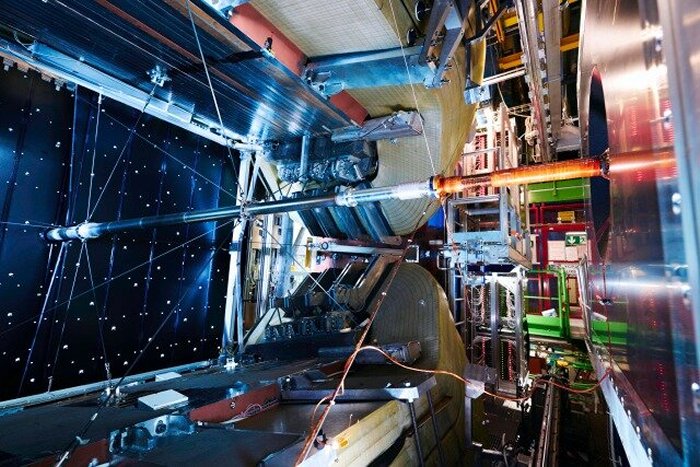
The LHCb experiment. Credit: CERN

CERN: New Measurements Of Rare Decays Provide A High-Precision Test Of Lepton Flavor Universality

Eddie Gonzales Jr. – MessageToEagle.com – Today the international LHCb collaboration at the Large Hadron Collider (LHC) presented new measurements of rare particle transformations, or decays, that provide one of the highest-precision tests yet of a key property of the Standard Model of particle physics, known as lepton flavor universality. Previous studies of these decays

CERN: New Measurements Of Rare Decays Provide A High-Precision Test Of Lepton Flavor Universality Read More »

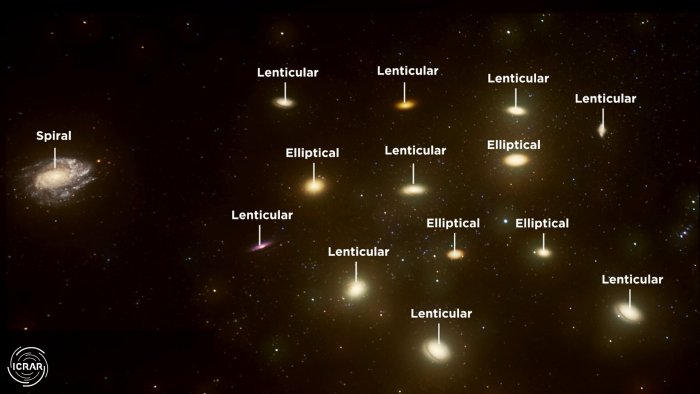
A representation of how the EAGLES program classifies galaxy as assessed by AI. Credit: ICRAR

Astronomers May Have Uncovered How Galaxies Change Their shape

Eddie Gonzales Jr. – MessageToEagle.com – Researchers may have answered a decades-old question about galaxy evolution, leveraging the power of artificial intelligence (AI) to accelerate their research. Ever since the Hubble Sequence, that classifies galaxy morphologies, was invented in 1926, astronomers have been refining our understanding of galaxy evolution and morphology as our technology advances.

Astronomers May Have Uncovered How Galaxies Change Their shape Read More »

Image credit. geralt - pixabay

Engineers Help Artificial Intelligence To Learn More Safely In The Real World

Eddie Gonzales Jr. – MessageToEagle.com – Penn State researchers are looking for a safer and more efficient way to use machine learning in the real world. Using a simulated high-rise office building, they developed and tested a new reinforcement learning algorithm aimed at improving energy consumption and occupant comfort in a real-world setting. Image credit.

Engineers Help Artificial Intelligence To Learn More Safely In The Real World Read More »