Astronomy

Astronomy

Our Universe is amazing and full of cosmic mysteries and curious anomalies. Since the dawn of history, humans have gazed at the night sky and wondered what is really out there. Where can we find extraterrestrials? What would alien worlds look like? There is still so much we don’t know about the Universe.

In this section, we take you on a journey to distant worlds and explore the secrets of our universe. You’ll find here the latest astronomy news, remarkable facts about the cosmos and space mysteries scientists are still trying to solve.

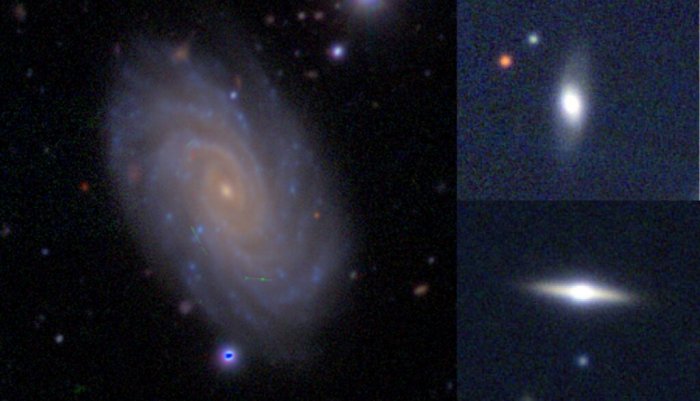
Examples of SAMI galaxies with central bulge and surrounding disc. Credit: Hyper Supreme-Cam Subaru and Pan-STARSS

Researchers Can Map The Galaxy With Spectra At Many Points Across The Galaxy

Eddie Gonzales Jr. – MessageToEagle.com – “This is a subtle signal that is really hard to detect in the observations,” says Dr. Barsanti. It has been made possible with the advent of integral field spectroscopy, a technique in which an optical instrument combines spectrographic and imaging capabilities to build a 3D image of a galaxy

Researchers Can Map The Galaxy With Spectra At Many Points Across The Galaxy Read More »

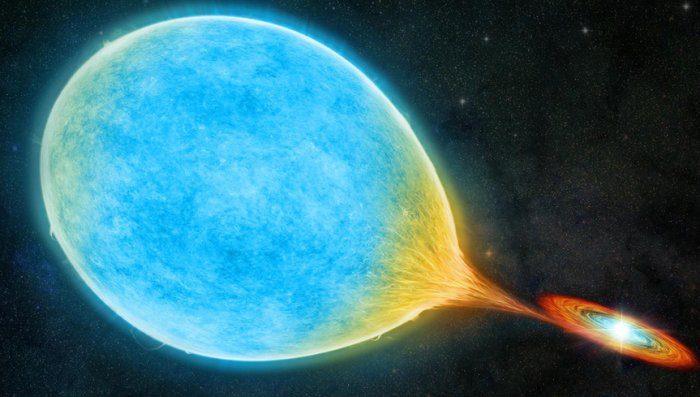
An artist’s illustration shows a white dwarf (right) circling a larger, sun-like star (left) in an ultra-short orbit, forming a “cataclysmic” binary system. Credits:Credit: M.Weiss/Center for Astrophysics | Harvard & Smithsonian

A ‘Cataclysmic’ Pair Of Stars With The Shortest Orbit Yet – Found

Eddie Gonzales Jr. – MessageToEagle.com – The stars circle each other every 51 minutes, confirming a decades-old prediction. Nearly half the stars in our galaxy are solitary like the sun. The other half comprises stars that circle other stars, in pairs and multiples, with orbits so tight that some stellar systems could fit between Earth

A ‘Cataclysmic’ Pair Of Stars With The Shortest Orbit Yet – Found Read More »

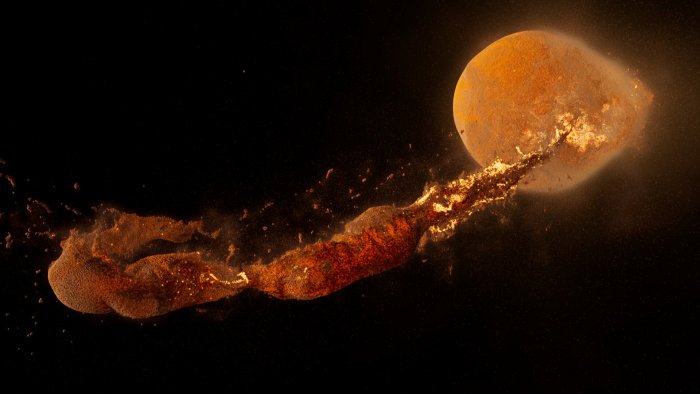
Credit: Dr Jacob Kegerreis

Giant Impact Could Have Formed The Moon More Rapidly – New Simulations Show

Eddie Gonzales Jr. – MessageToEagle.com – Scientists from Durham University’s Institute for Computational Cosmology used the most detailed supercomputer simulations yet to reveal an alternative explanation for the Moon’s origin, with a giant impact immediately placing a Moon-like body into orbit around Earth. Credit: Dr Jacob Kegerreis The researchers simulated hundreds of different impacts, varying

Giant Impact Could Have Formed The Moon More Rapidly – New Simulations Show Read More »

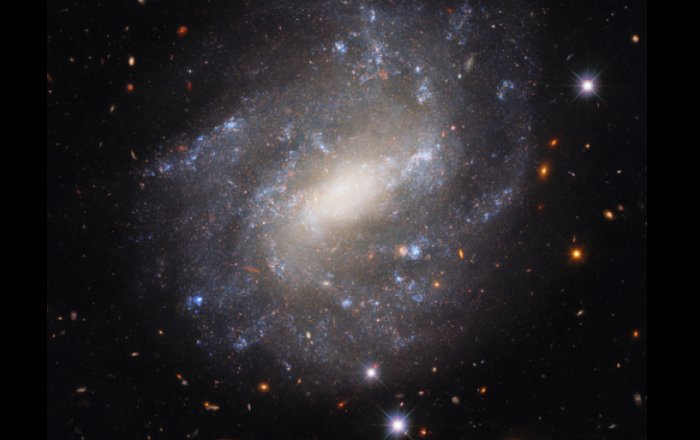
Credit: ESA/Hubble & NASA, A. Riess et al

Hubble Spies A Lonely Spiral Galaxy

Eddie Gonzales Jr. – MessageToEagle.com – The NASA/ESA Hubble Space Telescope’s Wide Field Camera 3 imaged this lonely spiral galaxy called UGC 9391. The galaxy resides 130 million light-years from Earth in the constellation Draco near the north celestial pole. Its star-studded spiral arms stand in splendid isolation against a backdrop of distant galaxies, which

Hubble Spies A Lonely Spiral Galaxy Read More »

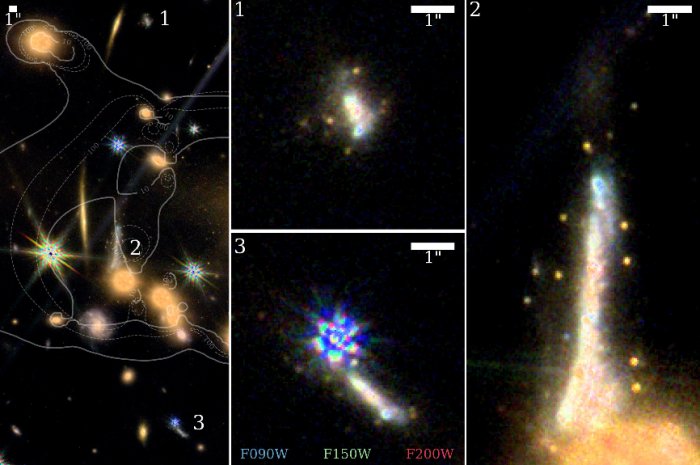
The surrounding environment of the Sparkler galaxy (L) and close-up views of it. Credit: Mowla, Iyer et al. 2022

NASA Webb Telescope Sees The Universe’s Oldest Star Clusters

Eddie Gonzales Jr. – MessageToEagle.com – Using the James Webb Space Telescope (JWST), researchers from the CAnadian NIRISS Unbiased Cluster Survey (CANUCS) team have identified the most distant globular clusters ever discovered. These dense groups of millions of stars may be relics that contain the first and oldest stars in the universe. The researchers studied

NASA Webb Telescope Sees The Universe’s Oldest Star Clusters Read More »

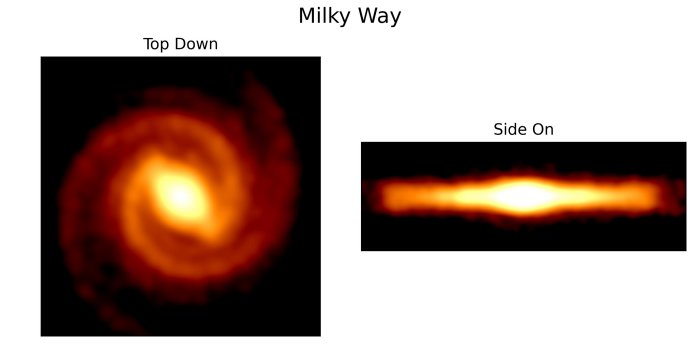
Color top-down and side-view of the visible Milky Way galaxy. Credit: University of Sydney

‘Galactic Underworld’ – Milky Way’s Graveyard Of Dead Stars Found

Eddie Gonzales Jr. – MessageToEagle.com – The first map of the “galactic underworld”—a chart of the corpses of once massive suns that have since collapsed into black holes and neutron stars—has revealed a graveyard that stretches three times the height of the Milky Way, and that almost a third of the objects have been flung

‘Galactic Underworld’ – Milky Way’s Graveyard Of Dead Stars Found Read More »

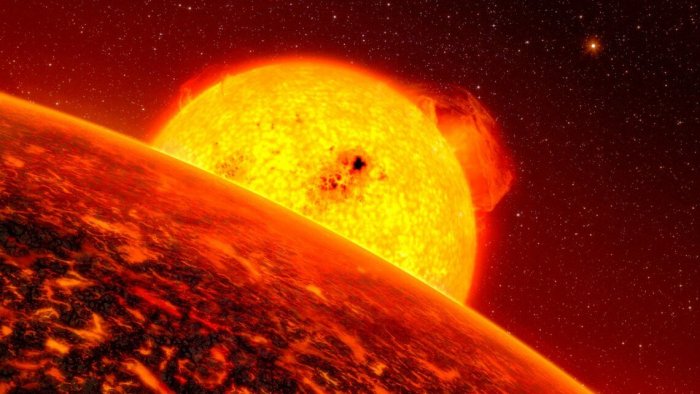
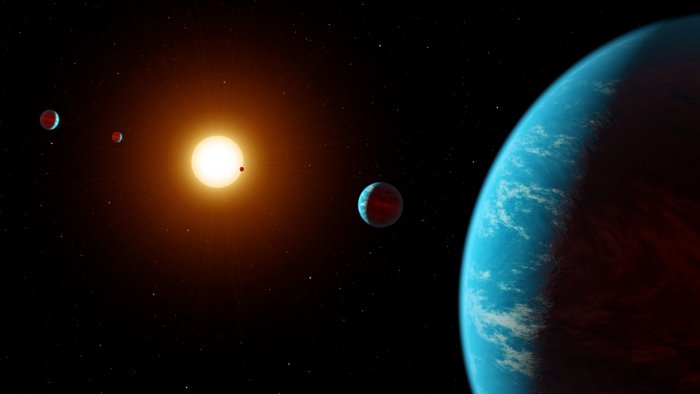
Artist's impression of a five exoplanet system. Credit: NASA/JPL-Caltech

Two Rare Super-Mercuries Discovered In The Same Star System

Eddie Gonzales Jr. – MessageToEagle.com – Researchers found three super-Earths and two super-Mercuries. This last type of exoplanet is still very rare—counting these two, there are only eight known super-Mercuries. A team led by Instituto de Astrofísica e Ciências do Espaço’s (IA3) researcher Susana Barros (IA & Dep. de Física e Astronomia—Faculdade de Ciências da

Two Rare Super-Mercuries Discovered In The Same Star System Read More »

First Probable Impact Crater- Buried At A Depth Of 1,000 M - Identified In Spain

First Probable Impact Crater – Buried At A Depth Of 1,000 M – Identified In Spain

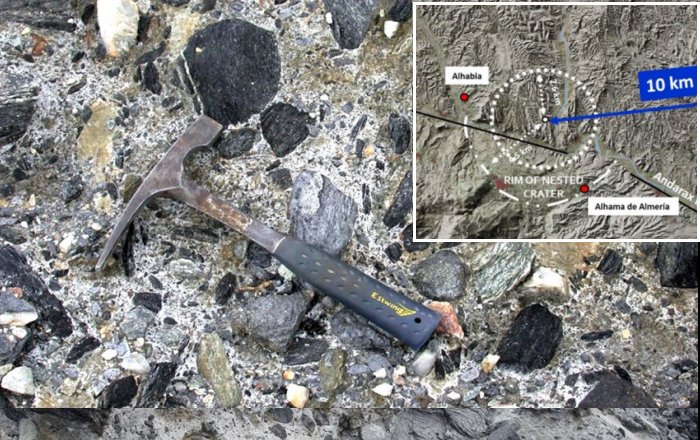
Eddie Gonzales Jr. – MessageToEagle.com – The first probable impact crater in Spain has been identified in the southern province of Almeria. The discovery was presented last week at the Europlanet Science Congress (EPSC) 2022 by Juan Antonio Sánchez Garrido of the University of Almeria. Location of the crater center and 20-kilometer radius of the

First Probable Impact Crater – Buried At A Depth Of 1,000 M – Identified In Spain Read More »