Astronomy

Astronomy

Our Universe is amazing and full of cosmic mysteries and curious anomalies. Since the dawn of history, humans have gazed at the night sky and wondered what is really out there. Where can we find extraterrestrials? What would alien worlds look like? There is still so much we don’t know about the Universe.

In this section, we take you on a journey to distant worlds and explore the secrets of our universe. You’ll find here the latest astronomy news, remarkable facts about the cosmos and space mysteries scientists are still trying to solve.

First Stars Were Not Alone - Artificial Intelligence Shows

First Stars Were Not Alone – Artificial Intelligence Shows

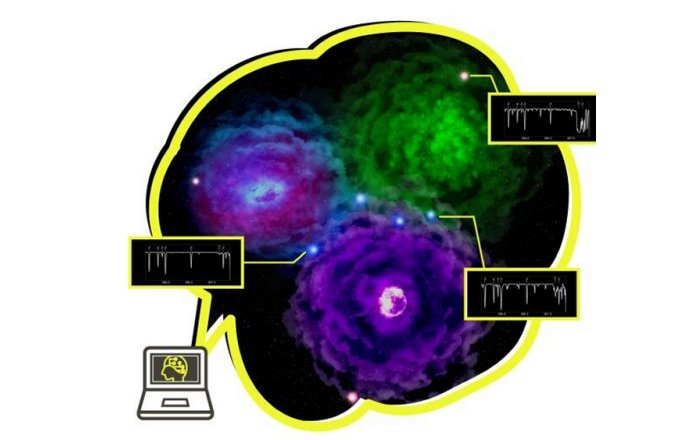
Eddie Gonzales Jr. – MessageToEagle.com – By using machine learning and state-of-the-art supernova nucleosynthesis, a team of researchers have found the majority of observed second-generation stars in the universe were enriched by multiple supernovae. Their findings are reported in The Astrophysical Journal. A schematic illustration of the first star’s supernovae and observed spectra of extremely

First Stars Were Not Alone – Artificial Intelligence Shows Read More »

James Webb Spots Swirling, Gritty Clouds On Remote Planet

James Webb Spots Swirling, Gritty Clouds On Remote Planet

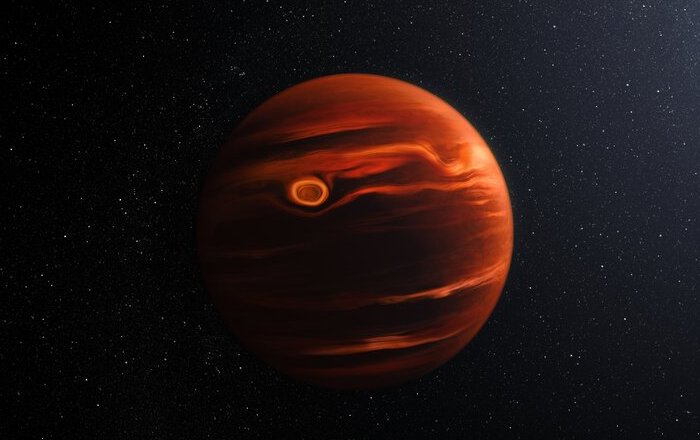
Eddie Gonzales Jr. – MessageToEagle.com – Researchers observing with NASA’s James Webb Space Telescope have pinpointed silicate cloud features in a distant planet’s atmosphere. The atmosphere is constantly rising, mixing, and moving during its 22-hour day, bringing hotter material up and pushing colder material down. This illustration conceptualizes the swirling clouds identified by the James

James Webb Spots Swirling, Gritty Clouds On Remote Planet Read More »

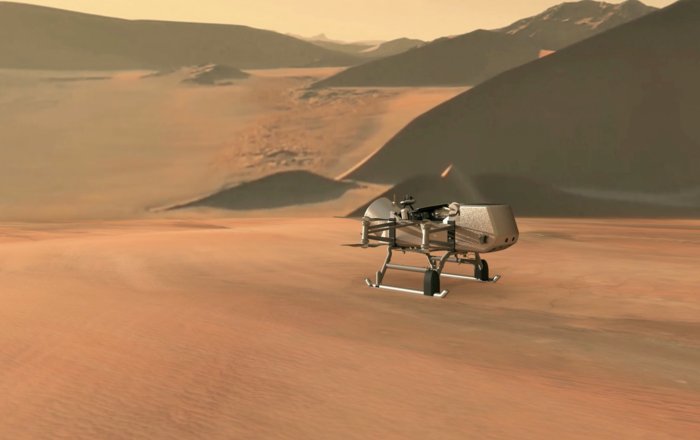
This illustration shows NASA’s Dragonfly rotorcraft-lander approaching a site on Saturn’s exotic moon, Titan. Taking advantage of Titan’s dense atmosphere and low gravity, Dragonfly will explore dozens of locations across the icy world, sampling and measuring the compositions of Titan's organic surface materials to characterize the habitability of Titan’s environment and investigate the progression of prebiotic chemistry. Credits: NASA/JHU-APL

NASA’s Dragonfly Could Reveal Chemistry Leading To Life On Titan

Eddie Gonzales Jr. – MessageToEagle.com – Titan’s abundant complex carbon-rich chemistry, interior ocean, and past presence of liquid water on the surface make it an ideal destination to study prebiotic chemical processes and the potential habitability of an extraterrestrial environment. This illustration shows NASA’s Dragonfly rotorcraft-lander approaching a site on Saturn’s exotic moon, Titan. Taking

NASA’s Dragonfly Could Reveal Chemistry Leading To Life On Titan Read More »

Where Did Earth's Water Come From? Not Melted Meteorites - New Study

Where Did Earth’s Water Come From? Not Melted Meteorites – New Study

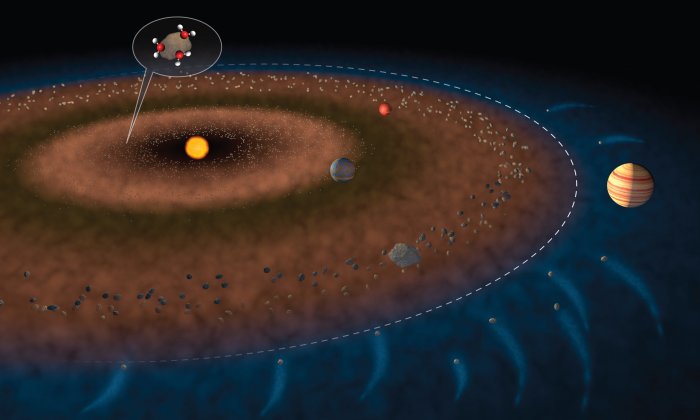
Eddie Gonzales Jr. – MessageToEagle.com – Water makes up 71% of Earth’s surface, but no one knows how or when such massive quantities of water arrived on Earth. A new study published in the journal Nature brings scientists one step closer to answering that question. Led by University of Maryland Assistant Professor of Geology Megan

Where Did Earth’s Water Come From? Not Melted Meteorites – New Study Read More »

'Terminator Zones' On Distant Planets Could Harbor Life, Astronomers Say

‘Terminator Zones’ On Distant Planets Could Harbor Life, Astronomers Say

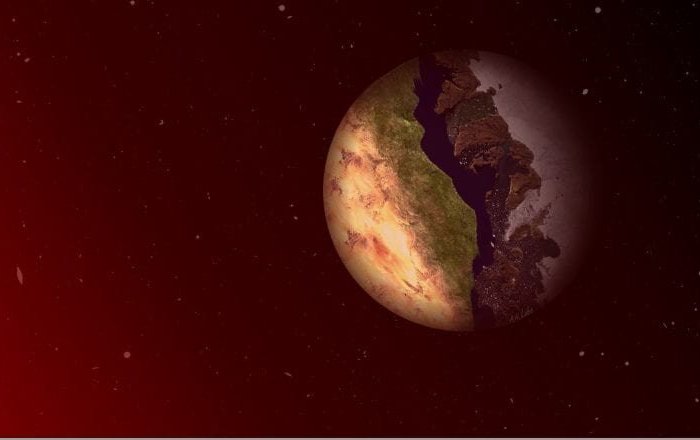
Eddie Gonzales Jr. – MessageToEagle.com – In a new study, University of California, Irvine astronomers describe how extraterrestrial life has the potential to exist on distant exoplanets inside a special area called the “terminator zone,” which is a ring on planets that have one side that always faces its star and one side that is

‘Terminator Zones’ On Distant Planets Could Harbor Life, Astronomers Say Read More »

UAF Scientist Offers Evidence That Venus Is Volcanically Active

UAF Scientist Offers Evidence That Venus Is Volcanically Active

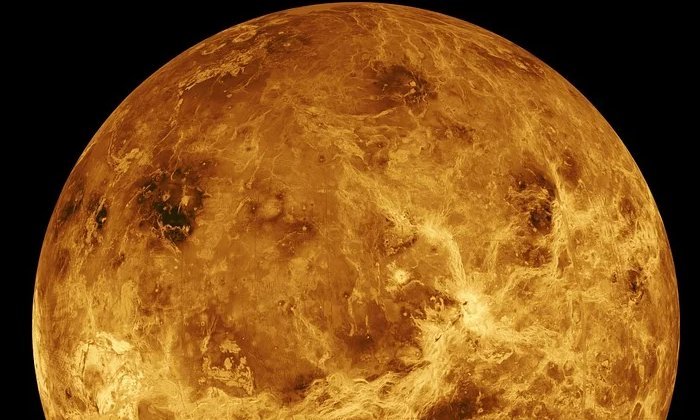
Eddie Gonzales Jr. – MessageToEagle.com – Venus appears to have volcanic activity, according to a new research paper that offers strong evidence to answer the lingering question about whether Earth’s sister planet currently has eruptions and lava flows. Planet Venus. Image credit: NASA Venus, although similar to Earth in size and mass, differs markedly in

UAF Scientist Offers Evidence That Venus Is Volcanically Active Read More »