MessageToEagle.com

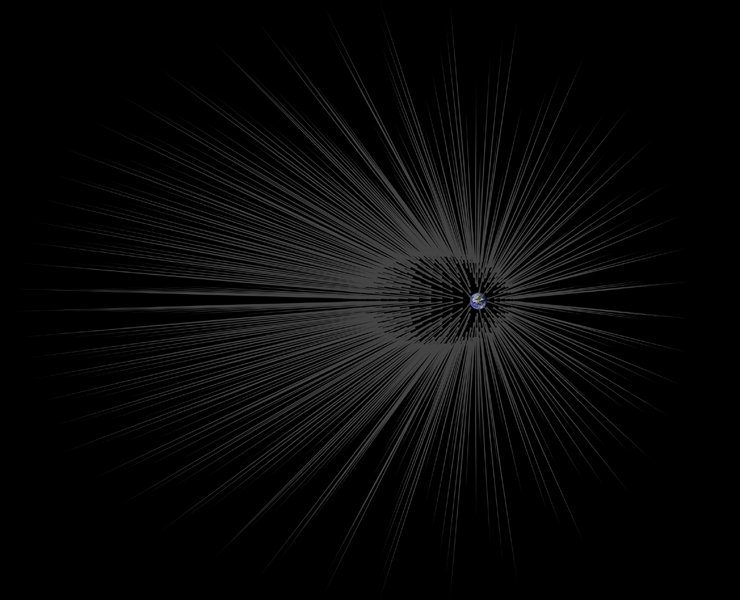
This illustration shows Earth surrounded by theoretical filaments of dark matter called "hairs." Credit: NASA/JPL-Caltech

Earth Might Have Hairy Dark Matter – Are We Closer To Unlock Secrets Of This Elusive Substance?

MessageToEagle.com – Long filaments of dark matter, or the so-called “hairs” exist and the solar system might be a lot hairier than we thought, according to a new study conducted by Gary Prézeau of NASA’s Jet Propulsion Laboratory, Pasadena, California. It’s not easy to unlock secrets of dark matter. Dark matter is an invisible, mysterious substance that makes

Earth Might Have Hairy Dark Matter – Are We Closer To Unlock Secrets Of This Elusive Substance? Read More »

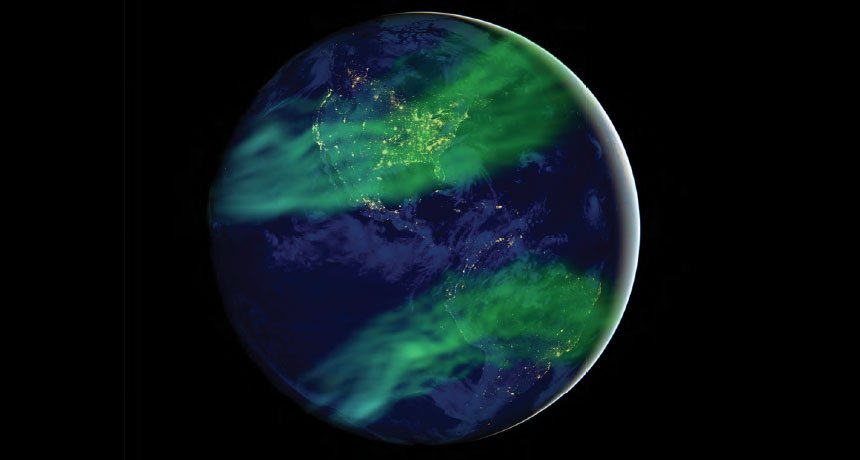
MAGNETIC SHIELD The planet’s magnetic field isn’t on the cusp of a catastrophic flip of the magnetic poles, new lava analysis suggest. A magnetic reversal would weaken Earth’s magnetic field, causing auroras closer to the equator, as seen in this artist’s illustration. HUAPEI WANG/MI

Earth’s Magnetic Poles Aren’t About To Switch, Researchers Say

MessageToEagle.com – Earth is not heading toward a doomsday reversal of its magnetic field, new research assures. The planet’s magnetic field is about 10 percent wimpier today than when physicists began keeping tabs on it in the 1800s. In the geologic past, such weakening preceded geomagnetic reversals —swaps of the north and south magnetic poles. Such

Earth’s Magnetic Poles Aren’t About To Switch, Researchers Say Read More »

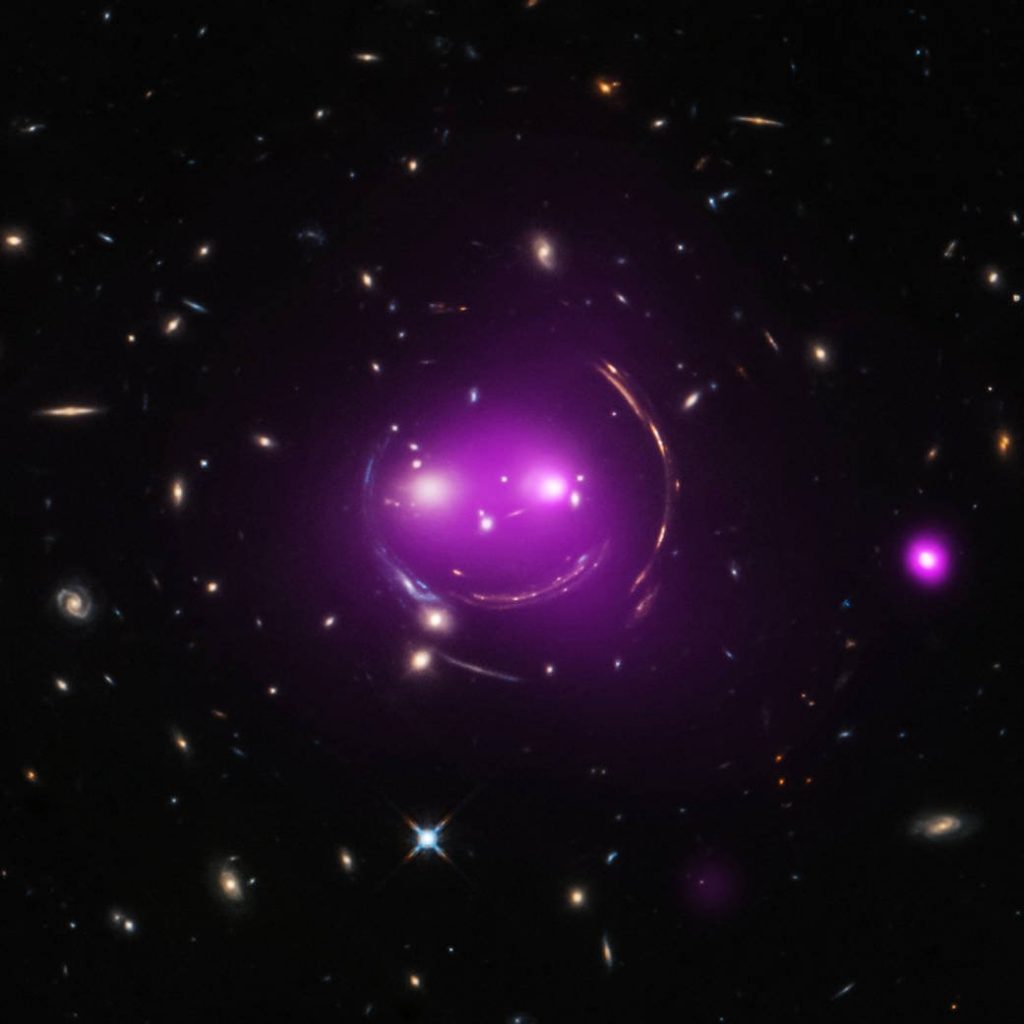
This group of galaxies has been nicknamed the "Cheshire Cat" because of its resemblance to a smiling feline. Image credit: X-ray: NASA/CXC/UA/J.Irwin et al; Optical: NASA/STScI

“Cheshire Cat” Galaxies – Where Alice In Wonderland Meets Albert Einstein

MessageToEagle.com – One hundred years ago this month, Albert Einstein published his theory of general relativity, one of the most important scientific achievements in the last century. A key result of Einstein’s theory is that matter warps space-time, and thus a massive object can cause an observable bending of light from a background object.  The

“Cheshire Cat” Galaxies – Where Alice In Wonderland Meets Albert Einstein Read More »

Noah's Ark - Italian mid-16th century painting

‘Frozen Ark’ To Preserve DNA Of Species In Face Of The Sixth Mass Extinction On Earth

MessageToEagle.com – ‘Frozen Ark’ is a British-led project, which is preserving the DNA of endangered species before they disappear due to the so-called the sixth mass extinction On Earth. ‘Many of these species are going to go extinct before we even know they exist,’ said John Armour, Professor of Human Genetics at the University of Nottingham,

‘Frozen Ark’ To Preserve DNA Of Species In Face Of The Sixth Mass Extinction On Earth Read More »

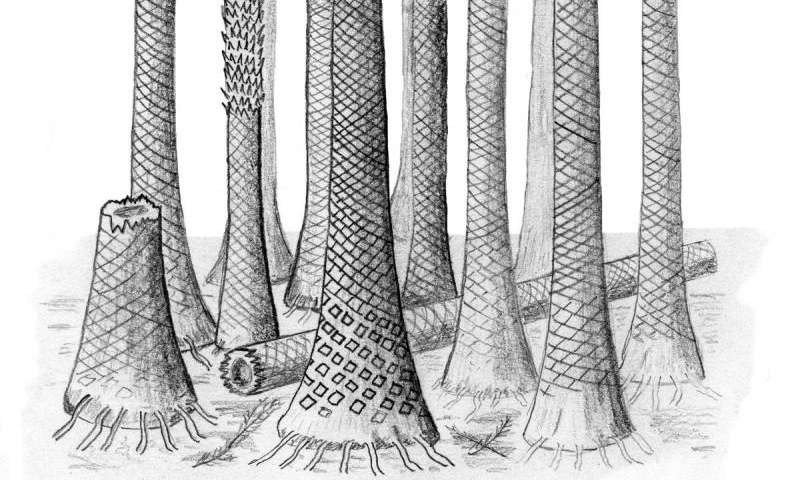
Reconstructed drawing of fossil forest in Svalbard. Credit: Image courtesy of Cardiff University

Three Tropical 380-Million-Year-Old Fossil Forests Unearthed In Arctic Norway

MessageToEagle.com – UK researchers have unearthed ancient fossil forests, thought to be partly responsible for one of the most dramatic shifts in the Earth’s climate in the past 400 million years. The fossil forests, with tree stumps preserved in place, were found in Svalbard, a Norwegian archipelago situated in the Arctic Ocean. They were identified and

Three Tropical 380-Million-Year-Old Fossil Forests Unearthed In Arctic Norway Read More »

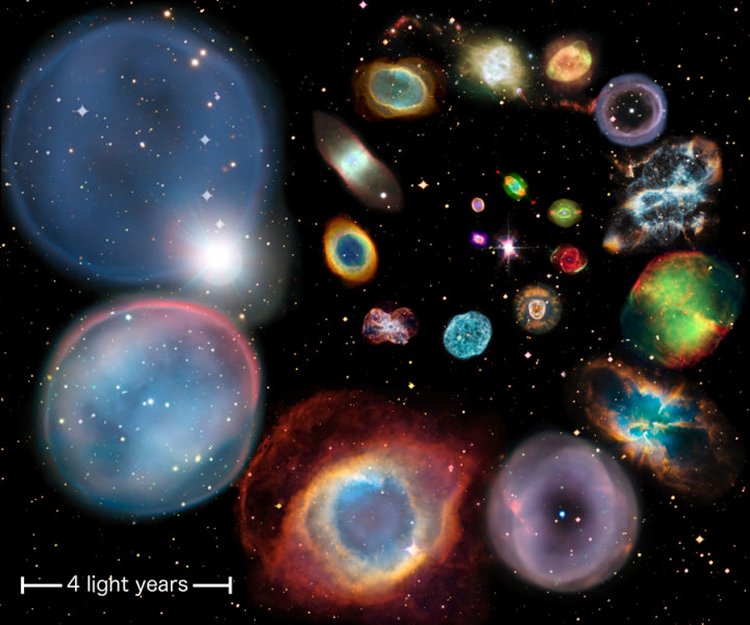
A collage showing 22 individual planetary nebulae artistically arranged in approximate order of physical size. The scale bar represents 4 light years. Each nebula's size is calculated from the authors' new distance scale, which is applicable to all nebulae across all shapes, sizes and brightnesses. The very largest planetary nebula currently known is nearly 20 light years in diameter, and would cover the entire image at this scale. Credit: ESA/Hubble & NASA, ESO, Ivan Bojicic, David Frew, Quentin Parker

Simple And Elegant Method To Measure Distance To ‘Planetary Nebulae’ – Ghostly Objects Spread Across Our Galaxy

MessageToEagle.com – Thousands of planetary nebulae are continuously observed and studied, but astronomers have long struggled to measure one of their key properties – their distance. Now, astronomers, based at the University of Hong Kong: Dr David Frew, Prof Quentin Parker and Dr Ivan Bojicic, have come up with a simple and elegant method that help

Simple And Elegant Method To Measure Distance To ‘Planetary Nebulae’ – Ghostly Objects Spread Across Our Galaxy Read More »

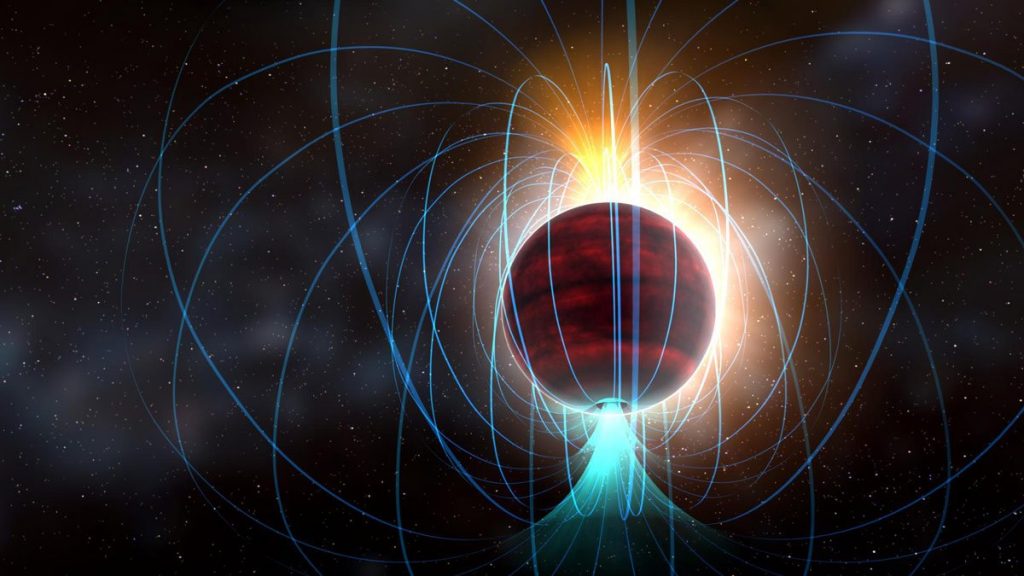
Artist impression of red dwarf star TVLM 513-46546. ALMA observations suggest that it has an amazingly powerful magnetic field, potentially associated with a flurry of solar-flare-like eruptions. Credit: NRAO/AUI/NSF; Dana Berry / SkyWorks

Tiny, Ultracool Star 35 Light-Years From Earth Is Magnetic Powerhouse

MessageToEagle.com – Our Sun is a relatively quiet star that only occasionally releases solar flares or blasts of energetic particles that threaten satellites and power grids. However, in the Universe there are tremendous forces that surprise us all the time. One of them is a tiny star with a monstrous temper. It shows evidence of much stronger

Tiny, Ultracool Star 35 Light-Years From Earth Is Magnetic Powerhouse Read More »