MessageToEagle.com

They found that humans are exceptionally short sleepers — getting by on an average of seven hours of sleep a night, whereas other primate species, such as southern pig-tailed macaques and gray mouse lemurs, need as many as 14 to 17 hours.

Humans Are Exceptionally Short Sleepers – We Get Better Sleep In Less Time

MessageToEagle.com – Humans sleep shorter, deeper than our closest animal relatives, according to a new study. The secret, according to a new study, is that our sleep is more efficient. Researchers from Duke University compiled a database of different patterns across hundreds of mammals including 21 species of primates — from baboons and lemurs to orangutans,

Humans Are Exceptionally Short Sleepers – We Get Better Sleep In Less Time Read More »
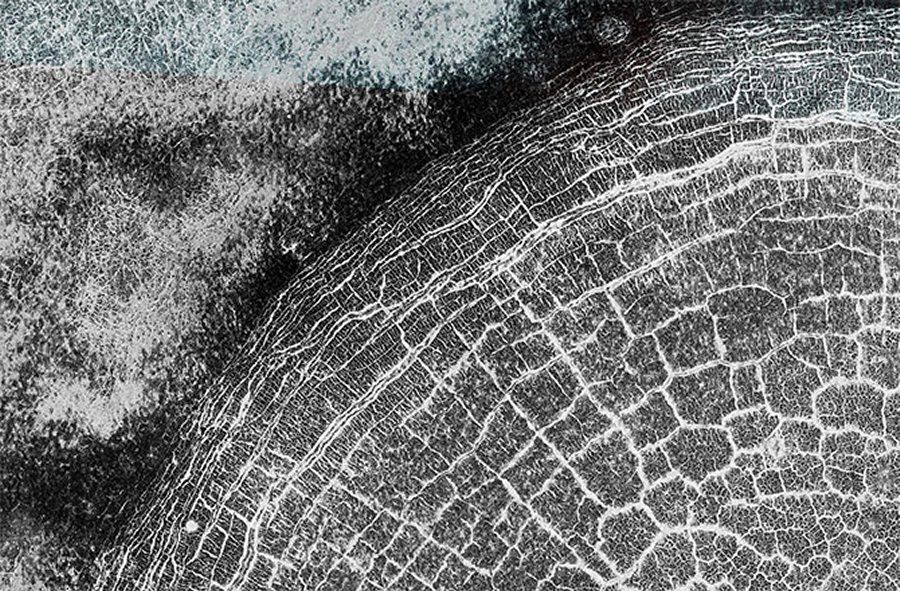
Fly Ranch Geyser

Fly Ranch Geyser: Nevada’s Marvellous And Unique Oddity

MessageToEagle.com – One of the planet’s most unique oddities can be admired near the small town Gerlach, located approximately two hours north of Reno in northwestern Nevada. It’s an amazing man-made geothermal geyser, known as Fly Ranch Geyser. Over the years, dissolved minerals created the mound that water now spews up to five meters from. The Fly Geyser is situated  on

Fly Ranch Geyser: Nevada’s Marvellous And Unique Oddity Read More »

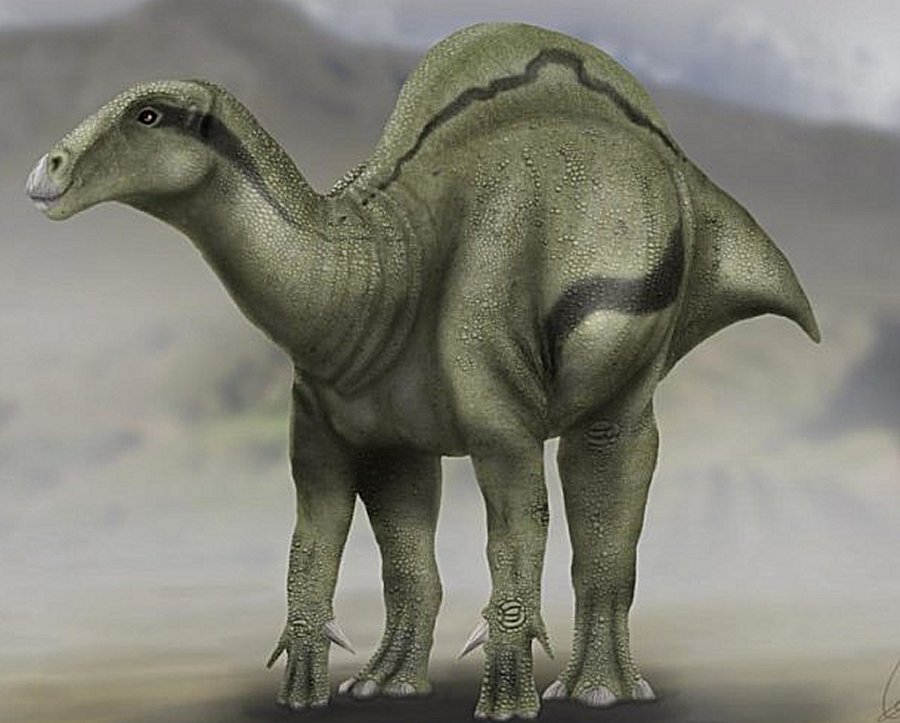
This is a picture of a life reconstruction of Morelladon beltrani. Credit: Carlos de Miguel Chaves

New Species Of Dinosaur With Odd Sail-Like Structure On Its Back Discovered In Spain

MessageToEagle.com – A ‘sail-backed’ dinosaur species named Morelladon beltrani, inhabited the Iberian landmass approximately 125 million years ago. Morelladon is a medium-sized styracosternan ornithopod of around 6 meters long and 2.5 meters high, similar in body length and proportions to its relative Mantellisaurus atherfieldensis. In a new study based on a partial skeleton mainly composed of dorsal and

New Species Of Dinosaur With Odd Sail-Like Structure On Its Back Discovered In Spain Read More »

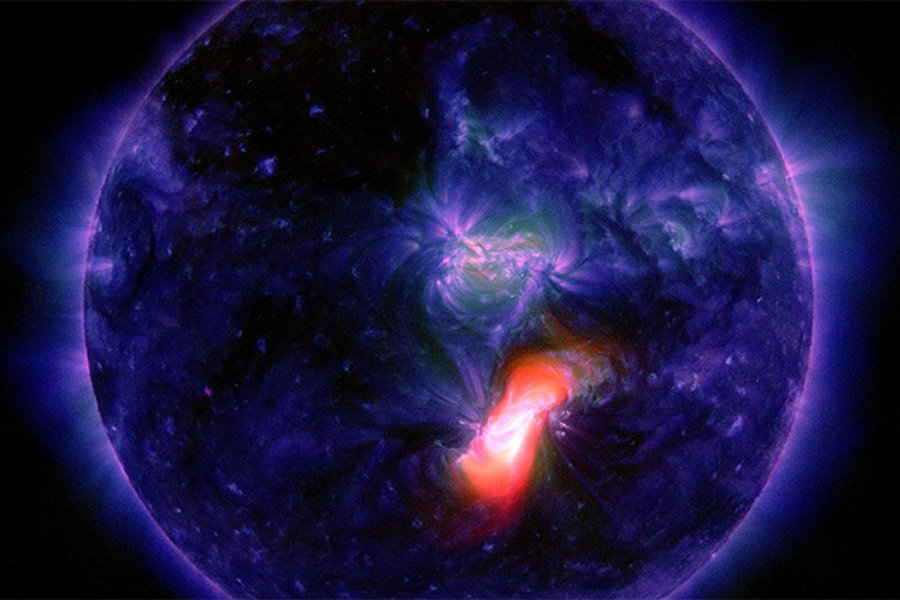
This NASA Solar Dynamics Observatory observation shows a composite view of our sun in extreme-ultraviolet light. On Dec. 28, the sunspot cluster AR2473 erupted with a M1.9 flare, sending a coronal mass ejection at Earth. Credit: NASA/SDO

Sun Blasts Flare At Earth: New Year’s Eve Storm?

MessageToEagle.com – You can say what you like about our nearest star, but as this latest solar eruption proves, it certainly has impeccable timing. On Monday (Dec. 28), a sunspot cluster erupted, blasting an M-class flare directly at Earth. The extreme-ultraviolet radiation immediately washed over our upper atmosphere, initiating an ionization event that caused a radio

Sun Blasts Flare At Earth: New Year’s Eve Storm? Read More »

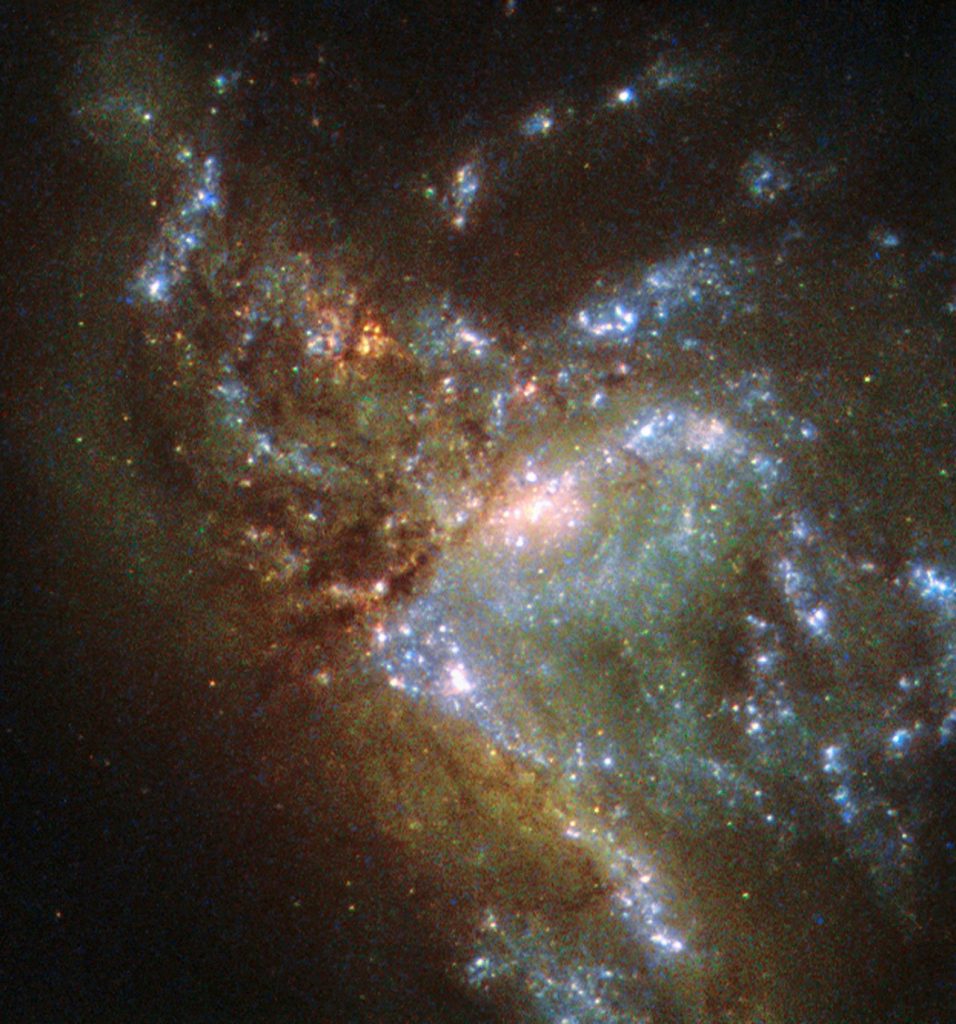
This image, taken with the Wide Field Planetary Camera 2 on board the NASA/ESA Hubble Space Telescope, shows the galaxy NGC 6052, located around 230 million light-years away in the constellation of Hercules. Credit: ESA/Hubble & NASA, Acknowledgement: Judy Schmidt (Geckzilla)

Hubble Presents: Galaxy NGC 6052 Located In The Constellation Of Hercules

MessageToEagle.com – The Wide Field Planetary Camera 2 (WFPC2) was Hubble’s workhorse camera for many years. One of Hubble’s most important instruments was used to observe just about everything. WFPC2 delivered many of the most famous Hubble pictures. This image, taken with the Wide Field Planetary Camera 2 on board the NASA/ESA Hubble Space Telescope, shows the galaxy NGC

Hubble Presents: Galaxy NGC 6052 Located In The Constellation Of Hercules Read More »

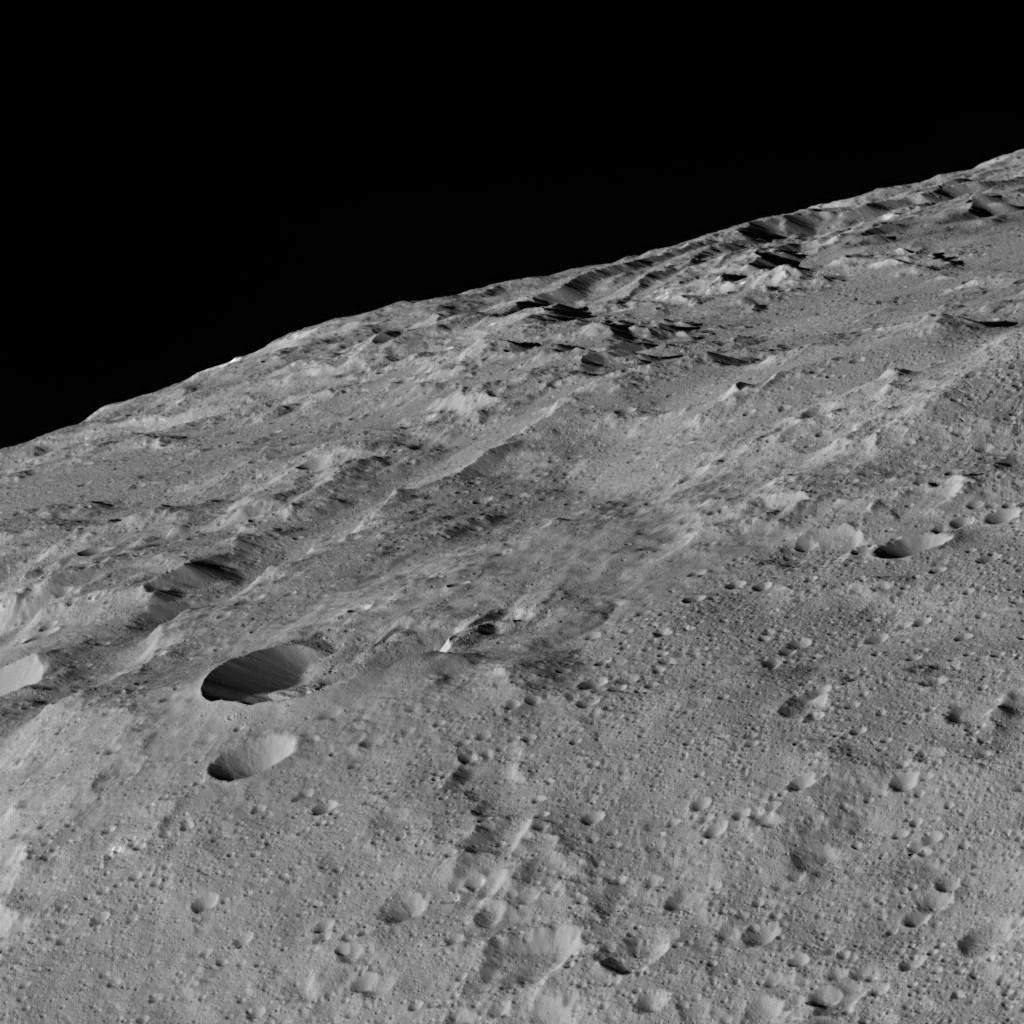
This image of Ceres was taken in Dawn's low-altitude mapping orbit around a crater chain called Gerber Catena. A 3-D view is also available. Credit: NASA/JPL-Caltech/UCLA/MPS/DLR/IDA

Dwarf Planet Ceres’ Stretched-Out Surface Revealed In New Photos

MessageToEagle.com – NASA’s Dawn probe took a series of stunning new images of Ceres’ chain of craters called Gerber Catana, from an altitude of just 240 miles (385 kilometers) – the closest the spacecraft has ever come to the dwarf planet. Among the major science findings from the close-up view is the discovery that Ceres, despite

Dwarf Planet Ceres’ Stretched-Out Surface Revealed In New Photos Read More »

NASA plans to grow food onboard future spacecraft and on other plants as a food supplement for its astronauts. (NASA)

ISS’ Astonishing ‘Space Garden’ With Fresh Fruits And Vegetables

MessageToEagle.com – Lettuce, peas and radishes are just a few vegetables that are found in a summer garden. But did you know these same vegetables also can be grown in space? Crew members aboard the International Space Station have been growing such plants and vegetables for years in their “space garden.” This garden represents a safe

ISS’ Astonishing ‘Space Garden’ With Fresh Fruits And Vegetables Read More »

Esteban De Armas/Shutterstock.com

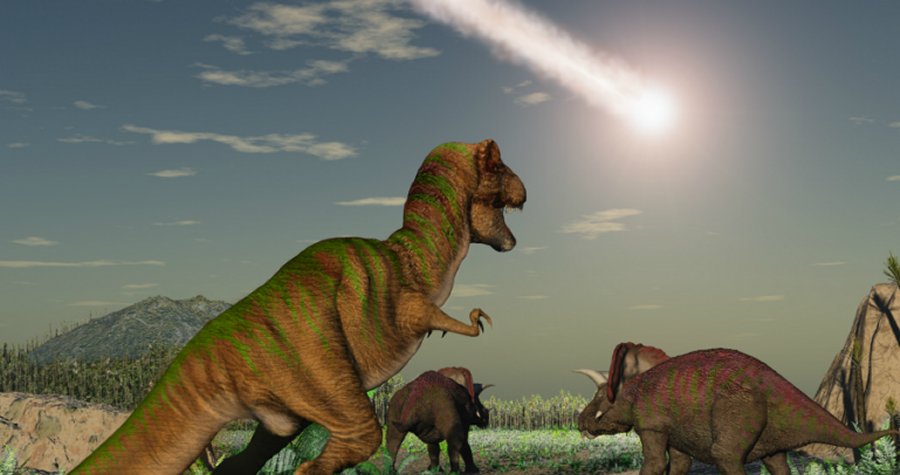
Giant Comets ‘Centaurs’ – A Hazard To Earth, Astronomers Say

MessageToEagle.com – Hundreds of giant comets have been dicovered in the outer planetary system over the last two decades. These objects could pose danger to life on Earth and represent a much greater hazard to life than asteroids, according to research conducted by a team of astronomers from Armagh Observatory and the University of Buckingham. The giant comets

Giant Comets ‘Centaurs’ – A Hazard To Earth, Astronomers Say Read More »