MessageToEagle.com

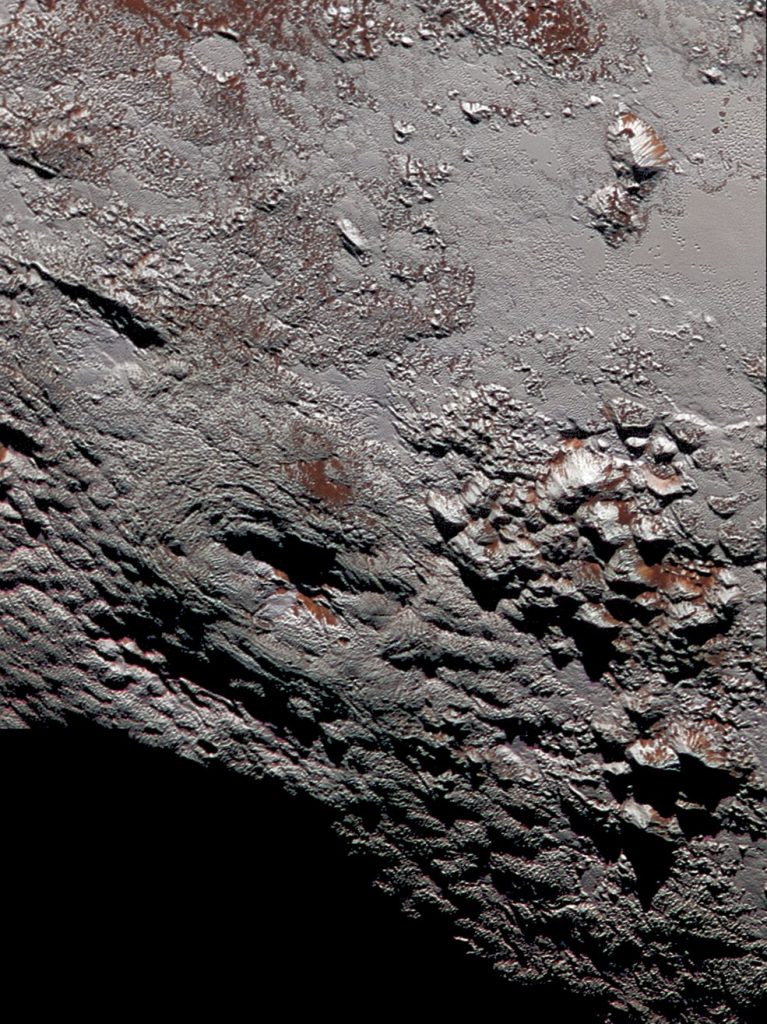
This composite image of a possible ice volcano on Pluto includes pictures taken by the New Horizons spacecraft’s Long Range Reconnaissance Imager (LORRI) on July 14, 2015, from a range of about 30,000 miles (48,000 kilometers), showing features as small as 1,500 feet (450 meters) across. Sprinkled across the LORRI mosaic is enhanced color data from the Ralph/Multispectral Visible Imaging Camera (MVIC), from a range of 21,000 miles (34,000 kilometers) and at a resolution of about 2,100 feet (650 meters) per pixel. The entire scene is 140 miles (230 kilometers) across. Image credit: NASA/JHUAPL/SwRI

NASA New Horizons’ New Image Of 150km-Wide Potential ‘Cryovolcano’ On Pluto

MessageToEagle.com – Scientists with NASA’s New Horizons mission have assembled this highest-resolution color view of one of two potential cryovolcanoes spotted on the surface of Pluto by the New Horizons spacecraft in July 2015. This feature, known as Wright Mons, was informally named by the New Horizons team in honor of the Wright brothers. At about

NASA New Horizons’ New Image Of 150km-Wide Potential ‘Cryovolcano’ On Pluto Read More »
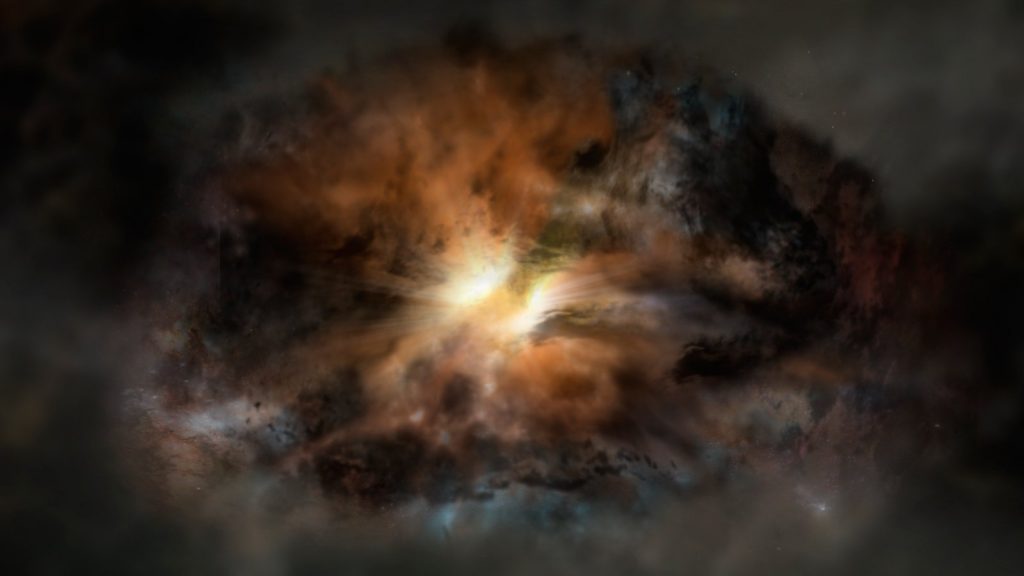
This artist's rendering shows a galaxy called W2246-0526, the most luminous galaxy known. New research suggests there is turbulent gas across its entirety, the first example of its kind. Image credit: NRAO/AUI/NSF; Dana Berry / SkyWorks; ALMA (ESO/NAOJ/NRAO)

Turbulent And ‘Most Luminous Galaxy’ Is Ripping Itself Apart

MessageToEagle.com – Astronomers have recently discovered a far-off galaxy W2246-0526, 12.4 billion light-years from Earth, which is the most luminous galaxy known, according to research published in 2015, based on data from NASA’s Wide-field Infrared Survey Explorer (WISE). A voracious black hole is devouring galactic grub and its feeding frenzy produces so much energy, it stirs up

Turbulent And ‘Most Luminous Galaxy’ Is Ripping Itself Apart Read More »

Faint traces of the canyons were observed using satellite imagery and small sections of the canyons were then found using radio-echo sounding data, whereby radio waves are sent through the ice to map the shape of the rock beneath it. Credits: Wikipedia

Is World’s Largest Canyon Hidden Under Antarctic Ice Sheet?

MessageToEagle.com – New analysis of satellite data by a team of scientists led by Durham University shows that the world’s largest canyon may lie under the Antarctic ice sheet. Although the discovery needs to be confirmed by direct measurements, the previously unknown canyon system is thought to be over 1,000km long and in places as much

Is World’s Largest Canyon Hidden Under Antarctic Ice Sheet? Read More »

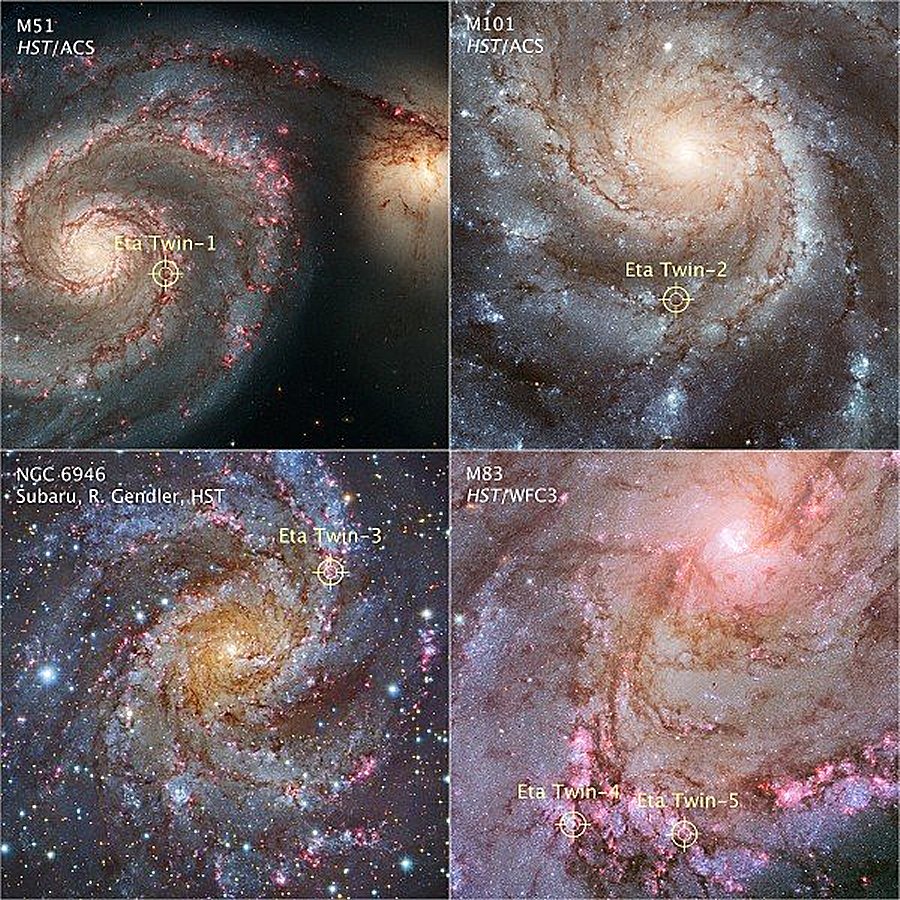
Location of Eta twins in galaxies M51, M101, NGC 6946, and M83. Individual Image Credits: M51: NASA/ESA/Hubble Heritage Team (STScI/AURA); M101:NASA/ESA/K. Kuntz (JHU), F. Bresolin (U. Hawaii), J. Trauger (Jet Propulsion Lab), J. Mould (NOAO), Y.-H. Chu (U. Illinois, Urbana), Canada-France-Hawaii Telescope/ J.-C. Cuillandre/Coelum/, Jacoby, B. Bohannan, and M. Hanna/ NOAO/AURA/NSF; NGC 6946: NASA/ESA/STScI/R. Gendler/Subaru Telescope (NAOJ); M83: NASA/ESA/Hubble Heritage Team (STScI/AURA) Credit: NASA, ESA and R. Khan (GSFC and ORAU)

Eta Carinae: Most Luminous And Massive Stellar System And Its ‘Twins’

MessageToEagle.com – Eta Carinae is the most luminous and massive stellar system within 10,000 light-years. It is best known for an enormous eruption seen in the mid-19th century that hurled an amount of material at least 10 times the sun’s mass into space. This expanding veil of gas and dust, which still shrouds Eta Carinae, makes

Eta Carinae: Most Luminous And Massive Stellar System And Its ‘Twins’ Read More »

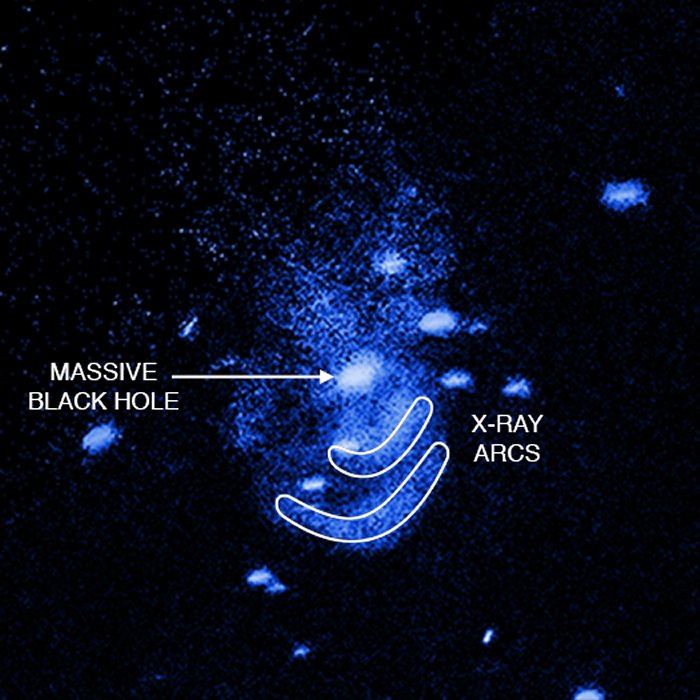
X-ray close-up. X-ray: NASA/CXC/Univ of Texas/E.Schlegel et al; Optical: NASA/STScI

Outburst In Supermassive Black Hole Observed By NASA’s Chandra

MessageToEagle.com – Astronomers, using NASA’s Chandra X-ray Observatory, have discovered evidence of powerful blasts produced by a giant black hole centered in the small galaxy NGC 5195, located 26 million light-years from Earth. This is one of the nearest supermassive black holes to Earth that is currently undergoing such violent outbursts. This companion galaxy is merging

Outburst In Supermassive Black Hole Observed By NASA’s Chandra Read More »

The James Webb Space Telescope will be a large infrared telescope with a 6.5-meter primary mirror. JWST will be the premier observatory of the next decade, that will study every phase in the history of our Universe, ranging from the first luminous glows after the Big Bang, to the formation of solar systems capable of supporting life on planets like Earth, to the evolution of our own Solar System. Credits: NASA

Search For Population III Stars And Hope To Observe Them With JWST

MessageToEagle.com – The first stars were made from completely pristine gas, and astronomers think they formed quite differently from stars today. Astronomers have long theorized the existence of these stars, also known as the Population III stars, which were born out of the primordial material from the Big Bang. The Population III stars, exploded in powerful supernovae, spreading

Search For Population III Stars And Hope To Observe Them With JWST Read More »