MessageToEagle.com

Are Sunspots And Flares A Product Of A Shallow Magnetic Field?

Are Sunspots And Flares A Product Of A Shallow Magnetic Field?

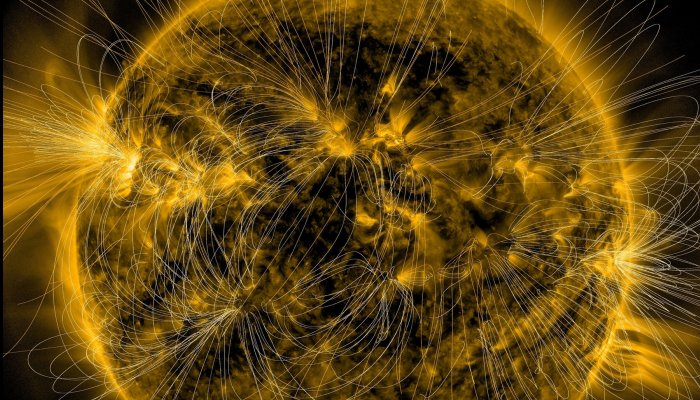
Eddie Gonzales Jr. – MessageToEagle.com – Researchers at MIT, the University of Edinburgh, and elsewhere find that the sun’s magnetic field could arise from instabilities within the sun’s outermost layers. This illustration lays a depiction of the sun’s magnetic fields over an image captured by NASA’s Solar Dynamics Observatory. The complex overlay of lines can

Are Sunspots And Flares A Product Of A Shallow Magnetic Field? Read More »

Alaska's Rusting Waters: Pristine Rivers And Streams Turning Orange

Alaska’s Rusting Waters: Pristine Rivers And Streams Turning Orange

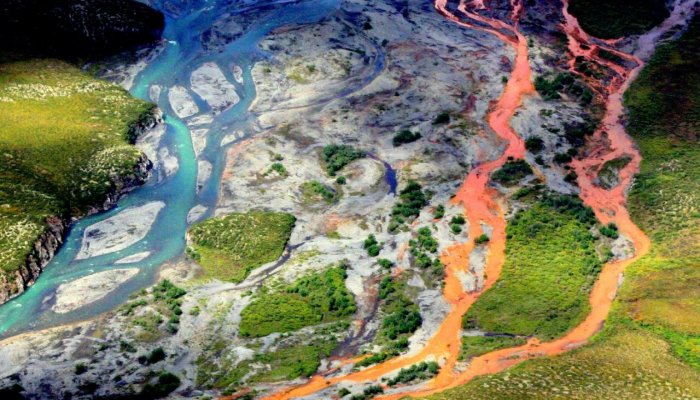
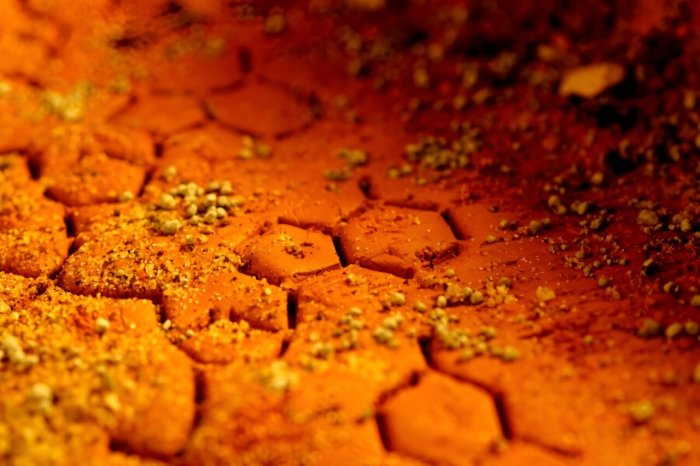
Eddie Gonzales Jr. – MessageToEagle.com – New research finds that dozens of Alaska’s most remote streams and rivers are turning from crystal clear blue to cloudy orange. The staining could be the result of minerals exposed by thawing permafrost. An aerial view of the rust-colored Kutuk River in Gates of the Arctic National Park in

Alaska’s Rusting Waters: Pristine Rivers And Streams Turning Orange Read More »

The Hubble Has Captured A Remarkable Celestial Phenomenon – The Dawn Of A Sun-Like Star

Hubble Has Captured A Remarkable Celestial Phenomenon – The Dawn Of A Sun-Like Star

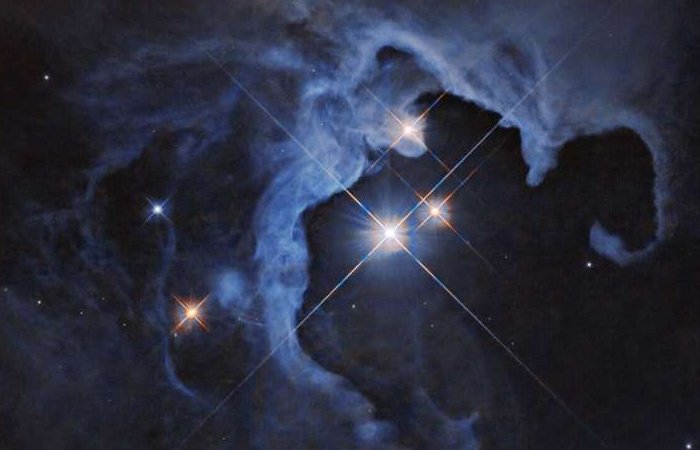
Eddie Gonzales Jr. – MessageToEagle.com – Looking like a glittering cosmic geode, a trio of dazzling stars blazes from the hollowed-out cavity of a reflection nebula in this new image from NASA’s Hubble Space Telescope. This NASA Hubble Space Telescope image captures a triple-star star system. Credit: NASA, ESA, G. Duchene (Universite de Grenoble I);

Hubble Has Captured A Remarkable Celestial Phenomenon – The Dawn Of A Sun-Like Star Read More »

Lightning Storms Contribute To The Accelerated Rate Of Sea Ice Melting At The North Pole

Lightning Storms Contribute To The Accelerated Rate Of Sea Ice Melting At The North Pole

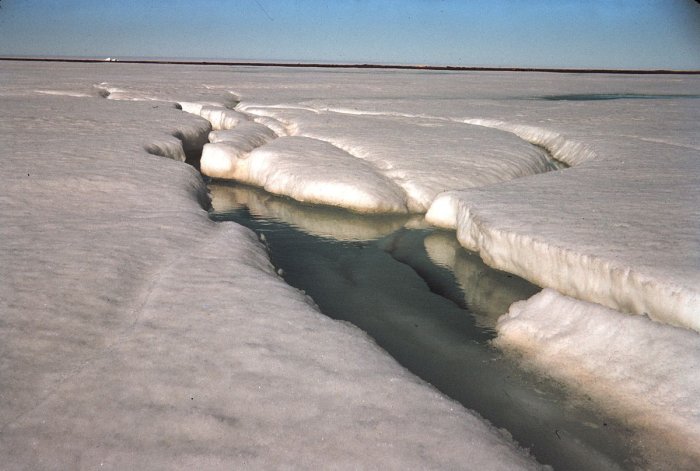
Eddie Gonzales Jr. – MessageToEagle.com – Recent international research has revealed that lightning storms contribute to an accelerated rate of sea ice melting in the Arctic region. The first sign of the spring melt – a stream is seen flowing on the ice – Alaska, Tigvariak Island, North Slope. Image credit: Harley D. Nygren (1924–2019)

Lightning Storms Contribute To The Accelerated Rate Of Sea Ice Melting At The North Pole Read More »

Earth-Sized Exoplanet Orbiting Ultracool Dwarf Star SPECULOOS-3 As Small As Jupiter - Discovered

Earth-Sized Exoplanet Orbiting Ultracool Dwarf Star SPECULOOS-3 As Small As Jupiter

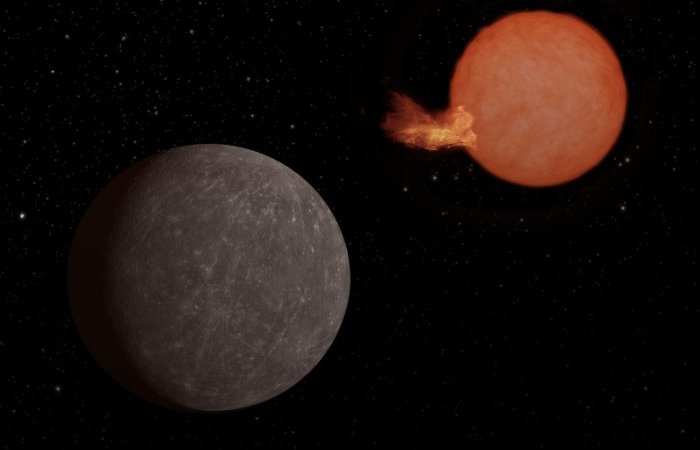
Eddie Gonzales Jr. – MessageToEagle.com – Astronomers discovered a new Earth-sized exoplanet, an “ultracool dwarf” star as small as Jupiter, twice as cold as our Sun, and located 55 light-years from Earth. Artist’s view of exoplanet SPECULOOS-3 b orbiting its star. The planet is as big as the Earth, while its star is slightly larger

Earth-Sized Exoplanet Orbiting Ultracool Dwarf Star SPECULOOS-3 As Small As Jupiter Read More »

First ‘Warm-Blooded’ Dinosaurs Evolved 180 Million Years Ago

First ‘Warm-Blooded’ Dinosaurs Evolved 180 Million Years Ago

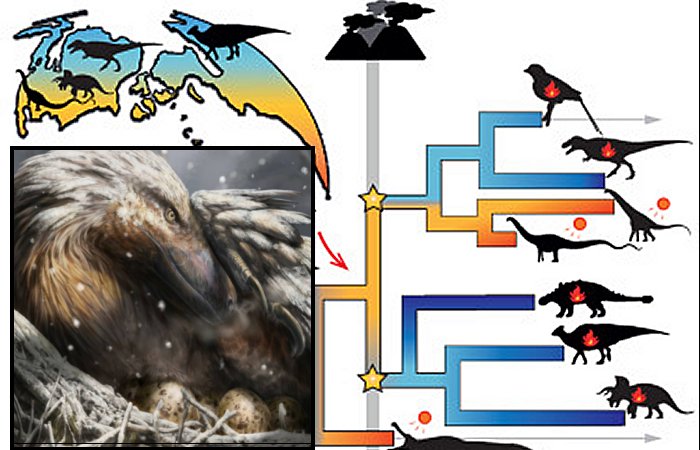
Eddie Gonzales Jr. – MessageToEagle.com – The capacity to regulate body temperature, a characteristic common to all contemporary mammals and avian species, may have originated among specific dinosaur lineages during the early Jurassic period, approximately 180 million years ago. This shows a new study led by researchers from University College London and the University of

First ‘Warm-Blooded’ Dinosaurs Evolved 180 Million Years Ago Read More »

Universe’s Oldest Stars In Our Own Galactic Backyard - Discovered

Universe’s Oldest Stars In Our Own Galactic Backyard – Discovered

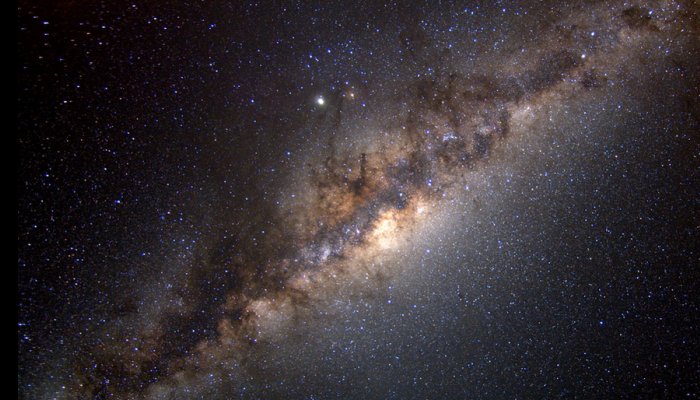
Eddie Gonzales Jr. – MessageToEagle.com – Three stars circling the Milky Way’s halo formed 12 to 13 billion years ago. MIT astronomers discovered three of the oldest stars in the universe, and they live in our own galactic neighborhood. The stars are in the Milky Way’s “halo” — the cloud of stars that envelopes the main

Universe’s Oldest Stars In Our Own Galactic Backyard – Discovered Read More »

A New Mechanism To Explain How Continents Stabilized

A New Mechanism To Explain How Continents Stabilized

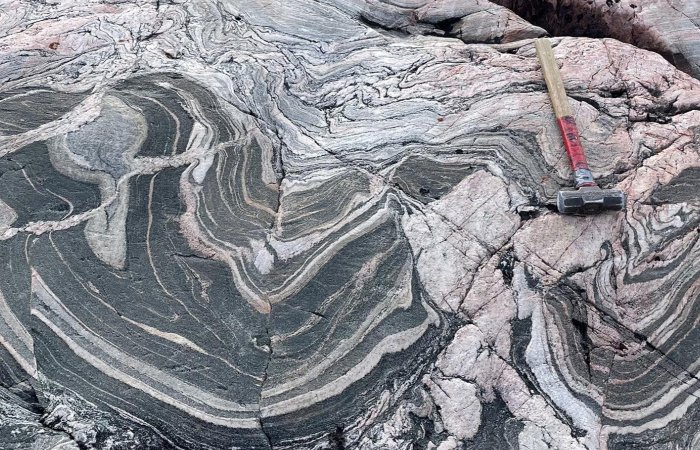
Eddie Gonzales Jr. – MessageToEagle.com – Ancient, expansive tracts of continental crust called cratons have helped keep Earth’s continents stable for billions of years, even as landmasses shift, mountains rise, and oceans form. These ancient metamorphic rocks called gneisses, found on the Arctic Coast, represent the roots of the continents now exposed at the surface.

A New Mechanism To Explain How Continents Stabilized Read More »